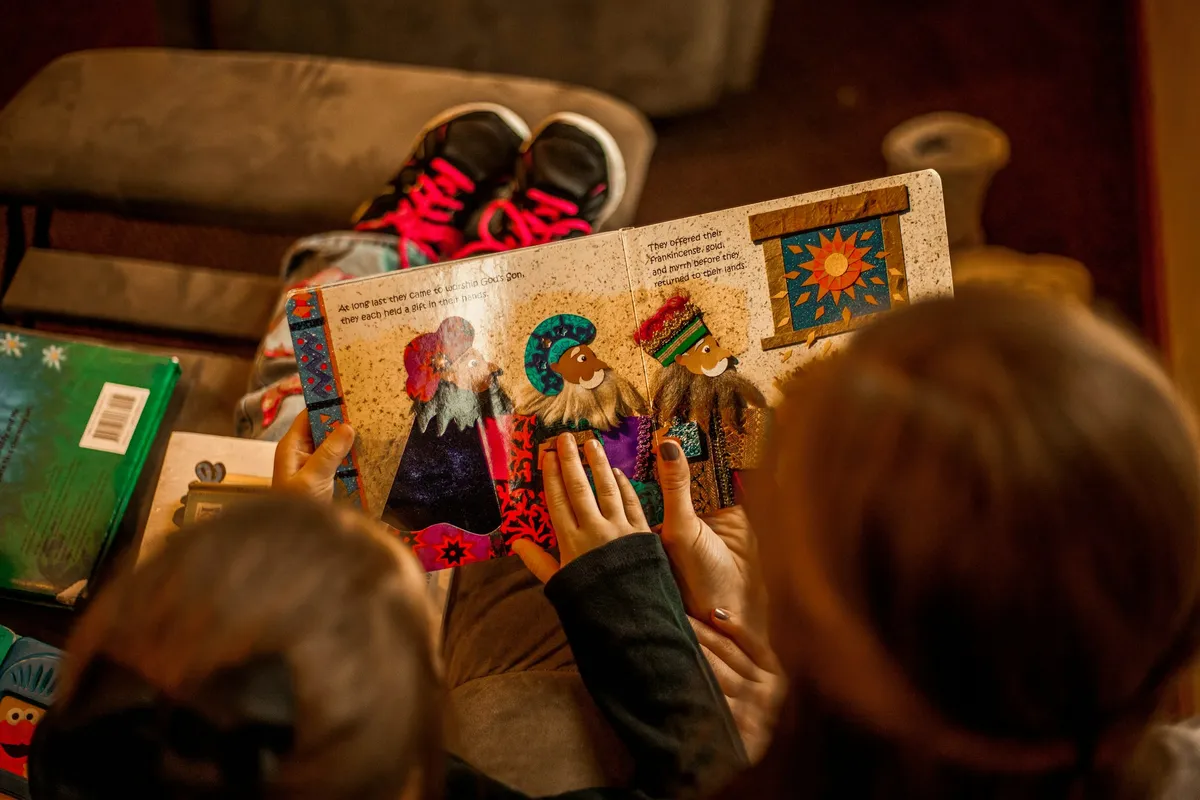
Children’s stories are one of the most familiar parts of family life, and also one of the easiest to underuse — read occasionally, without much thought to timing, fit, or what a particular story is actually good for. This guide brings together why reading aloud matters, how to choose stories that genuinely fit your child, and how to build a simple routine around it, so story time can be a deliberate, regular part of your family’s week.
What reading aloud actually builds
Reading aloud isn’t just a pleasant bedtime habit — it does real developmental work. It builds vocabulary and sentence sense well beyond everyday conversation, gives a child practice following a sequence of events from beginning to end, and offers a low-stakes way to encounter and understand feelings through a character. None of this requires a special program; it develops through the ordinary, repeated act of reading together. The Benefits of Reading Aloud to Kids covers this in more depth, grounded in real research on early language and emotional development.
Choosing stories that actually fit
A story that holds a preschooler’s attention can lose a toddler within a page, and matching a story to a child’s current stage — not just their age — makes read-aloud time work far better. Roughly: infants and young toddlers respond to rhythm and simple images, toddlers thrive on short, repetitive stories, preschoolers are ready for a real plot and relatable feelings, and kindergarten-age children can often follow longer stories and early chapter books. How to Choose Age-Appropriate Stories for Bedtime and Storytime goes through each of these stages in detail.
Using stories to teach specific ideas
Beyond general language and attention benefits, a well-chosen story can give an abstract idea a concrete shape — a character who wants something, has to wait or work through a problem, and comes out the other side. Teaching Kids Patience Through Stories covers how this works for patience specifically, using The Patience Garden: A Story About Waiting — a 12-page illustrated storybook about a young gardener learning that good things take time — as an example of a story built well around this idea. For a free story on the same theme, A Short Story for Kids About Waiting for Something Good is ready to read right now.
Using stories to support a shy child
A story can help with more than one specific idea like patience — it also gives a child language for a feeling that’s otherwise hard to talk about directly, like shyness. Helping a Shy Child Feel Confident: Books and Everyday Conversations covers everyday ways to support a shy child, along with how a story built around the same feeling can help.
Using stories to help a child understand anger
Stories can also help with a feeling that’s harder to talk about directly in the moment: anger. Helping Kids Name and Handle Anger covers how stories and everyday conversation can give a child language for anger once they’re calm, as a complement to in-the-moment calming techniques.
Free stories to start with
Not every story needs to come from a purchased book. The Kind Little Cloud and A Short Story for Kids About Waiting for Something Good are both short, original, read-aloud-ready stories available on this site — a good way to start building a rotation without needing anything else on hand.
Building a simple routine around it
None of the benefits above require an elaborate setup — they come from stories being read regularly, which mostly means removing friction: a predictable time, a small rotating stack of books within reach, and low pressure around finishing every story completely. How to Build a Simple Read-Aloud Routine at Home walks through exactly how to build that kind of low-effort, repeatable routine.
Bringing it together
Stories reward consistency more than any single perfect pick. A simple, repeated rhythm — books matched to your child’s current stage, an occasional story built around a specific idea like patience, shyness, or anger, and a predictable time to read together — covers most of what makes story time genuinely valuable, developmentally and as shared family time. The seven companion guides linked throughout this article go deeper on each piece: what reading aloud builds, choosing stories by age, teaching ideas like patience, quiet confidence, or naming anger through story, a free original story to start with, and setting up a routine that actually lasts. Start with whichever piece is most relevant to where your family is right now.
Frequently asked questions
What’s the single most important thing to know about reading with kids?
That the shared, repeated practice matters more than any single book or session. Regular read-aloud time, even in short stretches, builds real language, attention, and emotional skills over time, well beyond any one story’s specific lesson.
Do stories actually help teach concepts like patience or handling change?
Yes, when the story gives the idea a concrete shape — a character who wants something, faces it, and works through it. That concrete version of an abstract idea tends to land with young children better than a direct explanation alone, though real-life practice still matters just as much.
How do I turn reading aloud into an actual daily habit?
Keep it simple: a predictable time, an easy way to choose a book without much searching, and low expectations about finishing every story completely. A routine that’s easy to repeat tends to last far longer than one built around finding the “perfect” book each time.