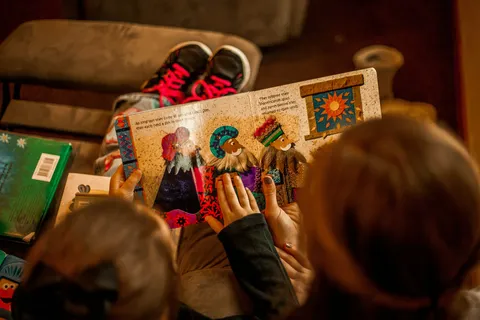
A shy child hanging back at a birthday party, going quiet around new adults, or needing a few minutes before joining a group isn’t showing a problem to solve — they’re showing a temperament, and one that often comes with real strengths like careful observation and thoughtfulness. The more useful question usually isn’t “how do I make my child less shy,” but “how do I help my child feel confident being exactly who they are, while still building comfort with new people and situations at their own pace.”
What “shy” usually looks like
Shyness tends to show up as hesitation rather than distress: a child who needs a few minutes to warm up in a new setting, prefers to watch before joining in, or answers a new adult’s question in a whisper or through a parent. This is different from a child who’s genuinely upset or refusing to participate at all — most shy children do eventually join in, on their own timeline, once they’ve had a chance to observe and feel ready. Recognizing this as a normal, common temperament rather than a problem is usually the first useful shift, both for how a parent responds in the moment and for how a child comes to see themselves.
Everyday conversations that build confidence
Small, repeated conversations tend to do more for a shy child’s confidence than a single big talk about “being braver.” A few approaches that tend to help:
- Name the feeling without labeling the child. “It looks like meeting new people feels a little uncomfortable right now” lands differently than “you’re just shy,” which can start to feel like a fixed identity rather than a passing feeling.
- Preview new situations in advance. A short heads-up about who will be there and what will happen — a birthday party, a new class, a relative’s visit — gives a shy child a chance to prepare mentally, which often reduces hesitation once the moment actually arrives.
- Notice small brave moments specifically. Pointing out a specific small step (“you said hi to your cousin even though it felt hard”) builds more genuine confidence than general praise like “good job,” because it shows the child exactly what they did that took courage.
- Avoid forcing a greeting or performance. Requiring a shy child to hug a relative, answer a stranger’s question, or perform on command tends to increase resistance rather than build confidence — a quiet wave or simply standing nearby is a reasonable middle step.
How stories help specifically
A story can do something a direct conversation about shyness often can’t: it lets a child watch a character go through the same hesitation, in a low-pressure way, without being the one on the spot. Seeing a character feel nervous, take one small step anyway, and come out the other side gives a shy child both language for what they’re feeling and a concrete, remembered example to draw on the next time a similar moment comes up — the same way Teaching Kids Patience Through Stories describes stories giving shape to another hard-to-explain feeling.
Where “It’s Okay to Be Shy” fits
It’s Okay to Be Shy: A Story About Quiet Confidence is a short illustrated storybook, built for ages 4–8, that follows a shy child’s own path from hesitation toward quiet confidence. It’s built specifically to validate a shy child’s nature rather than frame it as something to overcome — modeling quiet observation, deep thinking, and small moments of gentle bravery as genuine strengths, not consolation prizes. It also includes built-in conversation prompts for parents and teachers, which makes it easier to turn the story into one of the everyday conversations described above, rather than needing to come up with the right words from scratch.
When to look beyond books and conversation
For most children, shyness eases gradually with time, patience, and the kind of everyday support described here — it isn’t something that needs to be treated. But if shyness seems to be causing a child real, ongoing distress, or is consistently stopping them from doing things they genuinely want to do, that’s worth a conversation with a pediatrician or a child counselor, who can look at the full picture rather than relying on general guidance like this alone.
Bringing it together
A shy child usually needs patience and validation more than encouragement to “come out of their shell.” Everyday conversations that name feelings without labeling the child, a bit of preparation before new situations, and a story that gives quiet confidence a concrete shape can go a long way together. For more on choosing stories that fit where your child actually is, see How to Choose Age-Appropriate Stories for Bedtime and Storytime, and for help turning any story — this one included — into a regular habit, see How to Build a Simple Read-Aloud Routine at Home. Children’s Stories at Home: A Complete Guide to Read-Aloud Time and Story-Based Learning ties this together with the rest of what makes story time valuable.
Frequently asked questions
Is shyness something I should be trying to fix?
Not really. Shyness is a temperament, not a flaw — plenty of shy children grow into thoughtful, observant adults who simply warm up more slowly than others. The goal isn’t to make a shy child outgoing; it’s to help them feel confident being exactly as quiet as they naturally are, while still building comfort in new situations at their own pace.
What age is this most relevant for?
Shyness shows up at very different ages, but the everyday approaches here tend to work well from around preschool age through early elementary, roughly ages 4 to 8 — old enough to talk a little about feelings, young enough that quiet, low-pressure conversation still works better than a bigger discussion.
Should I be worried if my child seems more than just shy?
Occasional shyness in new situations is typical and not something to worry about on its own. If shyness seems to be causing your child real, ongoing distress, or is stopping them from doing things they want to do, it’s worth talking with your child’s pediatrician or a child counselor, who can look at the fuller picture.