A story that holds a four-year-old’s full attention can lose an eighteen-month-old within a page, and a story built for a baby can feel far too simple for a child who’s ready for a real plot. Matching a story to where a child actually is — not just their age in years — makes storytime work better for everyone, and it changes gradually enough that it’s worth revisiting every so often rather than assuming last year’s picks still fit.
Infants and young toddlers (roughly 0–2): sound, rhythm, and simple images
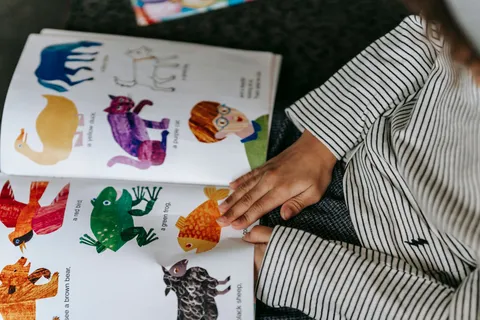
At this age, a story doesn’t need much plot at all. What matters most is the sound of language — rhythm, repetition, simple rhymes — paired with clear, uncluttered images a baby or young toddler can actually focus on. Board books with sturdy pages, one simple idea per page, and room for pointing and naming objects tend to work best. Following a full narrative isn’t the goal yet; shared attention and the sound of a caregiver’s voice are doing most of the work.
Toddlers (roughly 2–3): short, repetitive, and predictable
Toddlers often gravitate toward short stories with a clear, repeated structure — the same phrase or event happening a few times with small variations. That predictability isn’t a limitation; it’s exactly what helps a toddler follow along and start to anticipate what comes next, which is real comprehension practice. Stories with a simple, single problem and a quick resolution suit this age better than anything with subplots or a large cast of characters to track.
Preschoolers (roughly 3–5): a real plot and relatable feelings
By this age, many children are ready for stories with an actual arc — a character who wants something, faces a small obstacle, and works through it — along with characters whose feelings are clearly described. This is also the age where a story about a specific experience, like starting something new, waiting for something, or feeling shy in a new situation, tends to land especially well, since a preschooler can now follow the connection between the character’s situation and their own. Teaching Kids Patience Through Stories and A Short Story for Kids About Waiting for Something Good are both built for roughly this stage, and It’s Okay to Be Shy: A Story About Quiet Confidence works the same way for a child who feels shy or hesitant in new situations.
Kindergarten age and up (roughly 5–7): longer stories and early chapter books
Around kindergarten age, many children can follow longer stories across multiple sittings, including simple early chapter books with a handful of short chapters. Attention spans vary widely here, so it’s worth continuing to watch what actually holds a specific child’s interest rather than assuming readiness based on age alone. This is also a good stage to start talking more explicitly about a story’s theme or lesson afterward, since a child at this age can usually engage with that kind of conversation more directly.
Matching format to attention span, not just age
Age ranges are a starting point, not a rule, and attention span varies even within a single week depending on how tired or distracted a child is. A few signs that a story is a poor match right now: consistent fidgeting or wandering attention partway through, frequent requests to stop, or a child who seems to be listening but can’t describe anything about the story afterward. None of these mean a story was a bad choice permanently — the same book might land better on a calmer day, or once a child is a bit older.
Why matching age to story matters
Choosing a story that’s genuinely matched to a child’s current stage isn’t just about avoiding boredom — it’s what lets all of the developmental benefits of reading aloud actually happen. A story that’s too advanced loses a child’s attention before the language or emotional content can do any work, and a story that’s too simple doesn’t stretch a child who’s ready for more. The Benefits of Reading Aloud to Kids covers what’s at stake when that match is working well, and Children’s Stories at Home: A Complete Guide to Read-Aloud Time and Story-Based Learning brings this together with the rest of what makes read-aloud time work.
Frequently asked questions
Is it okay if my child wants the same story every night?
Yes. Repetition is genuinely valuable at most ages — it builds familiarity with language and lets a child predict and participate in the story more, which is part of why the same book requested night after night doesn’t waste the reading time.
What if my child wants a book that seems too advanced for their age?
It’s usually fine to read it anyway, especially if a child is genuinely drawn to it. Following interest, and simplifying or skipping parts as needed, tends to work better than strictly enforcing an age label on a book.
How do I know if a story is too long for my child’s current attention span?
Watch the child, not a general guideline. If attention consistently drops off partway through, a shorter story or a book with more pictures and less text per page is usually a better match than pushing through the same length repeatedly.