Fine motor skills — the small, coordinated movements of the fingers and hands — get a lot of quiet practice before a child ever picks up a pencil. Buttoning a shirt, using a spoon, turning a doorknob, stacking blocks: each one asks for a slightly different combination of grip, pressure, and control. The good news is that almost none of this requires special equipment. Ordinary household items, used with a bit of intention, do most of the work.
Why fine motor practice matters at this age
Strong fine motor skills support far more than handwriting later on. They’re behind a preschooler’s growing independence with buttons, zippers, and utensils, their ability to manipulate small toys and puzzle pieces, and eventually the hand strength and control that make holding a pencil comfortable rather than tiring. Skipping straight to pencil-and-paper practice before these underlying muscles and coordination patterns are ready often just produces frustration. Building strength and control through varied, hands-on play first tends to make any later writing practice go more smoothly.
Everyday fine motor activities using things you already have
None of these need a trip to the store:
- Clothespin pinching. Clipping clothespins onto the edge of a box, a piece of cardboard, or a clothesline works the exact pinching motion used for holding a pencil, and it’s satisfying enough that many preschoolers do it repeatedly on their own.
- Tong or tweezer transfers. Using kitchen tongs or child-safe tweezers to move pom-poms, cotton balls, or small toys from one bowl to another builds hand strength and precision at the same time.
- Pouring practice. Pouring water, rice, or dry beans from one cup to another — over a tray to catch spills — combines hand-eye coordination with the kind of controlled wrist movement used in many daily tasks.
- Playdough squeezing and rolling. Squeezing, rolling, and pinching playdough (homemade or store-bought) strengthens the same hand muscles used for cutting with scissors and holding a pencil with good control.
- Button and zipper practice. Practicing buttons, snaps, and zippers on an old shirt or jacket — not necessarily one currently being worn — turns a genuinely useful life skill into repeated fine motor practice.
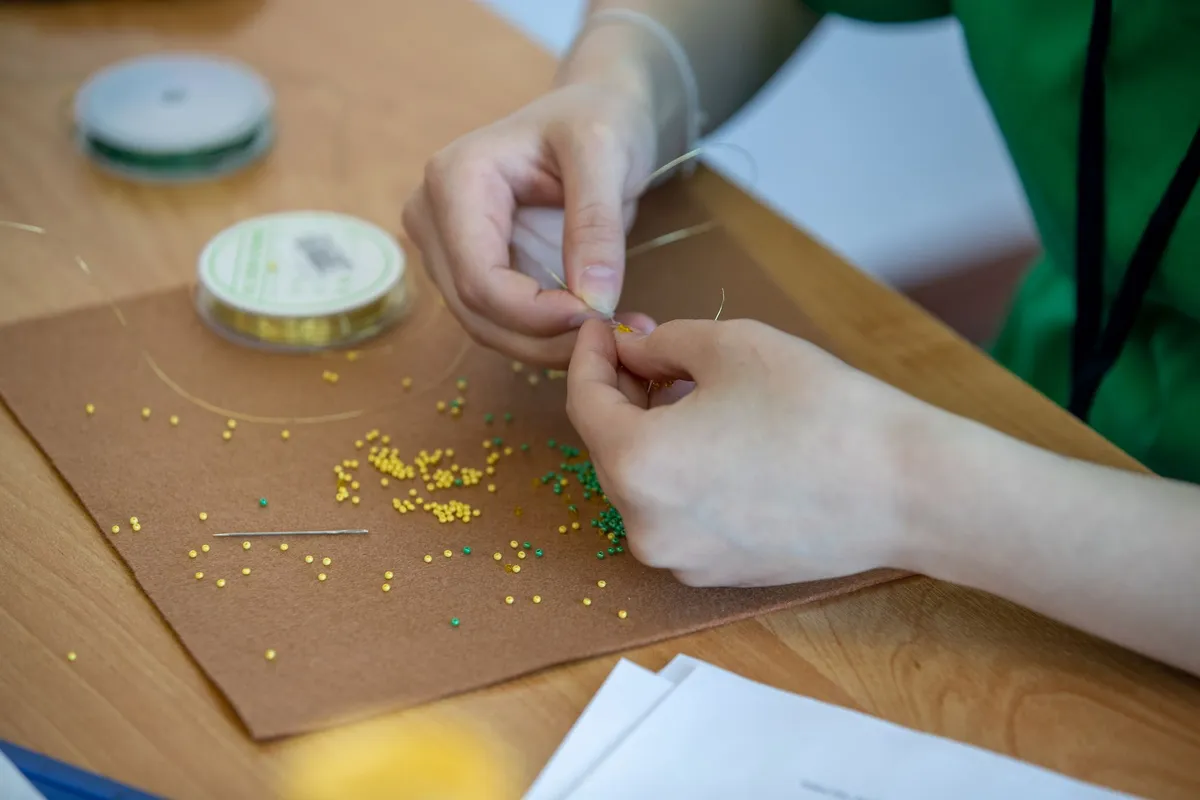
- Threading and lacing. Threading large beads, pasta, or cut-up straws onto a shoelace or piece of string builds precision and bilateral coordination (using both hands together, each doing something different).
- Spray bottle painting or watering. Squeezing a spray bottle trigger to “water” plants or paint with diluted washable paint on paper builds hand strength through an activity that feels like play rather than exercise.
Turning ordinary chores into fine motor practice
Some of the best fine motor practice doesn’t look like an “activity” at all:
- Helping in the kitchen. Stirring batter, snapping green beans, or peeling a hard-boiled egg all combine fine motor practice with a genuine sense of contribution.
- Sorting laundry. Matching socks or sorting small items by color or type is a fine motor task disguised as a household job.
- Setting the table. Placing utensils, folding napkins, and carrying (unbreakable) plates all ask for careful hand control in a low-stakes, useful context.
- Self-dressing. Letting a preschooler manage their own buttons, zippers, and shoes, even when it’s slower than doing it for them, turns a daily routine into repeated fine motor practice.
Signs it’s time to add more structured practice
Everyday activities like the ones above are usually enough on their own, but a few signs suggest a child might benefit from more deliberate, varied fine motor practice: they consistently avoid activities involving small objects, they seem to tire quickly or lose interest fast during hands-on play, or a preschool teacher mentions noticing something worth extra attention. In most cases, though, this is simply a developmental stage that responds well to time, repetition, and playful practice, not a sign that anything needs to be fixed.
For a family who wants a bit of structured, printable practice alongside these everyday activities, the My First Learning Busy Book: Letters, Numbers, Colors & Shapes is a 20-page activity book for ages 2–4 that includes tracing, coloring, and matching activities among its letter, number, color, and shape practice — each of which also happens to exercise the same hand-strength and control skills described above. It’s a reasonable light addition for a family already doing this kind of everyday fine motor play and looking for some printable variety, though the hands-on activities above are the more central way to build these skills at this age.
Keeping it low-pressure
Fine motor development happens gradually and unevenly, and a preschooler who struggles with one activity may excel at another that uses a slightly different grip or motion. The goal at this age isn’t mastery of any single skill — it’s steady, varied practice woven into ordinary days, without turning snack time or getting dressed into a performance to evaluate. A few minutes of genuine engagement with a clothespin, a spray bottle, or a pile of dry beans adds up over weeks in a way that a single structured session rarely matches.
Many of these same activities double as recognition practice — see Letters, Numbers, Colors, and Shapes: Early Learning Activities for Preschoolers for playful ways to fold letters, numbers, colors, and shapes into hands-on play. And for a fuller picture of how fine motor skills fit alongside everything else worth focusing on at this age, see Preschool Activities at Home: A Complete Guide by Age and Skill.
Frequently asked questions
What are fine motor skills, exactly?
Fine motor skills are the small, precise movements made with the hands and fingers — grasping, pinching, squeezing, twisting, and coordinating fingers with the eyes. They’re distinct from gross motor skills, like running or jumping, which use larger muscle groups.
Do I need special toys or tools to build fine motor skills?
No. Most fine motor development happens through ordinary tasks and everyday objects — clothespins, tongs, buttons, playdough, pouring water. Specialized toys aren’t necessary, though some families enjoy them as an occasional addition.
How do I know if my preschooler’s fine motor skills are on track?
There’s a wide normal range at this age, and interest matters more than precision. A child who can pick up small objects, use a spoon reasonably well, and hold a crayon in some kind of grip, even an immature one, is generally developing typically. A pediatrician or preschool teacher is the right person to ask if something feels genuinely off.