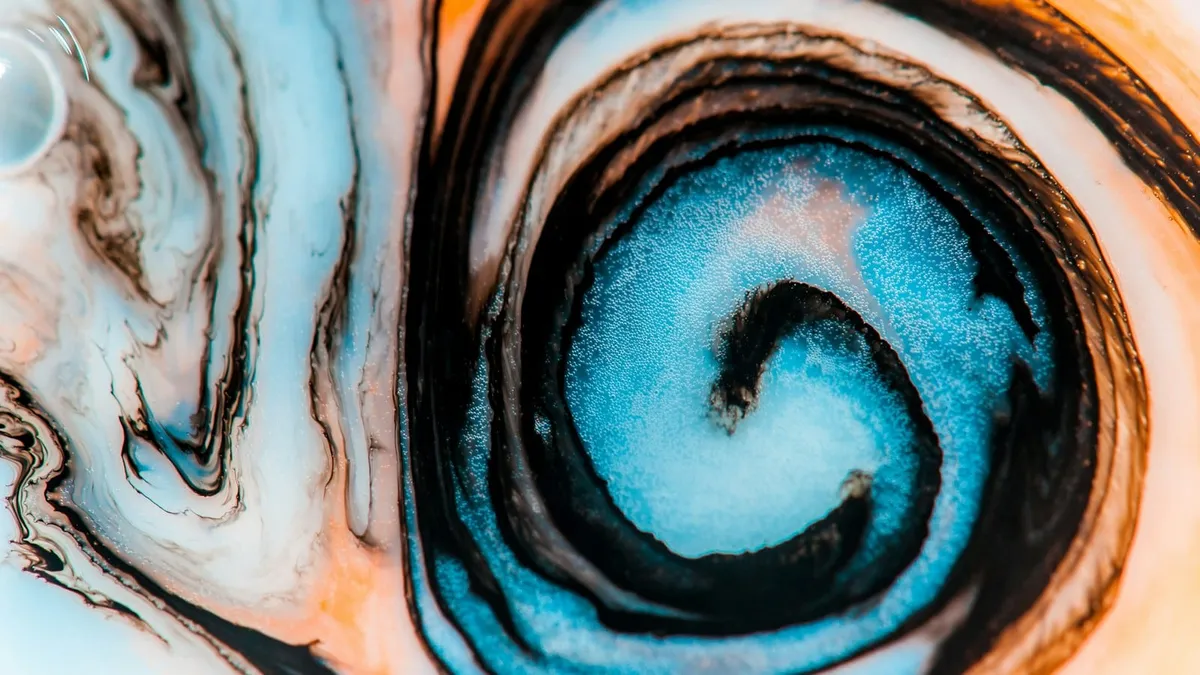
The rainbow milk experiment is one of the most satisfying kitchen science activities for children. You drop a few colors on a plate of milk, touch it with a soapy cotton swab and the colors burst and swirl as if the milk were alive. It takes about five minutes, uses items most homes already have, and gives children a chance to predict, watch and explain.
This guide covers the exact steps, a plain-language explanation, what to do if it fizzles, variations to turn it into a fair test, and how to record results. It is one of five experiments in our roundup of easy science experiments with food coloring; here we go deeper on this one.
What you need
- A shallow plate, pie dish or baking dish with a rim
- Whole milk (about one cup is enough to cover the bottom)
- Liquid food coloring in three or four colors
- Dish soap (regular liquid dish soap works well)
- Cotton swabs or toothpicks
- A tray or plastic tablecloth underneath, and paper towels
Room-temperature milk is fine. Some people find that slightly warmer milk moves a little faster, but a cold plate works too, so this is a good thing to test rather than assume.
Step-by-step instructions
- Cover the bottom of the plate with milk. A thin layer is enough, about a quarter of an inch (half a centimeter). Let the milk settle so it stops moving.
- Add the colors. Put a few drops of each color in different places on the milk. Space them out and do not stir. Keep them near the center so there is room for the swirls.
- Ask for a prediction. Before touching the soap, say “What do you think will happen when the soap touches the milk?” and let your child answer.
- Dip a cotton swab in dish soap. Get the tip well coated.
- Touch the swab to the middle of the milk. Hold it still for a few seconds. Watch the colors rush away from the soap and start to swirl.
- Keep experimenting. Touch the swab in a different place, or dip a second, clean swab in soap and try again. The action slows down after a minute or two.
Why does rainbow milk swirl? The science in plain words
Milk is mostly water, with tiny droplets of fat and some proteins floating in it. When you add a drop of food coloring, it sits on the surface and mostly stays where you put it.
Dish soap does two things. First, it lowers the surface tension of the milk: surface tension is the “skin” that makes the surface of a liquid hold together, and where the soap touches, that skin becomes weaker. Second, soap molecules attach to the fat and protein in the milk and spread out. As they spread, they push the milk, and the colors floating in it, in swirls and streaks. It stops when the soap is evenly spread and there is nothing more for it to push around.
A simple way to explain it to a child: “The soap likes to grab the tiny fat droplets in the milk and run away with them. The colors get pushed along for the ride.”
Because fat matters here, whole milk usually gives the strongest effect. That is a good idea to test.
Predict, observe, explain: a simple worksheet
You do not need a printable. A sheet of paper with this table works well and turns the experiment into a small investigation:
| Question | My prediction | What I saw |
|---|---|---|
| What happens when the soap touches the milk? | ||
| What happens when I touch it in a new spot? | ||
| What happens after a few minutes? | ||
| Why do I think it happened? |
Younger children can draw the plate before and after instead of writing. The goal is to practice noticing and explaining rather than getting the “right” answer.
Five variations that turn it into a fair test
A fair test changes only one thing at a time. Try these one by one:
- Different milks. Compare whole milk, low-fat milk and skim milk. Ask which one will swirl most, and why they think so.
- Plant milks. Try oat, soy or almond milk. Results vary, so record what you see without expecting a specific outcome.
- Warm or cold. Use the same milk cold from the fridge and at room temperature and compare the speed.
- Different soaps. Try two brands of dish soap, or a swab of soap versus a swab of water. The water swab is a good “control” that shows what the soap adds.
- Cream or half-and-half. More fat may make a stronger reaction; check whether your child’s prediction matches.
Fixing rainbow milk that isn’t working
If the swirls are weak, check these common causes:
- The milk is low-fat or skim. Switch to whole milk.
- There is not enough soap on the swab. Dip it a little deeper and let a drop of soap sit on the tip.
- The colors have already mixed. Drop the color in gently without stirring and start with a fresh plate.
- The plate is too deep or too small. A wide, shallow plate gives the colors room to move.
- The soap is watered down. Use it full strength on the swab.
Extend it: print your rainbow
If the swirls look beautiful, you can try to keep a record of them. Lay a piece of paper towel or coffee filter gently on the surface, lift it off and let it dry. Some of the color usually transfers, which gives you a swirled keepsake. Results depend on the paper and the colors, so treat it as an experiment.
Keep the learning going while you wait
After the swirls stop, the plate is done: children usually want a new activity. A screen-free printable is a good next step. The Ultimate Kids’ Activity Book is a printable PDF for ages 4 to 8 with puzzles, mazes, matching games and pattern activities that are a calm follow-up after a messy experiment.
For a wider range of ideas by age, see our guide to science experiments for kids by age. If you are looking for a seasonal twist, the potion and cabbage-color experiments in Halloween science experiments for kids use the same “watch it change” idea. And for the classic fizzing reaction, do not miss the baking soda and vinegar volcano.
Cleaning up
Pour the used milk down the sink with plenty of water; do not keep it or feed it to pets. Wash the plate with warm soapy water, wipe the tray and wash hands. Food coloring can stain skin and clothes, so wear an apron or old shirt.
Bringing it together
The rainbow milk experiment works because a few common items behave in a surprising way. It is fast, cheap and easy to repeat, which makes it ideal for asking “what if?” questions. Set up a plate, ask your child to predict what will happen, and then change one thing at a time to see what changes. That habit of noticing and testing is what turns a fun five minutes into real science.