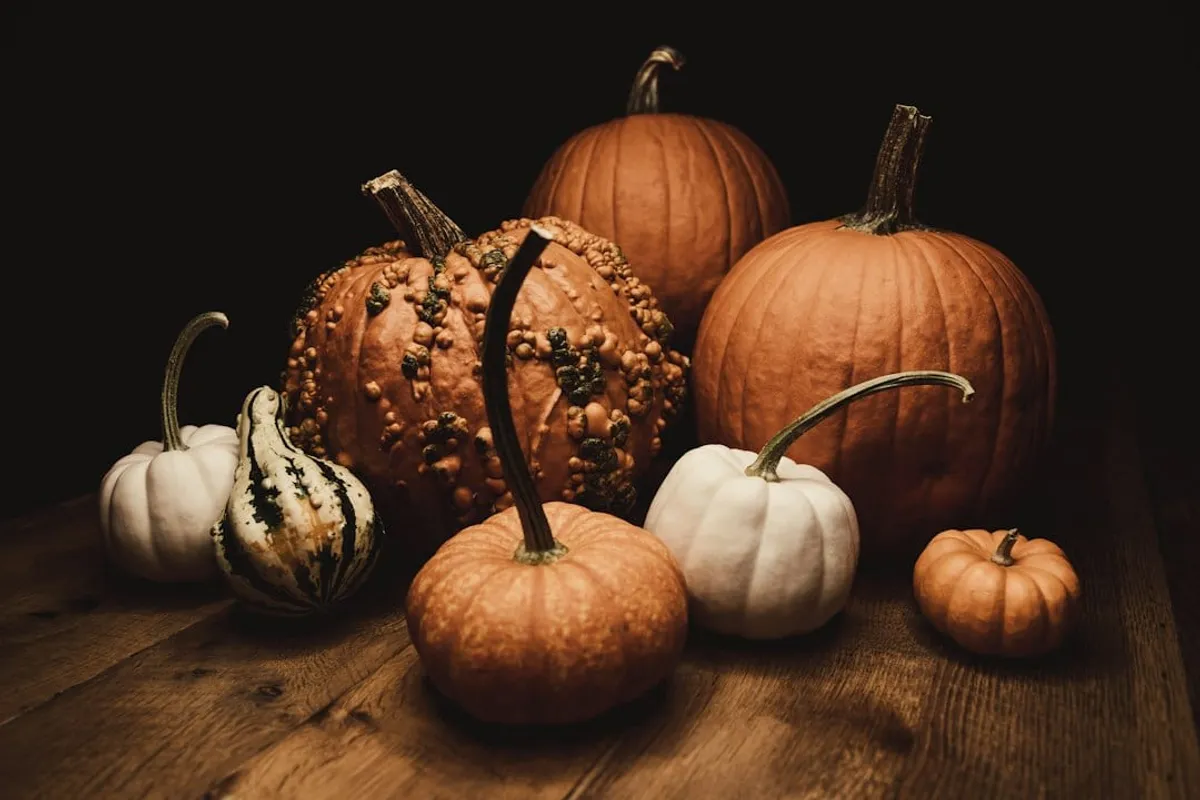
Pumpkins show up everywhere in October, and they make a naturally appealing autumn toy for toddlers: round, colorful, easy to grip, and a little different every time. Pumpkin activities for toddlers do not need to be elaborate. A few mini pumpkins from the grocery store or a pumpkin patch are enough for an afternoon of rolling, sorting, painting and simple sensory play.
This guide has eight toddler-friendly pumpkin ideas, from the simplest (just handling one) to a supervised seed-scooping activity, plus safety notes for hands-on play with a real pumpkin.
Before you start: choosing and prepping pumpkins
- Pick mini or small pumpkins. They are easier for toddler hands to hold, roll and carry than a large carving pumpkin.
- Wash the outside with water before bringing pumpkins indoors, since they travel through fields, stores and car trunks.
- Check the stem. Some stems are dry, sharp or loose; trim or remove a stem you are not sure about before handing a pumpkin to a toddler.
- Decide in advance whether today’s activity involves cutting. If it does, an adult should do all cutting; toddlers only handle the finished, open pumpkin under supervision.
1. Roll and carry (ages 1 and up)
The simplest pumpkin activity is also often the favorite: let your toddler pick up, carry, hug and roll a mini pumpkin. Set a few on a rug or the grass and let your child push them, chase them and compare which one rolls farther. There is no wrong way to do this, and it is a good activity for children who are just starting to enjoy cause-and-effect play.
2. Sort pumpkins by size or color (ages 2 and up)
Gather mini pumpkins in a few sizes and colors, orange, white and green if you can find them, and let your toddler sort them into bowls or baskets. You can start with just two groups, “big” and “small,” and add more categories as your child is ready. For more sorting and grouping ideas at this age, see our guide to fine motor activities for preschoolers.
3. Paint a mini pumpkin (ages 2 and up, with help)
You need: mini pumpkins, washable non-toxic paint, paper plates for the paint, and paintbrushes or cotton swabs.
Steps:
- Set a mini pumpkin on a tray or newspaper to contain drips.
- Let your child dip a brush or swab into paint and cover the pumpkin however they like.
- Let it dry completely on the tray before moving it.
Tip: For younger toddlers, painting with fingers works just as well as a brush. Use an old shirt and expect some paint on hands, which washes off easily.
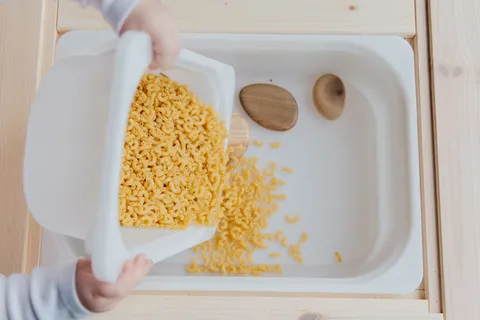
4. Pumpkin sensory bin (ages 1 and up, supervised)
You need: a shallow plastic bin, a filler such as dried beans, chickpeas, shredded paper or oats, a few mini pumpkins, scoops and cups.
Steps: Fill the bin a few inches deep with your chosen filler, nestle in the mini pumpkins, and let your child pour, scoop, bury and “find” the pumpkins. This is a good indoor activity on a cold or rainy fall day. Choose a coarser filler for children who still mouth objects, and stay within arm’s reach throughout.
5. Pumpkin seed scooping (ages 2 and up, adult does the cutting)
You need: one pumpkin cut open by an adult, a large bowl, and a big spoon.
Steps: After an adult opens the pumpkin and removes any tools, let your toddler scoop the loose, stringy insides into a bowl using a spoon or their hands. Many toddlers enjoy the squishy texture even if they do not want to touch it with bare hands at first, which is completely fine. Supervise closely, since loose seeds are a choking hazard for children who still put things in their mouths, and wash hands and surfaces afterward.
6. Pumpkin stacking and building (ages 1 and up)
Line up mini pumpkins by size, from smallest to biggest, or try stacking two or three (flat side down works best). This is a simple way to practice comparing sizes and builds hand-eye coordination without any preparation.
7. Pumpkin patch counting (ages 2 and up)
Gather several mini pumpkins and count them together as you set them in a row: “One pumpkin, two pumpkins, three pumpkins.” Toddlers often enjoy repeating number words even before they fully understand counting, and physically moving an object for each number helps build the connection. Our guide to activities for toddlers and two-year-olds at home has more simple counting and matching ideas for this age.
8. Pumpkin stamping with paint (ages 2 and up)
You need: a mini pumpkin cut in half by an adult (or a large potato as a substitute), washable paint on a paper plate, and paper.
Steps: Dip the cut side of the pumpkin half into paint and press it onto paper to leave a print. Toddlers can hold the pumpkin half with help and press it themselves. This combines the sensory fun of pumpkins with a keepsake craft.
How to match pumpkin play to your toddler’s age
| Age | What tends to work well | What to expect |
|---|---|---|
| 12–18 months | Rolling, carrying, simple sensory bin | Short attention, lots of dropping |
| 18–24 months | Sorting by size, stacking, counting | Following simple one-step directions |
| 2–3 years | Painting, seed scooping (supervised), stamping | Longer focus, more independent participation |
These ranges are guides only; follow your own toddler’s interest and comfort level, and stop or simplify any activity that frustrates them.
For older children, our pumpkin science experiments for kids add measuring, sprouting and simple investigations.
Talking through pumpkin play
You do not need a lesson plan. A few simple comments turn pumpkin play into language practice:
- Size: “This pumpkin is big. That one is tiny.”
- Color: “This pumpkin is orange. This one is white.”
- Texture: “The seeds feel slippery. The outside feels smooth.”
- Counting: “One, two, three pumpkins in a row.”
For more ways to build vocabulary through everyday play, our guide to sensory activities for toddlers at home covers safe textures and materials beyond pumpkins, including kitchen items you likely already have.
Add a little structure with a busy book
Pumpkin play naturally touches on colors, sizes and counting, the same early skills a printable can reinforce on a quieter day. The My First Learning Busy Book is a 20-page printable for ages 2 to 4 with tracing, coloring, counting and matching pages covering letters, numbers, colors and shapes, a good pairing for a rainy day between outdoor pumpkin sessions.
If you cannot get real pumpkins
Paper pumpkins cut from orange construction paper work for sorting, counting and simple gluing crafts if fresh pumpkins are not available where you live. A felt or fabric pumpkin toy is a reusable option for sensory bins and stacking games year after year.
Bringing it together
Pumpkins are an easy, low-cost way to fill an autumn afternoon with hands-on play. Start with the simplest option, rolling and carrying, and add painting, sorting or a sensory bin as your toddler shows interest. Stay close during any scooping activity, keep small loose parts away from children who mouth objects, and let your child lead the pace.