Watch a toddler squish dough, splash in a bowl of water or shake a homemade rattle and you’ll see it: they’re learning. Sensory activities for toddlers turn everyday materials into experiments in texture, sound and movement, and they support early language, hand strength and focus, all while children are having a good time.
This guide gives you simple sensory ideas you can set up in minutes, with safety notes and mess-control tips for real homes.
Safety first
Toddlers explore with their hands and mouths, so a few rules matter more than any activity:
- Stay within arm’s reach at all times, especially with water, which can be a drowning risk even in very small amounts.
- Avoid small parts. Anything that fits through a toilet-paper tube is a choking hazard for many toddlers.
- Skip risky fillers such as dried beans, uncooked rice, water beads and small beads for children who still mouth objects.
- Check for allergies. Flour, oats, nut oils, and dairy can all be allergens.
- Choose taste-safe options if your child still tries to eat things.
If you are unsure whether an activity suits your child, check with your pediatrician.
Water play
Water tub. A shallow tub with cups, a sponge and a spoon lets toddlers pour, squeeze and splash. Place it on a towel or in the bathtub.
Bubbly water. Add a small squirt of baby-safe soap and whisk it into bubbles.
Sink and float. Offer a small selection of large items such as a plastic cup, a wooden spoon and a rubber duck to see what floats.
Ice tray play. Add large ice cubes to a tub of water and let toddlers watch them melt. Ice is cold and can be a choking hazard, so use large cubes and supervise closely.
Touch and texture
Cloud dough. Mix about eight parts flour with one part cooking oil until it’s soft and crumbly like damp sand. It isn’t meant to be eaten, so use it only with children who no longer put everything in their mouths, and skip it if anyone in the home has a wheat allergy.
Cooked pasta bin. Cooked, cooled spaghetti (with a drop of food coloring if you like) is squishy and safe to taste.
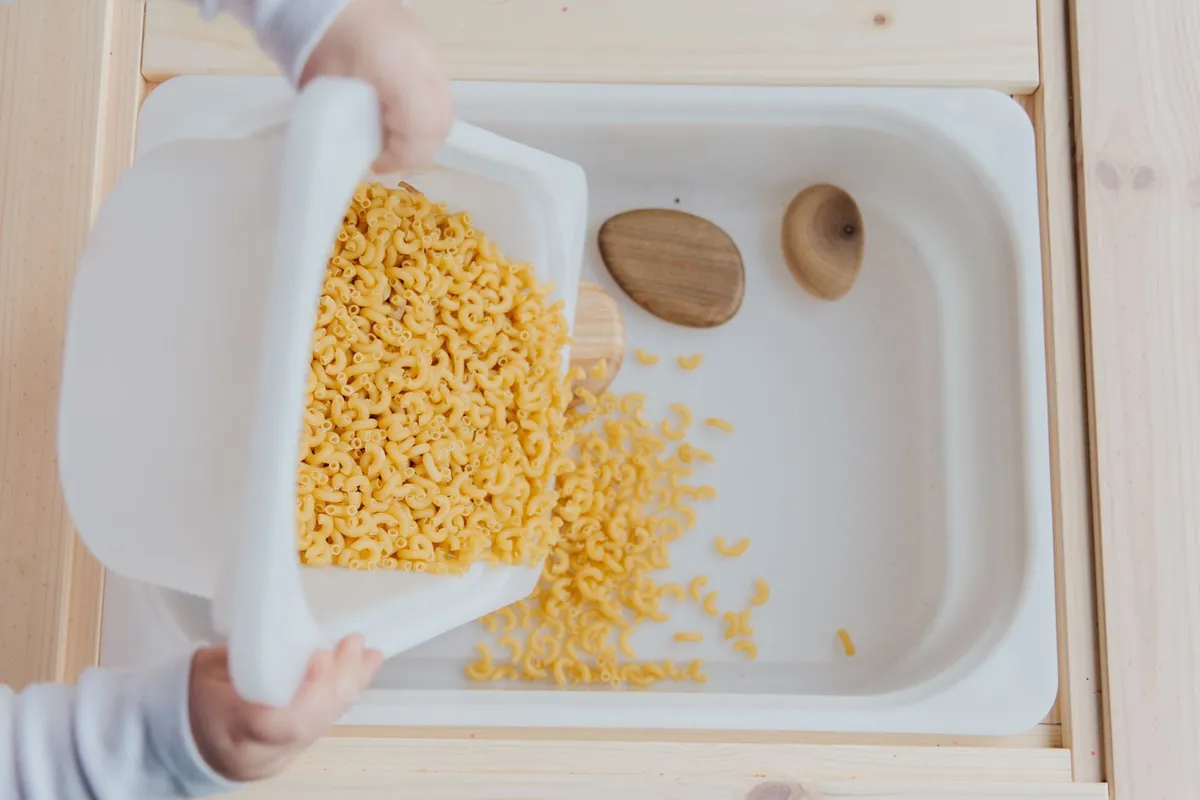
Oat sensory tray. Dry oats with a few scoops and cups make a soft, quiet bin.
Texture walk. Lay out different materials on the floor — a towel, a piece of felt, a bubble-wrap sheet (supervised), a foam mat — and let children walk or crawl across.
Play-dough time. Rolling and squeezing play-dough helps hand strength. Use large cookie cutters and rolling pins.
Sound and movement
Shaker bottles. Fill a small plastic bottle with a few large, safe items, glue and tape the cap on securely, and let toddlers shake and roll. Always seal it firmly so nothing can come out.
Pots-and-pans band. A wooden spoon on a pot makes a fun drum.
Scarf dancing. Toss lightweight scarves into the air and watch them float.
Rhythm walk. March to a beat and change tempo: slow, fast, tiptoe.
Sight and light
Sensory bottles. Fill a clear plastic bottle with water, a few drops of food coloring and glitter, and seal it with strong glue or tape. Turning it upside down is a calming visual for many children.
Flashlight play. In a dim room, shine a flashlight on the wall and let toddlers chase the beam.
Window art. Stick clear contact paper sticky-side-out to a window and let children stick on tissue paper or leaves.
Nature sensory play
Leaf pile. Fresh, dry leaves to crunch and toss.
Mud kitchen. Outdoors with dirt, water, pots and spoons.
Sand tray. A shallow tray of clean sand with cups and scoops.
Grass and flower touch. Feel different textures during a walk, naming each: smooth, bumpy, soft.
Keeping the mess manageable
- Use a defined space: a baking sheet, a large towel, a shower curtain on the floor, or the bathtub.
- Give a small amount. A cup of material feels like a lot to a toddler.
- Prepare the cleanup first: towel, damp cloth and a bucket for wet items within reach.
- Dress for the job: old clothes or just a diaper.
- Set an endpoint: “When the music stops, we wash hands.”
How long and how often
Five to fifteen minutes is a typical attention span for a toddler on one sensory activity, and shorter is fine. Repeating the same activity across days is beneficial: toddlers keep discovering new things in the same materials.
Adding early learning
Sensory play is a natural time for language. Describe what your child does: “You’re squeezing the sponge. It’s wet.” Use words such as cold, soft, sticky and bumpy, and ask simple questions.
When you’re ready for a bit of structured practice too, My First Learning Busy Book: Letters, Numbers, Colors & Shapes is a 20-page printable for ages 2 to 4 with tracing, coloring, counting and matching, which you can dip into for a few minutes at a time.
For a wider range of toddler-friendly ideas, browse our guide to activities for toddlers and two-year-olds at home.