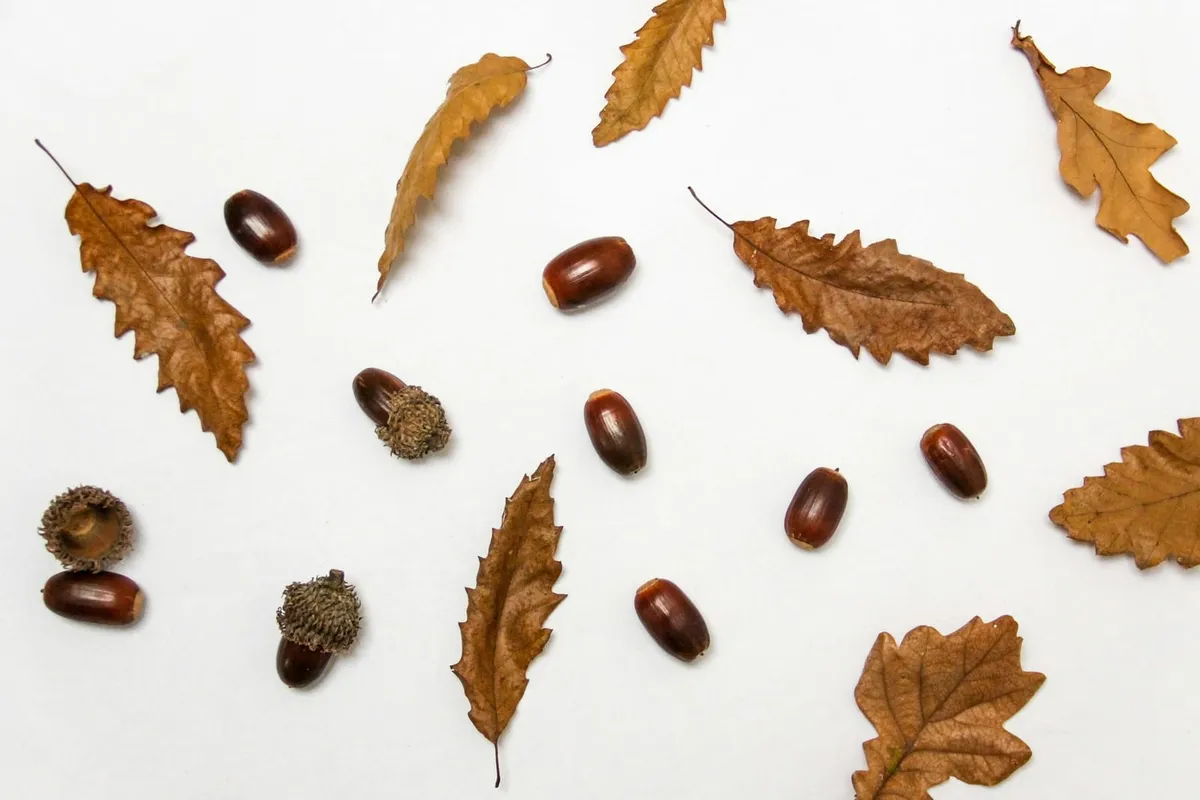
A sensory bin is one of the easiest ways to give a young child a long stretch of calm, hands-on play. You fill a container with something fun to dig through, add a few tools and small objects, and step back. Fall sensory bin ideas are especially easy because autumn does much of the shopping for you: leaves, acorns, mini pumpkins, apples and pinecones are everywhere.
This guide shows how to set up a bin, which bases and scoops work for different ages, eight ready-to-use fall themes, and the safety rules that matter most for toddlers and preschoolers. If you’d like more ideas beyond the bin, see Sensory Activities for Toddlers at Home.
What you need for a sensory bin
You need very little:
- A container. A shallow plastic tub, a baking tray, a roasting pan or a cardboard box lined with a bag all work. A wider container is easier for toddlers; a deeper one keeps spills down.
- A base. This is the material your child digs through (see the table below).
- Tools. Spoons, scoops, small cups, tongs, funnels and bowls turn digging into pouring, transferring and measuring.
- A few themed objects. These make the bin feel like fall.
- A mat or sheet to catch what escapes.
Choosing a base
Different bases suit different ages and different levels of tolerance for mess. Use this table as a guide.
| Base | Good for | Watch out for |
|---|---|---|
| Dry rice or lentils | Scooping and pouring; preschoolers | Small and easy to spill; not for children who mouth everything |
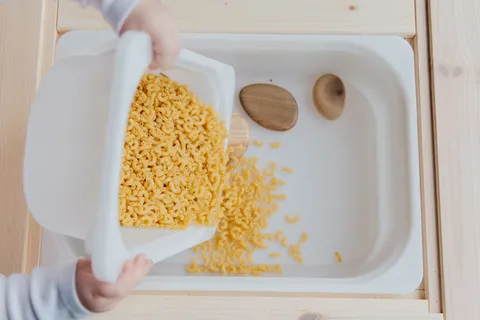
| Dry pasta shapes | Scooping, counting, sorting; preschoolers | Choking hazard for the youngest; contains wheat |
| Rolled oats | Soft feel and a mild fall smell; toddlers (with supervision) | Contains gluten if not certified free of it; can be dusty |
| Shredded paper or crinkle paper | Toddlers who still mouth things; no food | Can be messy; may stick to damp hands |
| Dried leaves | Crunching and crumbling; all ages | Brittle, so leaves break into small pieces; check for dampness and insects |
| Cotton balls or pom-poms | Soft, large items for toddlers | Pom-poms can be a choking hazard when small |
Dried corn kernels, popcorn kernels and nuts are sometimes used for fall bins, but they are small, hard and, for nuts, a common allergen. Skip them for toddlers and any child with allergies.
Eight fall sensory bin ideas
1. Leaf crunch bin. Fill a tub with dried leaves of different shapes and sizes, add a small rake or a wooden spoon and let your child crush, sort and scoop. It is the simplest bin on the list and works even for toddlers.
2. Pumpkin patch. Use rolled oats or shredded brown paper as “soil”, add mini pumpkins and gourds, and give your child a small scoop or toy shovel to “harvest” them. Count the pumpkins or sort them by size.
3. Apple orchard. Fill a bin with shredded green and red paper and hide plastic or real small apples in it. Add a small basket and tongs so your child can collect them. Older preschoolers can sort apples by color.
4. Acorn and pinecone scoop. Collect acorns and pinecones on a walk, wash them and let them dry, then add them to a bin with scoops and small bowls. Check acorns for holes or mold and keep this one for children who no longer mouth objects; raw acorns are not for eating.
5. Orange rice. Color rice with a little food coloring and a splash of vinegar in a zip bag, spread it on a tray to dry completely, then pour it into a bin with mini pumpkins and cups. Coloring the rice ahead of time is a fun activity in itself.
6. Autumn letter or number hunt. Hide plastic or paper letters or numbers in a leaf bin and ask your child to find the ones in their name or to find a particular number. This is a low-pressure way to practice recognition; see Early Learning Activities for Preschoolers for the “why”.
7. Scarecrow stuffing. Use straw-colored shredded paper, a few old gloves or a hat, and let your child “stuff” a paper scarecrow shape or a small bag.
8. Cozy fall kitchen. Add pots, spoons and mini pumpkins to a bin of rolled oats for pretend “soup”. Cinnamon sticks can add scent, but keep them out of little mouths and eyes.
How to set up a bin in five minutes
- Put the mat down first, then the bin.
- Add the base about one to two inches (three to five centimeters) deep so scoops have something to dig.
- Hide or place the themed objects in the base.
- Put one or two tools next to the bin. Too many tools can make play scattered.
- Sit nearby, describe what your child is doing (“you scooped three pumpkins”) and let them lead.
Turning play into learning (without turning it into a lesson)
Sensory bins build several skills quietly, and you don’t need to point them out:
- Fine motor skills: scooping, pinching, pouring and using tongs all strengthen the small hand muscles children use later for writing. See Fine Motor Activities for Preschoolers for more ideas.
- Early math: counting pumpkins, comparing “more” and “less” and sorting by size or color.
- Language: describing textures (crunchy, soft, rough), following simple directions and pretend play.
- Focus and calm: many children find the repetitive, gentle movement of scooping soothing.
If your child is between two and four, a busy book can add a bit of structured practice. The My First Learning Busy Book is a 20-page printable for ages 2 to 4 with tracing, coloring, counting and matching pages that pair naturally with a bin themed around letters, numbers, colors and shapes.
Safety checklist
- Supervise every session. Sensory bins are not independent play for toddlers.
- Avoid small parts and hard items (nuts, dried corn, beads, small pom-poms) for children who still put things in their mouths.
- Check for allergies before using wheat (pasta), oats, nuts or other foods in a bin, and remember that some children with allergies react to touching as well as eating.
- Inspect natural items. Wash and dry leaves, acorns and pinecones, and throw away anything with mold, insects or damp spots.
- Keep the bin low and stable so it cannot tip onto a child, and keep water play on a waterproof mat.
- Store dry materials in a sealed container and check them for damp or a musty smell before reusing.
Ideas for the day after
If your child loved the bin, you don’t need to invent something new tomorrow. Try a mini version in a baking tray, take the leaves outside for a “leaf soup” in the garden, or read a fall picture book and ask your child to find the same objects in the bin. For more ideas about how to arrange your day around short activities, our Activities for Toddlers and Two-Year-Olds at Home guide has a simple structure. And if your child enjoys a seasonal theme, the ideas in Halloween Activities for Kids at Home work well in the last week of October.
Bringing it together
A fall sensory bin doesn’t have to be pretty or perfectly themed to be worth doing. Choose a base that suits your child’s age, add a few autumn objects and a scoop, keep an eye on small parts and allergies, and enjoy watching your child explore. Ten minutes of scooping and pouring is a good use of an afternoon.