The lava lamp experiment is a favorite kitchen science activity because it looks like magic and is easy to repeat. Colored blobs rise through a layer of oil, pause at the top and sink again, over and over, just like a real lava lamp, but with no heat or electricity. Children get to see two big science ideas at once: some liquids do not mix, and gas bubbles can lift things.
This guide covers the ingredients, three different methods, a simple explanation of what is happening, and what to do when it does not work the first time.
Ingredients and equipment
- A clear plastic bottle or tall glass (a 500 ml / 16 oz bottle is a good size)
- Water
- Vegetable oil (baby oil also works and is clearer)
- Liquid food coloring
- A bubble maker: effervescent tablets, or baking soda and vinegar, or table salt
- A tray, a funnel and paper towels
- Optional: a flashlight to shine up through the bottle
Method 1: The classic fizzing-tablet lava lamp
- Fill the bottle about a quarter full with water.
- Add oil almost to the top, leaving a few centimeters of space. Use a funnel if you have one. Watch the oil settle on top of the water.
- Wait a minute until the two layers are clear and separate.
- Add 8–10 drops of food coloring. The drops pass through the oil and color only the water. Ask your child why they think that happens.
- An adult breaks a tablet into a few pieces and drops one piece in.
- Watch the lava. Bubbles of gas carry colored water up through the oil. At the top, the gas escapes and the colored water sinks back down.
- When it slows, add another piece of tablet to start it again.
Method 2: The baking soda and vinegar lava lamp
This version uses kitchen staples instead of tablets and lets children control the action.
- Put three or four spoonfuls of baking soda in the bottom of a tall glass.
- Fill the glass about three-quarters full with oil.
- Mix food coloring into a small cup of vinegar.
- Drip the colored vinegar into the glass with a dropper, straw or small spoon.
- Watch each drop sink through the oil, hit the baking soda, fizz and rise back up with bubbles attached.
This one is slower and more controlled, which suits younger children who like to decide when the next drop goes in. It uses the same reaction as our baking soda and vinegar volcano, just in slow motion.
Method 3: The salt lava lamp
- Fill a glass about two-thirds with water and add food coloring.
- Pour in a layer of oil a few centimeters thick.
- Sprinkle a teaspoon of salt on top of the oil.
- Watch blobs of oil sink with the salt, and then float back up as the salt dissolves in the water.
The effect is gentler, but it is a good comparison: children can see that the oil goes down with the salt and comes back up on its own.
The science: why oil and water don’t mix
Two ideas make the lava lamp work.
Density. Density is how much “stuff” is packed into a certain amount of space. Oil is less dense than water, so it floats on top. That is why the layers separate even after you shake the bottle.
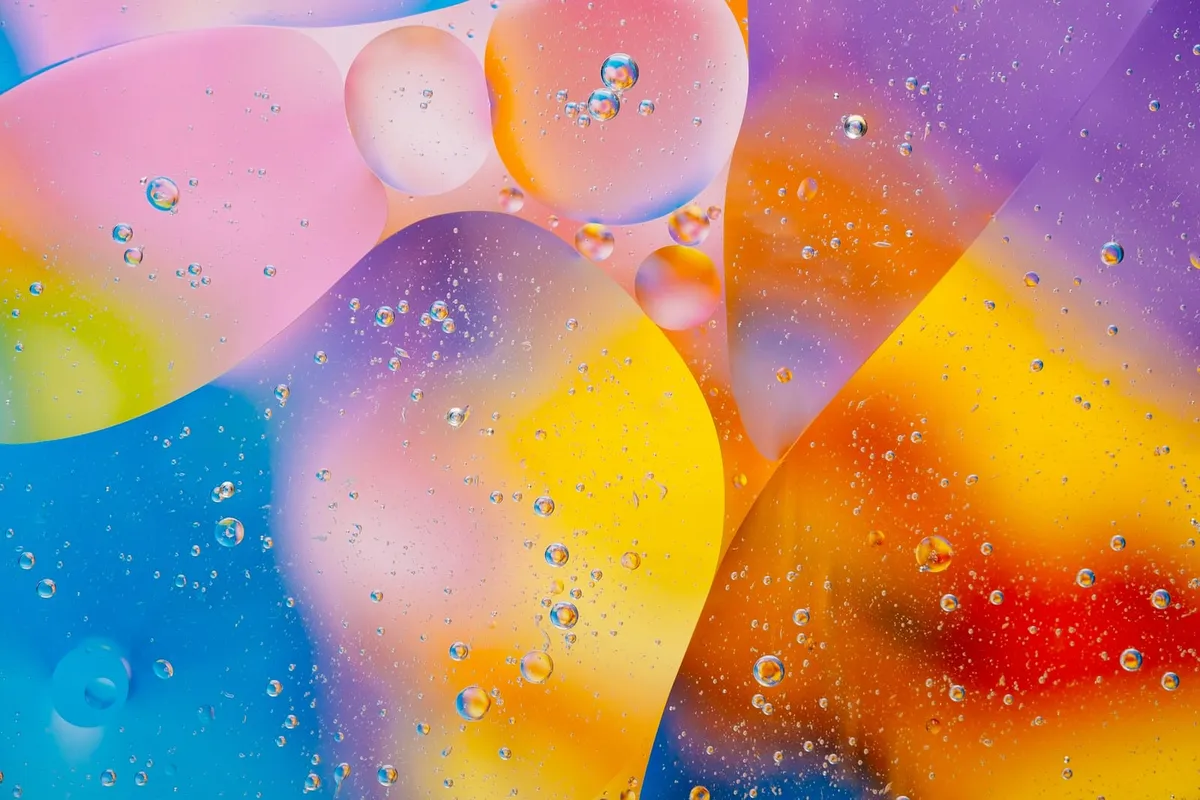
Oil and water don’t mix. Water molecules are strongly attracted to each other and don’t mix easily with oil molecules, so the oil stays in its own layer. Food coloring is water-based, so it passes straight through the oil and joins the water.
Gas bubbles lift the water. The tablet, or baking soda and vinegar, produces carbon dioxide gas. Bubbles of gas cling to bits of colored water and carry them up through the oil. At the surface the gas escapes into the air, the water is heavy again and it sinks.
A child-friendly version: “The oil is lighter, so it sits on top. The color only likes water. The bubbles give the water a ride to the top, then it falls back down.”
Troubleshooting a lava lamp that isn’t working
- The colors mixed into the oil. Some food colorings are gel or oil-based. Use liquid, water-based coloring.
- Nothing is moving. The tablet may be old, or the baking soda may have been used up. Add a fresh piece or more baking soda.
- It fizzed too fast and overflowed. Use smaller tablet pieces and leave more space at the top.
- The layers look cloudy. Wait a few minutes. Shaking or pouring fast mixes tiny oil droplets into the water, and they take time to separate.
- The blobs are small. Try a narrower, taller bottle, which gives bubbles a longer path to rise.
Make it an investigation
Children learn more when they change one thing and compare. Try:
- More or less oil: Does a thicker oil layer make the blobs slower?
- Warm or cold water: Does the tablet fizz faster in warm water?
- Whole or broken tablet: Which gives a longer show?
- Different oils: Compare vegetable oil and baby oil.
Record results in a simple table:
| What I changed | My prediction | What happened |
|---|---|---|
For more experiments in this style, sorted by age, see our guide to science experiments for kids by age.
Adapting the lava lamp by age
- Ages 3–4: Use the baking soda and vinegar method in a plastic cup, with an adult holding the vinegar. Let your child squeeze the dropper and describe what they see: “up,” “down,” “bubbles,” “blue.”
- Ages 5–6: Add a prediction before each step and try the flashlight in a dark room. Ask them to draw the bottle before and after.
- Ages 7–9: Run one of the fair tests above, time how long the lava keeps moving, and write results in the table.
- Ages 10 and up: Look up the densities of water and vegetable oil together, and discuss why the salt makes oil sink for a while and then lets it float back up.
Clean-up
Do not pour oil down the sink, because it can build up in pipes. Let the bottle settle, pour off the water carefully, and put the oil in a sealed container in the trash or take it to cooking-oil recycling if your area offers it. Wash the bottle with hot soapy water.
Keep the kitchen science going
If your child loved watching colors move, the rainbow milk experiment is a natural next try, and our list of easy science experiments with food coloring has more. For a place to record them, My Science Lab: Experiment Journal for Kids is a 25-page printable for ages 5 to 9 with 10 kitchen experiments, including a Homemade Lava Lamp, plus materials lists and pages to draw and record results.
Bringing it together
The lava lamp experiment shows children that liquids have different densities and that gas bubbles can move things, all in a bottle on the kitchen table. Start with the fizzing-tablet version for the big effect, try baking soda and vinegar for a slower show, and then let your child choose one thing to change and test. Keep the tablets with an adult, keep the oil on the tray, and enjoy the lava.