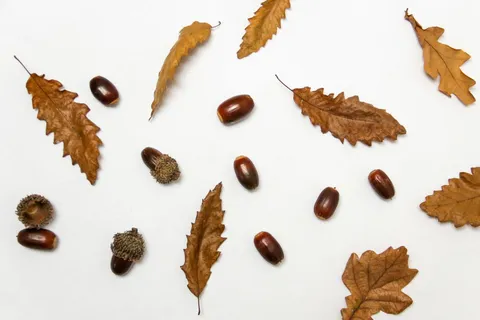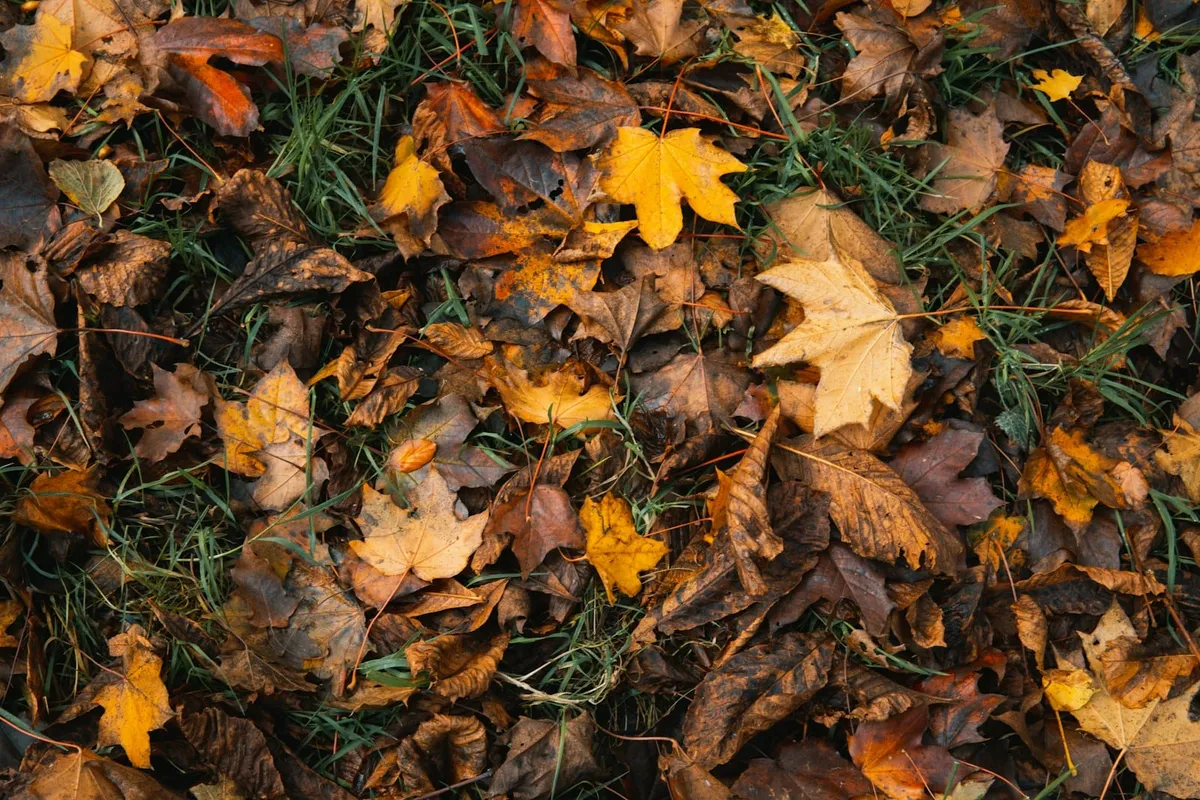
Autumn hands toddlers a free art supply: leaves. They crunch, they change color, they come in every size and they can be carried in a basket, dropped from a height or pressed onto sticky paper. Leaf activities for toddlers need almost no preparation, cost nothing and give little ones plenty to look at, touch and talk about.
This guide has eight simple ideas, from the easiest (a walk with a basket) to a small craft. It also covers safety with natural materials, because toddlers explore the world with their hands and mouths. If you prefer to stay inside on a rainy day, the ideas also work with leaves you have collected earlier.
Before you start: collect and check your leaves
- Choose a dry day and take a bag or basket.
- Pick up leaves that look clean and dry. Leave behind anything moldy, slimy, very wet, or covered in dirt or droppings.
- Avoid plants you cannot identify as harmless, and any plant you know can irritate skin in your area, such as poison ivy or nettles.
- Shake off insects and let leaves dry on a towel for an hour or two before using them indoors.
- Wash your child’s hands after playing.
1. Leaf hunt with a basket (ages 1 and up)
This is the simplest activity and often the best. Give your child a small basket or bag and go for a walk. Name colors and shapes as you go: “This one is yellow and big. Can you find a little red one?” Let your child pick, carry and drop leaves as they like. There is no right way to do it.
Ideas to add: a “find something red” game, a leaf that is bigger than your hand, or one that is smaller than your thumb. For more outdoor ideas, see our guide to outdoor activities for kids at home.
2. Sort leaves by color, size or shape (ages 2 and up)
Lay out two or three paper plates or bowls and let your child put leaves into them. You can label the plates with a color dot: one red, one yellow, one brown. Sorting is one of the earliest ways children practice grouping and comparing.
Make it easier or harder: For a younger toddler, use only two very different colors. For an older toddler, try “big” and “small” or “smooth” and “crinkly”.
3. Crayon leaf rubbings (ages 2 and up, with help)
You need: flat, dry leaves, thin paper, and crayons with the paper peeled off.
Steps:
- Put a leaf on the table with its veins facing up.
- Place a sheet of thin paper over it.
- Rub the side of a peeled crayon across the paper. The leaf shape and veins will appear.
- Try different leaves and colors and compare the patterns.
Tip: A piece of tape at the corners keeps the paper from sliding. Younger toddlers may just scribble, which is fine; the rubbing pattern is a bonus.
4. Sticky-paper leaf collage (ages 1 and up)
You need: clear self-adhesive paper (contact paper) or wide tape, a few leaves and small petals if you like.
Steps:
- Tape a sheet of contact paper to a table or window with the sticky side facing out.
- Let your child press leaves onto it.
- Cover with a second sheet or a layer of clear tape if you want to keep it, and hang it in the window so the light shines through the colors.
This activity has almost no mess and works well for children who dislike glue on their fingers. It is also a good way to practice pinching and pressing.
5. Leaf stamping with washable paint (ages 2 and up)
You need: leaves with clear veins, washable non-toxic paint, a paper plate for the paint and paper for printing.
Steps: Brush a thin coat of paint onto the underside of a leaf, press it paint-side down onto paper and lift it off carefully. Toddlers may press hard or smear, which is fine. An adult can hold the paper still. Use washable paint and an old shirt, and wash hands afterwards.
6. Crunch, stomp and jump (ages 1 and up)
Sometimes the best leaf activity is a big pile of leaves. Rake or gather a pile, then let your child stomp, kick and toss the leaves. Encourage them to listen: “What sound does it make?” Check first that the pile has nothing sharp, wet or dirty hiding in it, and keep it away from roads and puddles. Older toddlers may enjoy hiding a soft toy in the pile and finding it.
7. Leaf soup and water play (ages 2 and up)
Fill a shallow tub or large bowl with a few inches of water, add leaves, a spoon and a cup, and let your child stir a pretend soup. This is a good outdoor activity on a mild day. Empty the water afterwards and never leave a child alone near water, even a shallow tub. For a dry version, see our fall sensory bin ideas, which include a leaf crunch bin and other autumn themes.
8. Paper leaf butterfly (ages 3 and up)
You need: two leaves of similar size, a sheet of paper, glue stick, a twig or a drawn line for the body, and crayons.
Steps: Glue the leaves onto the paper side by side, tips pointing outward, to make two wings. Draw or glue a thin body between them and add antennae with a crayon. Older toddlers can decorate the wings with dots or stickers. This is a small craft that combines gluing, pressing and drawing, and it can hang on the fridge.
How to make leaf activities work with different ages
| Age | What tends to work well | What to expect |
|---|---|---|
| 12–18 months | Carrying leaves, crunching, sticky-paper collage | Short sessions and lots of dropping |
| 18–24 months | Leaf hunt with a basket, stomping in a pile | Following simple directions with help |
| 2–3 years | Sorting, crayon rubbings, leaf stamping | Longer focus and more choices |
| 3–4 years | Leaf butterfly, matching leaves to colors, counting | More independent making |
These ranges are guides only. Children develop at different speeds, so follow your child’s interest and skip anything that frustrates them.
Talking about what you see
You do not need to teach a lesson. A few short comments turn a leaf walk into language practice:
- Colors: “That leaf is yellow. This one is red.”
- Sizes: “This leaf is big. That one is tiny.”
- Textures: “This one feels smooth. This one is crunchy.”
- Actions: “You picked it up. You put it in the basket.”
Repeating simple words as your child plays is one of the most natural ways to build vocabulary. For more ideas for this age, our guide to activities for toddlers and two-year-olds at home shows how to build the day around short, hands-on activities, and sensory activities for toddlers at home has more ways to explore textures safely.
Add a little structure with a busy book
Leaves are a natural way to practice colors, shapes and counting: “Let’s find three yellow leaves.” If your child is between two and four and enjoys pencil-and-paper activities, a printable can add a quiet next step. The My First Learning Busy Book is a 20-page printable for ages 2 to 4 with tracing, coloring, counting and matching pages covering letters, numbers, colors and shapes.
Rainy-day and indoor leaf ideas
If you cannot get outside, you can still enjoy leaves:
- Collect a few leaves on a dry day and keep them in a shoebox for an indoor sorting game.
- Use paper leaves. Cut leaf shapes from colored paper for a color-matching or hide-and-seek game.
- Read a fall picture book and ask your child to find the same colors in your leaf box.
- Make a “leaf walk” on a tray: lay leaves in a line and ask your child to touch each one and name its color.
Bringing it together
Leaf play does not need to be planned or pretty. A basket, a few minutes outside and some sticky paper are enough for a good autumn afternoon. Stay close, check your materials, let your child lead and enjoy the crunch.