If your child loves dinosaurs, you have probably noticed that the pages of a dinosaur coloring book are a bit of a prehistoric party. Flying animals, sea creatures and strange sail-backed beasts all show up beside the T-Rex. Many of them are not dinosaurs at all.
That is a gift for curious families. “Is this a dinosaur?” is a wonderful question, and the answer teaches children something real about how scientists sort living things. This guide covers who is who, with conservative facts, so you can answer the questions that come up while the crayons are out.
A quick note: scientists keep learning, and names or details can be updated. Where we are not certain, we say so, and for anything that matters to you, a museum website or a good children’s encyclopedia is the best place to double-check.
What makes a dinosaur a dinosaur?
You do not need a paleontology degree to talk about this. For young children, a simple version works: dinosaurs were a particular group of land-living reptiles that lived millions of years ago. Many other animals lived in the same long span of time, in the air and in the sea, but they belong to other groups.
That is why “lived at the same time as dinosaurs” does not automatically mean “was a dinosaur”. Think of it like the zoo today: lions and eagles and sharks all live on the same planet, but we do not call them the same kind of animal.
Animals that look like dinosaurs but are not
Pterosaurs: Pterodactyl and Pteranodon
Pterosaurs were flying reptiles. They lived at the same time as many dinosaurs, and they are often drawn flying over a dinosaur scene. Scientists usually describe them as relatives of dinosaurs in the wider reptile family tree, but not as dinosaurs themselves. The names Pterodactyl and Pteranodon both belong in this group. This is the fact that surprises children most, because wings and dinosaurs go together so naturally in their minds.
Plesiosaurus: a marine reptile
Plesiosaurus was a reptile that lived in the sea, often pictured with a long neck, a small head and paddle-like limbs. It lived around the same time as many dinosaurs, but it was a swimmer, not a land dinosaur.
Dimetrodon: older than the dinosaurs
Dimetrodon is the sail-backed animal that shows up on a lot of dinosaur pages. It belongs to a group that is generally placed closer to the mammal side of the family tree and lived before the first dinosaurs appeared. A good way to say this to a child: “Dimetrodon was around even before the dinosaurs.”
Deinosuchus: a giant crocodile relative
Deinosuchus was a giant relative of crocodiles and alligators. It lived alongside dinosaurs, and some pictures show it near the water’s edge. It looks scary enough to fit in a dinosaur book, but it belongs to the crocodile group.
Animals that really are dinosaurs
A short list of well-known dinosaurs helps children see the other side of the sorting game.
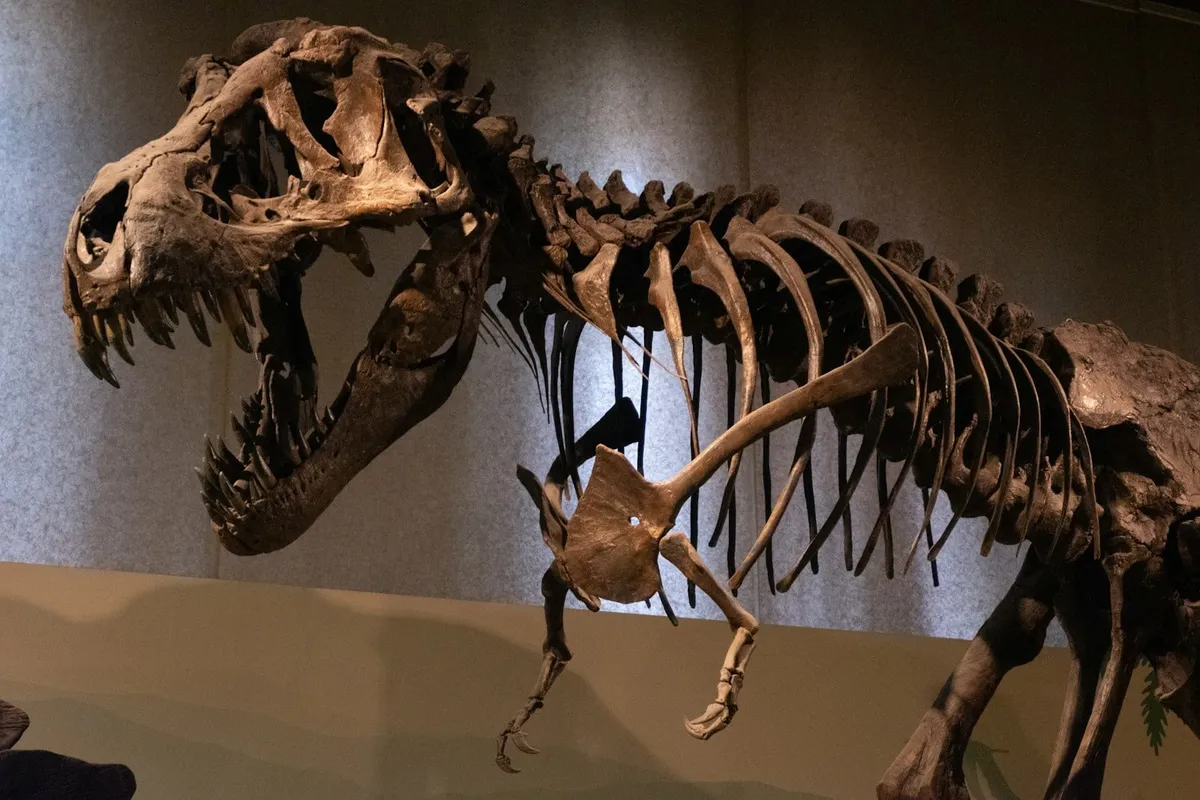
- T-Rex (Tyrannosaurus rex): a big meat-eating dinosaur with a large head and small arms.
- Triceratops: a plant-eater with a bony frill and horns on its face.
- Stegosaurus: a plant-eater with plates along its back and spikes on its tail.
- Diplodocus: a very long-necked, long-tailed plant-eater.
- Velociraptor: a smaller meat-eating dinosaur, usually pictured with feathers in newer books, so look out for that if your child asks.
- Spinosaurus: a large meat-eater with a tall sail or ridge on its back, often associated with water.
Because details change as scientists learn more, we are keeping things simple and avoiding exact sizes or dates. If your child asks “How big?”, turn it into a measuring game instead: use chalk or string to mark out a few steps in the yard and imagine how many fit end to end.
Archaeopteryx: feathers and a family connection
Archaeopteryx is often described as an early bird relative or a feathered dinosaur. It is a popular example for explaining that birds are generally thought to have descended from dinosaurs. You can tell a child: “Some scientists think birds today are living relatives of the dinosaurs.” It is a fun fact to share next time you see a sparrow on the fence.
Games that turn this into learning
These games need nothing but paper, crayons and a few minutes.
- Dinosaur or not? Write the names on small cards. Children sort them into two piles, then check the answers together using this article.
- Land, sea or sky? Use three sheets of paper as “habitats” and sort animals by where they lived. This is a gentler version for younger children that does not require the word “dinosaur”.
- Fact detectives. Ask older children to find one extra fact about an animal in a library book, then report back. Let them decide whether the fact belongs in “sure” or “maybe”.
- Measure the room. Choose a dinosaur length from a book, convert it to steps or arm spans with your child, and mark it with masking tape in a hallway.
- Coloring with a purpose. Ask your child to color dinosaurs in warm colors and non-dinosaurs in cool colors. It builds attention to detail, and the finished page doubles as a poster.
Using coloring pages for conversation
Coloring is quiet, but it is also a good time to talk. Children are more willing to ask questions when their hands are busy. A printable dinosaur book can be a good prompt for this kind of conversation, and our guide to dinosaur coloring pages for toddlers explains how to choose pages by age and what to expect from little hands.
For the youngest children, simple outlines with thick lines are the easiest. The Dinosaur Coloring Book for Toddlers & Kids is a 25-page printable PDF for ages 2 to 6 with large, bold dinosaur illustrations, including T-Rex, Triceratops, Pterodactyl, Diplodocus, Stegosaurus and Velociraptor, plus fun prehistoric scenes. It costs $4.99. A page with a Pterodactyl is also a handy way to start the “is it really a dinosaur?” conversation from this article.
If you want a broader view of how coloring changes as children grow, see Coloring Pages by Age.
Bring a little science to dinosaur time
Dinosaur play and science fit well together. Children can dig for “fossils” in a tray of sand, press toy dinosaur feet into play dough to compare footprints, or sort plastic animals by habitat. Our Science Experiments for Kids by Age is a good place to find hands-on activities that match your child’s age, and Easy STEM Activities for Kids Using Household Items shows how to build and test ideas with things you already have.
Safety and sensible expectations
- Small toys and parts. If you use toy dinosaurs or small fossil replicas for sorting games, keep them away from children who still put things in their mouths.
- Digging games outdoors. Supervise sand and dirt play, and wash hands afterwards.
- Crayons and markers. Choose child-safe, non-toxic supplies and protect the table.
- Facts change. If you read something different in another book, that is a great chance to show your child how scientists compare sources.
A simple takeaway for kids
If you want one sentence to share with your child, try this: “Dinosaurs shared the world with lots of other amazing animals, and learning who is who is part of the fun.”