When the days get short and the weather keeps everyone inside, a sensory bin can turn half an hour of “I’m bored” into calm, hands-on play. Winter sensory bin ideas are especially easy because the theme is simple: white, soft, sparkly or cold. Cotton, oats, rice, cloud dough, pinecones and toy animals do most of the work.
This guide covers how to set up a bin, which bases suit which ages, eight snowy themes, and the safety rules that matter most for toddlers and preschoolers. If you are looking for more ideas beyond the bin, see Sensory Activities for Toddlers at Home, and for the autumn version of this activity, our Fall Sensory Bin Ideas uses the same set-up with a different theme.
What you need for a winter sensory bin
You need very little:
- A container. A shallow plastic tub, a baking tray or a cardboard box lined with a bag all work. Wide and shallow is easiest for toddlers.
- A base. This is the material your child digs through.
- Tools. Spoons, scoops, small cups, tongs, funnels and bowls turn digging into pouring, transferring and measuring.
- Two or three themed objects. These make the bin feel like winter.
- A mat or old sheet to catch what escapes.
Choosing a base
| Base | Good for | Watch out for |
|---|---|---|
| Dry rice or oats | Scooping, pouring, a soft “snow” look; older toddlers and preschoolers | Spills easily; oats contain gluten unless certified free of it; not for children who eat everything |
| Cloud dough (flour and oil) | Moldable “snow”; preschoolers | Contains wheat; slippery on hard floors; keep away from children who taste it |
| Cotton balls or large cotton pads | Soft, fluffy “snow” for toddlers | Cotton balls can be pulled apart and swallowed; use large pads or pom-poms for young children |
| Crinkle paper or shredded white paper | Toddlers who still mouth things; no food | Can be messy and stick to damp hands |
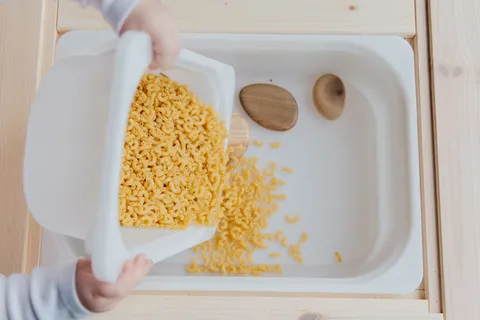
| Plain white pasta shapes | Counting and sorting; preschoolers | Choking hazard for the youngest; contains wheat |
| Ice cubes in water | Short, supervised cold play; preschoolers | Cold on small hands; keep sessions short and keep ice away from toddlers who may put it in their mouths |
Small hard items such as dried beans, beads and nuts are best left out for toddlers and for any child with allergies.
Eight winter sensory bin ideas
1. Snowy animal habitat. Fill a tub with rice, oats or crinkle paper and add toy arctic animals such as polar bears, penguins or seals, plus a small bowl of “ice” made from clear blocks. Children can build a world and invent a story.
2. Cloud dough snowscape. Mix about eight parts flour to one part vegetable oil until it holds together when squeezed. Add small toy trucks, small figures and cups so children can scoop, pack and make “snowmen”. Keep this one for children who no longer taste everything.
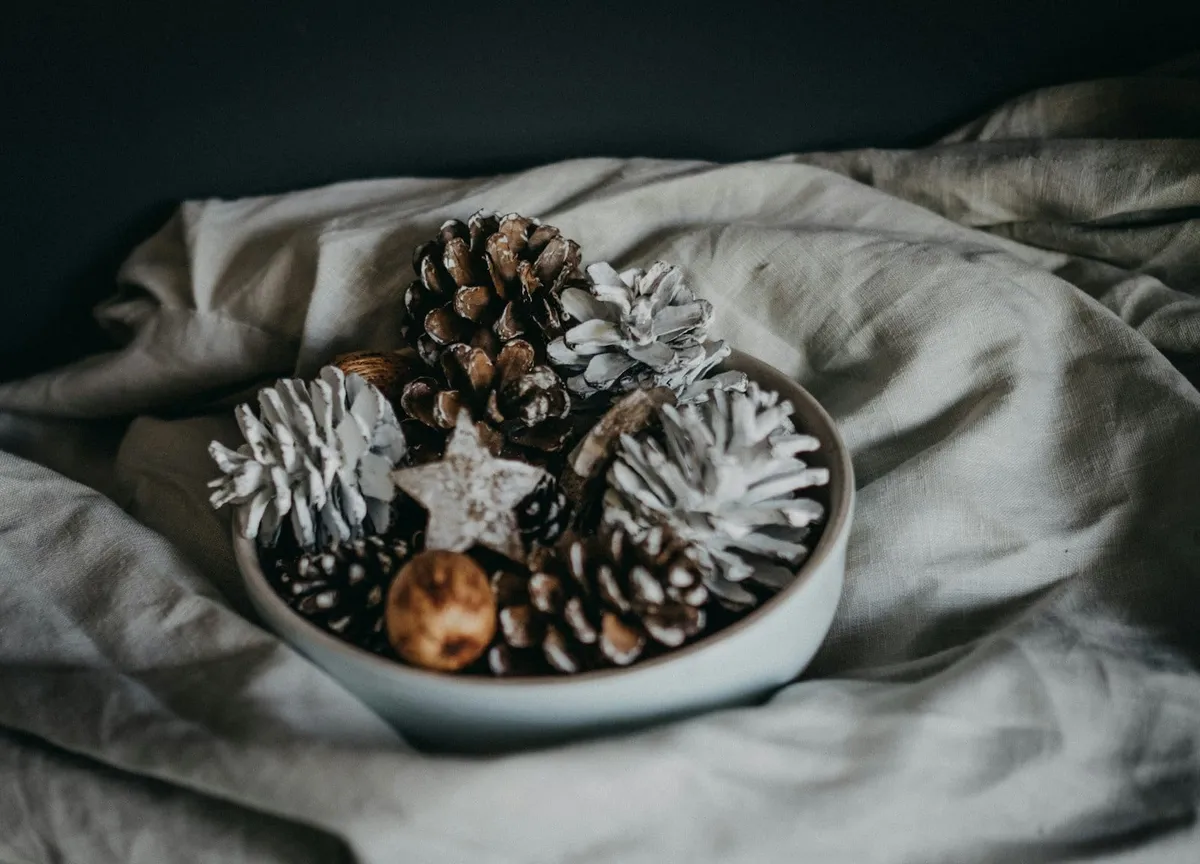
3. Pinecone forest. Add pinecones you have washed and dried, large wooden beads or stones for older children only, and a pair of tongs. Children can “plant” pinecones in oats or rice. Check each cone for sap, mold or insects first.
4. Mitten matching bin. Fill a bin with cotton pads or white crinkle paper, add several pairs of baby socks or small mittens, and ask your child to find the pairs. This is a gentle way to practice matching and sorting.
5. Melting ice bowl. Freeze small toys or colored water in a muffin tin, put the ice into a shallow bin and give your child warm water in a cup, a spoon or an eyedropper to melt it. Because ice and water are involved, use a waterproof mat and keep sessions short. For more cold-themed science, see our guide to Winter Activities for Kids at Home.
6. Snow-day kitchen. Add oats, a few small pots, spoons and a small ladle to make “snow soup”. Children can pour, stir and serve.
7. Winter letters and numbers hunt. Hide magnetic or paper letters and numbers in a bin of rice and ask your child to find the ones in their name or a certain number. Keep it playful and low pressure.
8. Cozy cabin. Fill a box with cotton pads, scraps of fabric and a few toy animals to create a “den” where animals can sleep. This pairs well with a bedtime story.
How to set up a bin in five minutes
- Put the mat down first, then the bin on top.
- Add the base about one to two inches (three to five centimeters) deep.
- Hide or place the themed objects in it.
- Put out one or two tools only. Too many tools make play scattered.
- Sit nearby, describe what your child does (“you filled the cup twice”) and let them lead.
Adjusting the bin for different ages
- Toddlers. Use big, soft, non-food items, a wide shallow tray and close supervision. Sessions are often short.
- Preschoolers. Add scoops, tongs and small cups. Ask open questions (“what lives here?”) rather than testing.
- Kindergarten. Add counting, measuring with cups, number or letter cards and simple predictions (“what do you think will happen to the ice?”).
Ages and attention spans vary a lot from child to child, so treat these as starting points, not rules.
Learning that happens without a lesson
Winter bins build several skills quietly:
- Fine motor skills: scooping, pouring, picking up with tongs and squeezing cloud dough all use the small hand muscles that children later use for writing.
- Early math: counting animals, comparing “more” and “less” and sorting by size or color.
- Language: describing textures such as soft, crunchy or cold, and telling stories about the scene.
- Calm and focus: many children find repetitive scooping and pouring soothing, though not every child does.
If your child is between two and four, a printable can add a bit of structured practice afterwards. The My First Learning Busy Book is a 20-page printable for ages 2 to 4 with tracing, coloring, counting and matching pages for letters, numbers, colors and shapes, which pair naturally with a bin built around letters or counting.
Safety checklist
- Supervise every session. Sensory bins are not independent play for toddlers.
- Avoid small parts (beads, pebbles, small pom-poms, nuts, dried beans) for children who put things in their mouths.
- Check for allergies before using wheat (flour, pasta), oats, nuts or other foods, and remember some children react to touch as well as eating.
- Check natural items. Wash and dry pinecones and discard anything with mold, sharp edges or insects.
- Keep water and ice play on a waterproof mat and wipe up spills quickly to avoid slips.
- Keep sessions short with ice, as very cold items can be uncomfortable for small hands.
- Store dry bases in a sealed container and throw them away if they smell musty or look damp.
Bringing it together
A winter sensory bin does not need to look perfect. Pick a base that suits your child’s age, add a few snowy objects and a scoop, watch for small parts and allergies, and see where the play goes. A small bin you can set up in five minutes is usually more useful than an elaborate one you only manage once.