Preschoolers do not need flashcard drills to start learning letters. In fact, many children pick up the alphabet most easily when it is woven into play: touching letters, hunting for them and hearing the sounds they make in words they care about.
Below are 12 alphabet activities for preschoolers you can do at home with ordinary materials. They focus on letter recognition rather than handwriting, so your child can enjoy the letters before worrying about getting the shapes perfect. If you are ready to add pencil practice later, our free printable alphabet tracing pages are a gentle next step.
Before you start: a few ground rules
- Keep it short. Five to ten minutes is enough. Stop while your child still wants more.
- Start small. Begin with three to five letters, often those in your child’s name, and add more gradually.
- Say the name and the sound. “This is B. It says /b/, like ball.”
- Follow your child’s interest. If they love trucks, hunt for the letter T on a toy truck.
- Do not worry about order. There is no required sequence for teaching letters.
- Skip the pressure. If your child is not interested today, try again tomorrow.
1. Name letters first
A child’s own name is usually the most meaningful word they know. Write it large on a piece of paper, point to each letter and say its name. Then:
- Find the first letter of their name on a cereal box or street sign
- Spell the name with magnetic letters or blocks
- Compare names in the family: “Which letter do you and Mommy share?”
2. Letter blocks and magnets
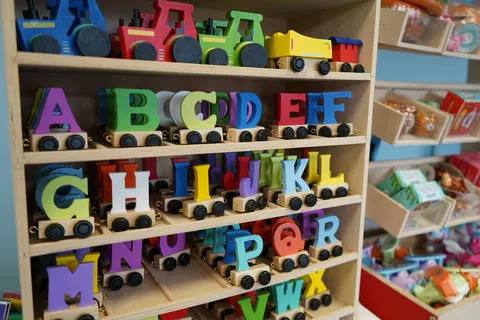
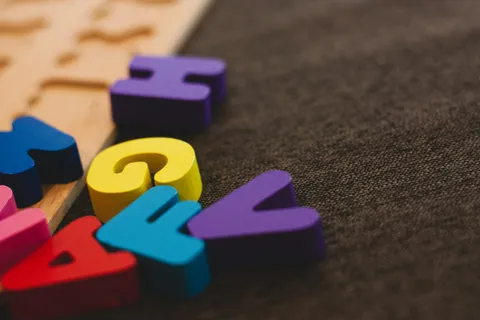
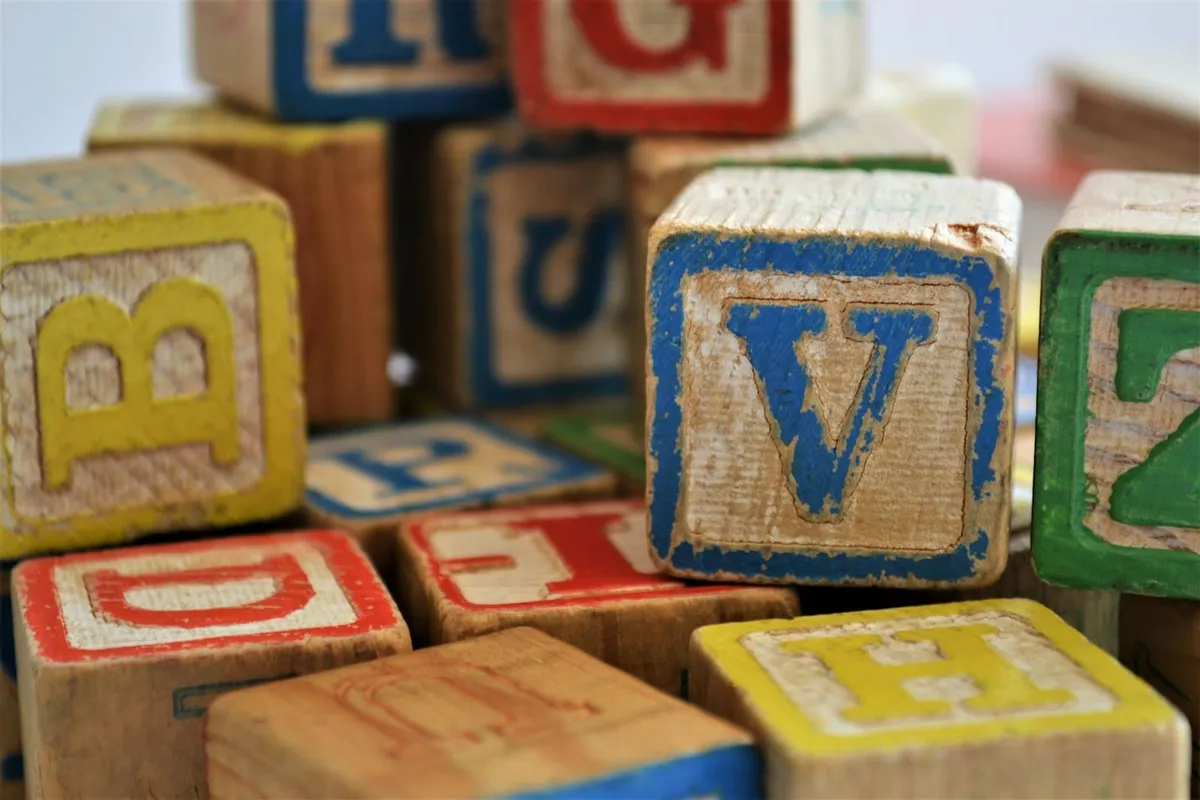
Wooden or foam blocks and fridge magnets are great for free exploration.
- Let your child sort them by color, then by letter
- Ask, “Can you find the letter that starts your name?”
- Build a simple three-letter word together and read it aloud
Keep a small basket of letters within reach so your child can play with them on their own.
3. Sensory letter trays
A shallow tray filled with a thin layer of dry rice, salt or sand turns letters into a touch experience.
- Pour a thin layer into a baking tray.
- Write a letter with your finger and say its name.
- Let your child copy it with their finger, then wipe it flat and repeat.
4. Alphabet scavenger hunt
Turn the house into a letter-spotting game.
- Pick a letter of the day, such as M.
- Walk around the house looking for things that start with M (mug, mat, milk, magnet).
- Or look for the letter itself on labels, books and packaging.
This builds both letter recognition and early sound awareness.
5. Playdough letters
Rolling playdough into snakes and shaping them into letters is satisfying and good for little hands.
- Roll long snakes and form the letter
- Press cookie cutters or letter stamps into flat dough
- Use a letter card as a guide and let your child copy it
Playdough also strengthens the small muscles that later support writing, which is why it appears in our list of fine motor activities for preschoolers.
6. Letter matching games
Matching games help children notice the small differences between letters.
- Make two sets of letter cards and play memory or snap
- Match uppercase and lowercase letters
- Match a letter card to a picture that starts with that letter
Start with a small set, such as six to eight cards, to avoid overwhelm.
7. Alphabet songs and movement
Songs and action games work well for children who need to move.
- Sing the alphabet song while pointing at letters
- Make an alphabet “hopscotch” with chalk and call out a letter to jump to
- Play “freeze” and call out a letter: children freeze when they hear their letter
Be aware that the alphabet song teaches the order of letters but can make letter-name recognition harder for some children, since “LMNOP” sounds like one word. Mixing the song with pointing to individual letters helps.
8. Color and trace
Coloring pages with a big letter and a simple picture give children a calm, creative way to look closely at each shape.
- Let your child choose the colors
- Ask them to name the letter and the picture
- Trace the outline with a finger first, then a crayon
If you want ready-made pages, Alphabet Coloring Book A-Z: 26 Letters & Animals to Color is a printable PDF for ages 2 to 5 that pairs each letter from A to Z with an animal, with big bold letters and easy designs.
9. Letter hunt in a book
Reading time can double as letter practice.
- Choose a letter and have your child tap it every time they spot it on the page
- Look for the first letter in a character’s name
- Talk about whether the letter is big or small
Do this lightly so that the story does not lose its magic.
10. Alphabet sorting
Sorting builds categories and attention to detail.
- Sort objects by their first letter (a toy cat and a toy car go together)
- Sort letters into “curvy” and “straight” groups
- Sort letters into “in my name” and “not in my name”
Use real objects where you can. Touching something real helps letters feel meaningful.
11. Sticker and dot letters
Dot markers, stickers and cotton swabs are good for children who are not ready for a pencil grip.
- Fill in a big outlined letter with dot stickers
- Dab paint with a cotton swab along a letter line
- Stick small paper circles along a letter to make it “grow”
12. Mixed-skills practice pages
Once your child knows some letters, short practice pages can help them review in a calm, structured way. My First Learning Busy Book: Letters, Numbers, Colors & Shapes is a 20-page printable activity book for ages 2 to 4 with tracing, coloring, counting, matching and review activities covering letters A to Z, numbers 1 to 10, colors and shapes. It is a general early-learning book rather than an alphabet-only course, so it works best as one part of a play-based routine. For more ideas across subjects, see our guide to early learning activities for preschoolers.
What to expect at different ages
Children develop at different speeds, so use this as a loose guide only.
| Age | Common focus |
|---|---|
| Around 2 to 3 | Noticing letters, singing the alphabet song, recognizing a few letters |
| Around 3 to 4 | Naming some letters, recognizing the letters in their own name |
| Around 4 to 5 | Recognizing many uppercase and lowercase letters, connecting letters to sounds |
If your child is not recognizing letters at the age a friend does, that is not a reason to worry on its own. If you have concerns about your child’s development, a conversation with their teacher or pediatrician is a good next step.
Troubleshooting common problems
- They mix up similar letters (b/d, p/q). This is very common. Teach the letters at different times and use a memory hook, such as “b has a belly and a bat”.
- They refuse to join in. Put the letters in a game they already love, such as car racing or a pretend shop.
- They know letters one day and forget the next. Learning is not linear. Keep sessions short and come back to the same letters often.
- They are only interested in a few letters. Follow that interest, then slowly widen the circle.
A simple weekly plan
- Monday: Letter blocks and name letters
- Tuesday: Sensory tray (two or three letters)
- Wednesday: Scavenger hunt for the letter of the day
- Thursday: Playdough letters or coloring
- Friday: Songs, movement and a review game
Five to ten minutes per day is plenty, and repeating favorites is a feature, not a flaw.