Thanksgiving day tends to have a gap that no one plans for: the long stretch when the food is cooking, guests are arriving and children are told to “go and play” without much to do. A small stack of printable pages can fill that gap, and unlike screen time, it keeps hands busy and gives everyone something to talk about.
This guide covers Thanksgiving printables for kids with a different focus from skill worksheets. Here we look at games, mazes, coloring and table activities: what each type is good for, which ages suit it, and how to run it so that the day stays calm. (If you are looking for learning-focused pages, see our article on Thanksgiving worksheets for kids.)
Why printables suit the holiday table
Printables have some advantages on a busy day.
- No setup mess. A page and a pencil are easier to manage than craft supplies.
- Easy to start and stop. A child can do half a maze, pause for dinner and come back later.
- Works across ages. You can offer a coloring page to a four-year-old and a harder puzzle to a nine-year-old.
- Portable. Pages travel well if you are visiting relatives.
Types of printables and who they suit
Coloring pages
Coloring is calming, flexible and suits almost every age. Younger children enjoy large, bold designs, while older children may like detailed patterns. Choose pages with clear outlines and plenty of space to color.
Good for: ages 2 to 10, quiet times, waiting before dinner.
Mazes
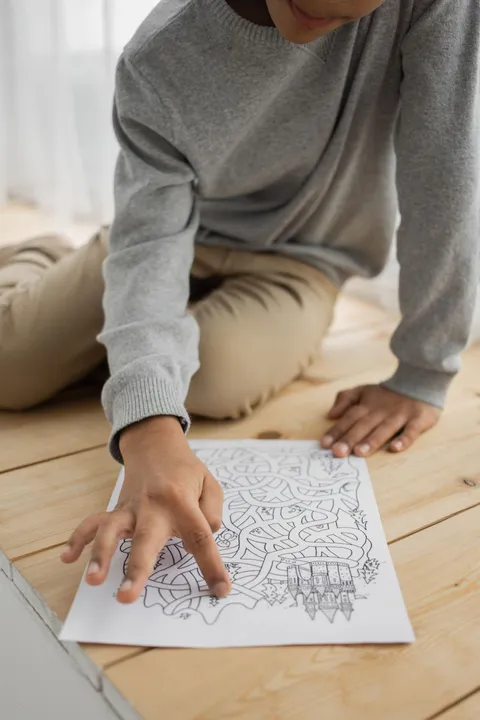
A maze asks a child to plan ahead and follow a path with a pencil, which also practices pencil control. Start with simple, wide paths for younger children and move to twistier ones for older kids. Our guide to free printable mazes for kids explains how to match difficulty to age.
Good for: ages 4 to 9.
Dot-to-dot
Connecting numbered dots reveals a picture, and it practices counting in order. Children who can count to twenty or beyond can try longer ones. Offer a number line nearby for anyone who gets stuck.
Good for: ages 4 to 8.
Color by number
Each number matches a color, and the finished picture appears as the child works. It combines number recognition, following a key and fine motor control. It is a popular choice for children who like clear instructions.
Good for: ages 5 to 9.
Spot the difference and hidden pictures
Searching pages ask children to look closely, which many find absorbing. They also work well for mixed-age groups, because an older child and a younger child can search together. For more on this type, read our guide to hidden pictures printables for kids.
Good for: ages 5 and up, or younger children with an adult partner.
Word searches and crosswords
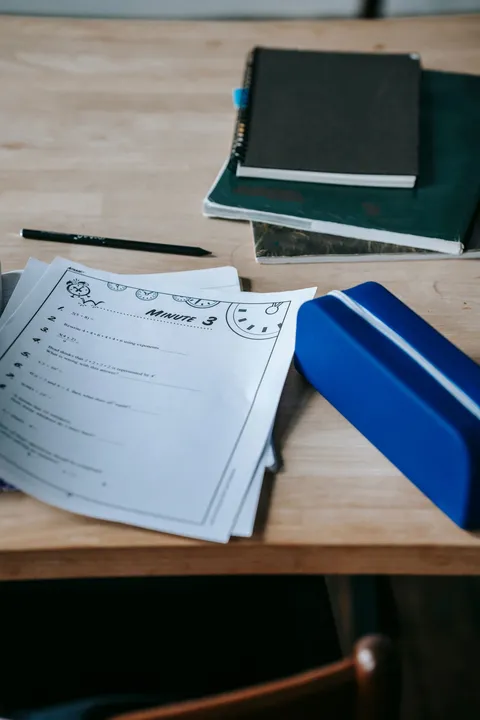
For readers aged seven or eight and up, a short Thanksgiving word search or simple crossword can be a good table activity. Keep the word list short and the letters large.
Good for: ages 7 to 12.
How to set it up so it works
A few small steps help the printables do their job.
- Print a small variety. Three or four types are plenty, and choose a few extra copies of the popular ones.
- Make packets. Put two or three pages, a pencil and a few crayons in a folder or envelope for each child, so they can start without asking for supplies.
- Choose a tool that suits the table. Pencils and crayons are cleaner than markers, which can stain tablecloths.
- Put a “waiting” basket near the kitchen. Children who need something to do can grab a packet without interrupting the cook.
- Offer a finish line. A simple display of finished pages on the fridge or a “gallery” at the end of the meal gives the pages a place to go.
Safety and tidiness notes
- Keep small items out of reach of toddlers, including crayon pieces and the tops of markers.
- Check any art supplies are non-toxic and appropriate for the age.
- Avoid scissors and glue near hot food or crowded tables, and supervise any cutting.
- Use a hard surface such as a clipboard or a tray when children color on their laps.
Ideas for using printables as games
A page does not have to be a solo activity. A few simple twists make it social.
- Maze race: give two children the same maze and see who finishes first, or play cooperatively and time everyone together.
- Gratitude coloring: ask children to color a page and tell the table one thing they are thankful for.
- Spot the difference teams: older children pair with younger ones to find the differences together.
- Gallery walk: tape finished pages to a wall and let everyone walk by and say what they like.
Single pages or an activity book?
Both approaches work. Single pages are cheap and easy to customize, and a printed folder lets you choose exactly what you need. An activity book keeps everything together and gives a ready variety, which can be useful when you do not have time to search for pages.
Thanksgiving & Fall Activity Book for Kids is a 25-page printable PDF for ages 4 to 8. According to its product page, it includes gratitude pages, coloring pages (including color by number), a harvest maze, spot the difference, connect the dots, counting pages, tracing and a Thanksgiving crossword, so it covers many of the types in this guide in a single file. You can print only the pages you want for the day.
If your children like searching pages, Cute Critters: Hidden Pictures & Seek-and-Find Activity Book for Kids offers cute critter illustrations to search and spot, delivered as a PDF. For a broader look at how to choose, see our guide to printable activity books for kids.
A simple plan for the day
Here is one way to spread printables through a typical Thanksgiving:
- Morning: a coloring page or two while you cook, to keep little hands busy.
- Before dinner: a maze or dot-to-dot for the pre-meal wait, with pencils only.
- At the table: a spot-the-difference or gratitude page that everyone can talk about.
- After dinner: a puzzle or word search for wind-down time, when everyone is full and quiet.
Keep the day flexible
Not every child will want a printable, and that is fine. Some will prefer to run around, build with blocks or help in the kitchen. Treat printables as one option on a menu rather than a rule, and let children choose. If a page flops, put it away and try something else later.