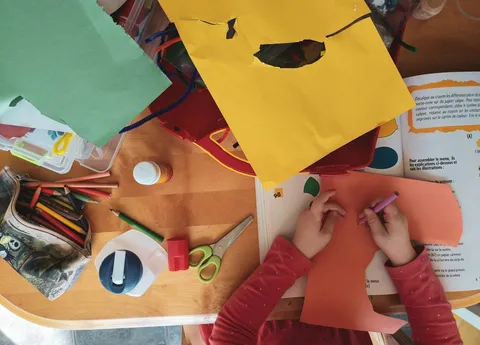
Coloring is one of the most familiar activities in any household with young children, and also one of the easiest to underuse — reached for occasionally, without much thought to timing, theme, or how it changes as a child grows. This guide brings together what coloring actually builds, what’s realistic to expect at each age, and how to set up a simple routine around it, so it can be a deliberate, regular part of your family’s week rather than an occasional fallback.
What coloring actually builds
Coloring isn’t just a quiet-time filler — it does real developmental work. Holding and guiding a crayon builds fine motor control and hand strength, the same skills that later support handwriting and other precise tasks. Finishing a page builds focus and follow-through. Choosing colors and staying within (or deliberately outside) a shape’s boundaries builds decision-making and creative confidence. None of this requires any special instruction; it develops through the ordinary, repeated act of coloring itself. The Benefits of Coloring for Kids: What It Actually Builds covers this in more depth, including a grounded look at the fine motor connection.
What to expect at each age
Coloring ability moves through fairly predictable stages, and matching pages to a child’s current stage — rather than a fixed age — keeps the activity appropriately challenging without becoming frustrating:
- Toddlers are mostly scribbling, and that’s exactly the right activity for this stage.
- Young preschoolers start connecting marks to shapes, staying loosely within large, simple outlines.
- Older preschoolers show more control and more intentional color choices.
- Kindergarten-age children color more consistently and can handle a bit more detail.
- Early elementary children are often ready for shading, blending, and more intricate pages.
Coloring Pages by Age: What to Expect from Toddlers to Big Kids goes through each of these stages in detail, along with how to tell when a child is ready for more complexity.
Choosing themes that hold interest
A single coloring theme can offer real variety if it’s built around a setting with several distinct moments rather than one repeated idea. Kitchen and baking scenes are a good example — mixing, cutting, decorating, and tasting all give a themed set genuine range. Kitchen and Baking-Themed Coloring Pages for Kids covers what makes a themed coloring book work well, using Coco Wyo’s Cookie Bake Off: Coloring Book for Kids — a 15-page printable set built around exactly this kind of cozy baking sequence — as an example of a themed set done well.
Using coloring for more than quiet time
Coloring also works as a genuine calm-down tool, not just a scheduled activity. Its repetitive, low-effort nature makes it useful for redirecting a child’s attention during an overwhelming moment, in addition to its role in planned quiet time. Coloring as a Calm-Down and Quiet-Time Activity for Kids covers how to set supplies up so they work for both uses, and where the real limits of “coloring as a coping tool” are.
Building a simple routine around it
None of the benefits above require an elaborate setup — they come from coloring happening regularly, which is mostly a matter of removing friction: accessible supplies, a predictable time, and a small rotating stock of pages matched to your child’s current stage. How to Set Up a Simple Coloring Time Routine at Home walks through exactly how to build that kind of low-effort, repeatable routine.
Bringing it together
Coloring rewards consistency more than any single clever idea. A simple, repeated rhythm — the right supplies within reach, pages matched to your child’s current stage, an occasional themed set for variety, and room to use it as a calm-down option when needed — covers most of what makes coloring genuinely useful, developmentally and practically. The five companion guides linked throughout this article go deeper on each piece: what coloring builds, what to expect by age, themed coloring done well, using it to help a child calm down, and setting up a routine that actually lasts. Start with whichever piece is most relevant to where your family is right now.
Frequently asked questions
Is coloring worth making regular time for, or is it just filler?
It’s worth regular time. Coloring builds real fine motor control, focus, and creative decision-making, on top of being calm and easy to supervise. Those benefits come from repeated, ordinary practice, not from any single special session.
What’s the single most useful thing to know about coloring by age?
That ability develops in fairly predictable stages — from scribbling to staying within shapes to detailed, intentional work — and matching a page’s complexity to a child’s current stage matters more than the specific theme or design of the page.
Do I need a variety of coloring books, or is one enough?
One is enough to start, but some variety in theme and difficulty tends to keep interest up over time. Rotating between a general set and an occasional themed one, matched to your child’s current stage, works well for most families.