Toddlers are surrounded by color, and they notice it long before they can name it. Color activities for toddlers turn that curiosity into play: sorting, matching, hunting and mixing, using things you already have at home.
This guide gives you simple ideas for roughly ages one to three, with safety notes and tips for keeping it low-pressure. Every child develops at their own pace, so treat the ages as loose guides.
Start with matching, not naming
Most toddlers can match two things that look the same well before they can say “blue” or “green”. That is normal, and matching is a real skill in its own right. Start by asking “Can you find another one like this?” and add the color word as you go: “Yes, that one is red too.”
A few ground rules make everything easier:
- Begin with two colors. Red and yellow, or blue and green, are plenty at first.
- Use large, distinct colors. Pale shades and near neighbors (blue and purple) are harder.
- Say the word, don’t test. “Here is the green block” works better than “What color is this?”
- Stop while it’s still fun. Five to ten minutes is a good session.
Color sorting ideas
Sorting helps toddlers notice similarities and differences.
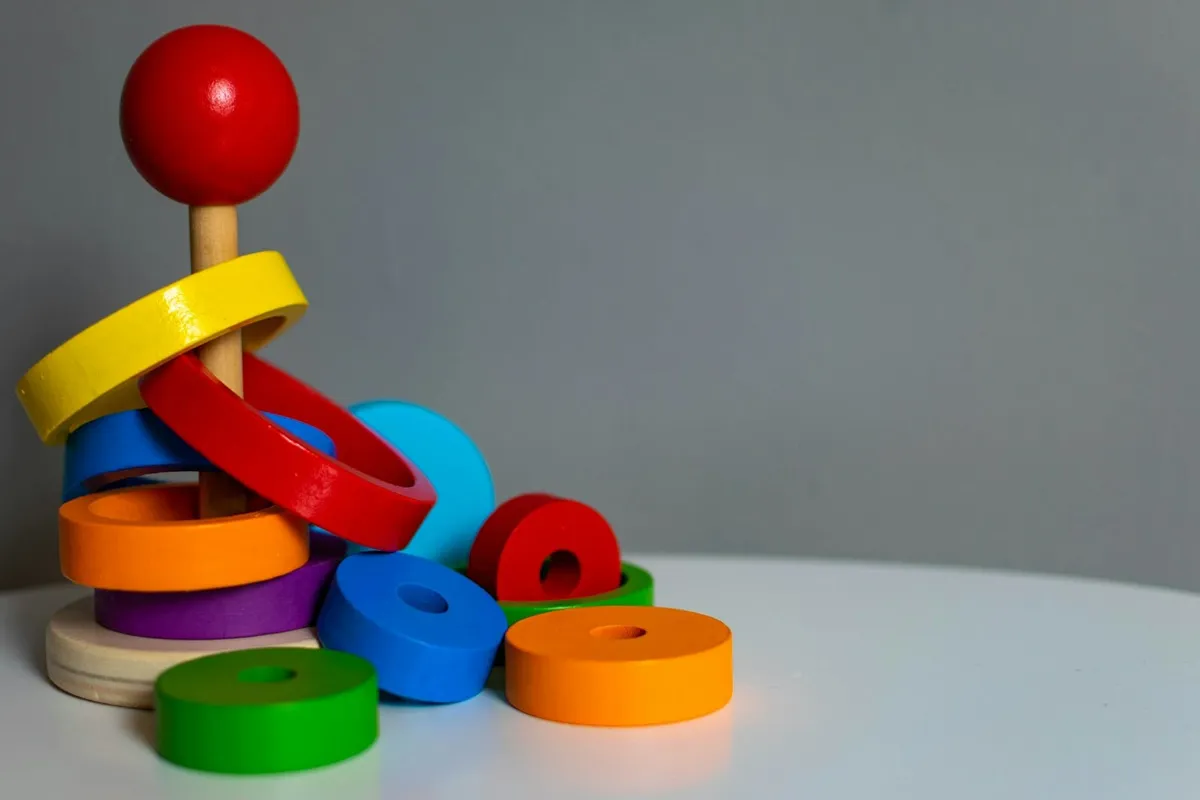
Block or ring sort. Take large building blocks or stacking rings and put two colors in a pile. Place two bowls or paper plates and let your child drop each piece in the matching spot.
Sock match. Laundry day is a free activity. Lay out a few pairs of clearly colored socks and match them together.
Pom-pom and tongs sort (older toddlers). Large pom-poms can be moved with tongs or a big spoon into color-coded cups. Small pom-poms are a choking risk for children who still put things in their mouths, so use large ones and stay beside your child, or skip this one until they are past the mouthing stage.
Toy car garage. Draw or tape colored squares on paper and “park” each car on the matching color.
Fruit and veg sort. Red strawberries, orange carrots, green cucumbers: a snack tray can double as a sorting game. Cut food to a safe size for your child’s age and eat while seated.
Color hunts around the house
A color hunt gets toddlers moving and builds vocabulary.
- Choose one color for the day, say yellow.
- Give your child a basket or bag.
- Walk around together and say, “Let’s find something yellow.”
- Name each item as it goes in: “A yellow duck. A yellow cup.”
Keep the hunt in a safe area, and avoid giving anything fragile, sharp or small enough to fit in the mouth. For an outdoor version, collect leaves, petals or stones of one color during a walk. Remind your child that nature items are for looking at, not for tasting.
Mixing colors with water
Color mixing is a classic first experiment, and the water version is easier than paint.
Materials: three clear cups, water, a few drops of red, yellow and blue food coloring, and a tray or towel.
How to do it:
- Fill the cups with water and add a few drops of a primary color to each.
- Give your child a spoon or a dropper (a spoon is easier for small hands).
- Let them pour a little of one color into another and watch what happens.
Expect lots of splashing and a few muddy browns, which is part of the fun. Food coloring can stain clothes and skin temporarily, so use old clothes and a tray. This is not a drink, so stay close and keep it away from mouths, and check for any allergy or sensitivity to ingredients.
Safer-by-design option: if your child still tends to taste everything, skip the food coloring and use a drop of washable paint in water, or stick to sorting and hunts for now.
Painting and mark-making
Finger painting. Use washable, non-toxic paints on large paper or taped-down paper on a tray. Offer two or three colors and let your child explore without a goal.
Painting with sponges. Cut a clean kitchen sponge into chunks and dab them in paint for big, bold prints.
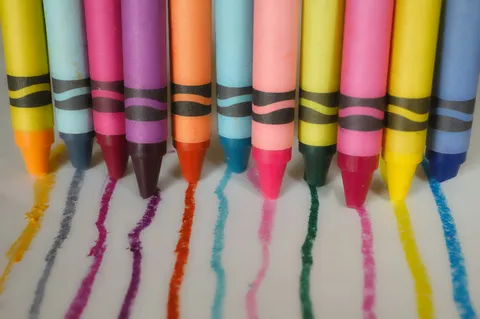
Crayon scribbling. Chunky crayons designed for small hands let toddlers scribble freely. Our article on the benefits of coloring for kids explains how early mark-making supports hand control and expression, and why scribbling counts.
Safety note: always use non-toxic art supplies labeled for young children, supervise closely, and keep crayons and paint away from mouths.
Color play with everyday materials
Colored ice cubes. Freeze water with a drop of coloring in an ice tray. Put the cubes in a shallow tub and watch them melt and swirl. Use large cubes and supervise, as ice can be a choking hazard.
Rainbow scarf dance. Toss lightweight colored scarves in the air and call out a color: “Wave the blue one!”
Color bottles. Fill clear plastic bottles with colored water and seal the caps very firmly (glue or tape works) so toddlers can shake and roll them without opening them.
Colored sticky window. Stick clear contact paper sticky-side out to a window and let your child press on colored tissue-paper squares. You will find more mess-friendly ideas in our guide to sensory activities for toddlers at home.
Printable and book-based color practice
Hands-on play is the heart of toddler learning, but a calm page-based activity is useful for a quiet moment or while you are making dinner. Look for pages with large pictures and plenty of space, and let your child scribble, point and tear rather than trying to complete a page perfectly.
My First Learning Busy Book: Letters, Numbers, Colors & Shapes is a 20-page printable for ages 2 to 4 that includes color matching along with tracing, counting and shape activities. For a broader school-readiness set, the Preschool Skills Busy Book covers colors and shapes alongside letters, numbers and patterns. You can dip into either for a few minutes at a time.
Making it part of the day
You don’t need to schedule “color time”. Small, repeated moments work well:
- At meals: “You have a blue spoon and a red cup.”
- Getting dressed: “Let’s find your green shirt.”
- Bath time: use colored cups for pouring.
- Books: point to colors in picture books and ask your child to point too.
Toddlers learn through repetition, so doing the same easy activity on several days is more helpful than introducing something new every time.
When to adjust
If your child loses interest, move on without fuss and try again another day. If an activity is frustrating, simplify it: fewer colors, bigger items, or just you modeling while they watch. If you ever wonder whether your child’s color or language development is on track, your pediatrician can help.
More toddler ideas
For a wider range of simple play ideas, see our guide to activities for toddlers and two-year-olds at home. Pick one color activity from this list, set it up in five minutes, and let your child lead.