December is busy, and children often have more energy than there are quiet moments to spend it. A coloring page asks for very little: paper, a few crayons and ten minutes. It can fill the gap between school and dinner, keep small hands busy during holiday cooking, or give an overexcited child somewhere calm to land.
This guide is about getting more from Christmas coloring pages: choosing ones that fit your child, picking the right tools, and turning finished pages into things your family can use. For a wider look at holiday printables such as countdowns and party games, see our guide to Christmas printables for kids.
Why coloring suits December
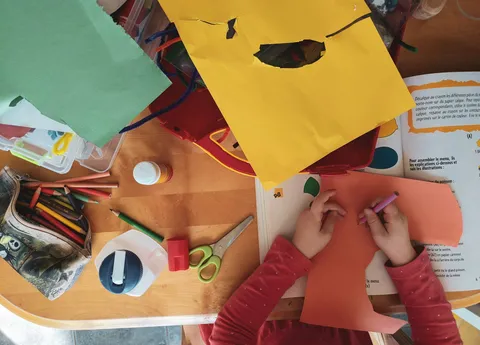
Coloring is low-prep and low-pressure. There is no right answer, no score and no special equipment. Children can work alone or beside you, finish in five minutes or spend an hour, and every finished page is something to show.
Many families also find that coloring helps the house feel festive: a tree on the fridge, a string of stockings across a window. We cover the calming side of coloring in more detail in our article on coloring as a calm-down activity.
Choosing pages by age
Ages are only a rough guide. Use them as a starting point and follow your own child.
- Toddlers (about 2 to 3). One big, simple picture with thick outlines. Expect scribbles that wander past the lines, and enjoy the process rather than the result. Chunky crayons are easiest to hold.
- Preschoolers (about 3 to 5). Simple scenes with clear shapes, such as a tree with a few ornaments, a snowman or a stocking. Many children at this age start to choose colors on purpose, such as a green tree and a red hat.
- Early school age (about 6 to 8). More detailed pages with patterns, smaller spaces and background scenes. Older children often enjoy adding their own details, shading with pencils or inventing a story about the picture.
If a page feels too hard, cover part of it with a sheet of paper or color it together. If it feels too easy, invite your child to add a background, draw a few extra ornaments or write a short caption. Our guide to coloring pages by age goes deeper on matching difficulty to your child.
Theme ideas worth coloring
Variety keeps coloring fresh across the weeks of December. Here are themes that tend to work well:
- Trees and ornaments. A tree gives children lots of small spaces to decorate in their own style.
- Stockings and presents. Big shapes that suit younger children.
- Snowmen and winter animals. Round, friendly shapes with room for scarves and hats.
- Cookies and baking scenes. A good match for afternoons spent in the kitchen.
- Lights, stars and candles (as pictures). Plain shapes that look striking in bright colors.
- Your own traditions. Pages that reflect what your family celebrates, whether that is a nativity scene, a family gathering or a favorite winter outing.
Keeping a few themes in rotation, rather than printing everything at once, helps each page feel special.
Pick the right tools
The tool changes the experience as much as the page does.
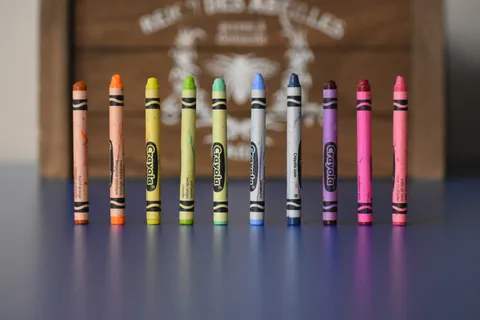
- Chunky crayons suit toddlers and small hands and make bold, simple color.
- Washable markers give bright, easy color with little pressure. Test on a spare sheet first so ink does not bleed through onto the table.
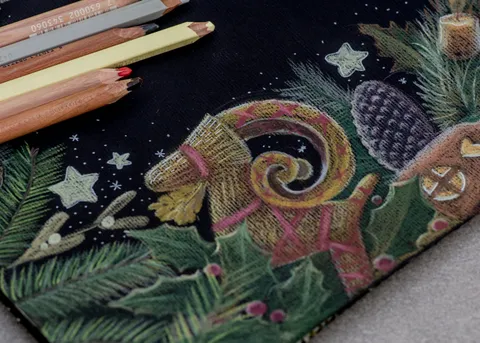
- Colored pencils are best for detail and shading, and suit children who like to take their time.
- Gel pens or metallic pens add sparkle for older children, and work well on card or darker paper.
A few practical tips:
- Put a placemat or a sheet of scrap paper under the page to protect the table.
- Use a clipboard or tape the page down so it does not slide.
- Keep crayons away from heaters and sunny windowsills, since they can soften and melt.
- Offer a small tray or cup of colors rather than the whole box. Fewer choices can make it easier to start and easier to tidy up.
Turn finished pages into something useful
Coloring feels even better when the result has a job to do. Here are four simple ideas, with steps.
Gift tags
- Print or draw small outlines and let your child color them.
- Cut them out (a grown-up can do the cutting for younger children).
- Punch a hole in one corner and thread through some string or ribbon.
- Write the name on the back.
A coloring garland
- Have your child color several small pictures, such as stars, stockings and trees.
- Cut them out and punch two holes near the top of each.
- Thread them onto a long piece of string or ribbon.
- Hang the garland across a window or along a shelf.
Homemade cards
Fold a sheet of paper in half and have your child color a small picture to glue on the front. Add a message inside, and let them sign it. These are lovely for grandparents and relatives, and children are proud to hand them over.
Window decorations
Color a picture with markers on plain paper, then tape it to the inside of a window so the light shows through. Ask your child to choose where it goes.
For more hands-on holiday projects, see our list of easy Christmas crafts for kids.
Make coloring a calm, cozy habit
When December gets loud, coloring can be a gentle reset. A few simple habits make it easier:
- Set up a coloring spot with a small table or tray, a mug of crayons and a few pages ready. Children often start on their own when materials are easy to reach.
- Keep sessions short and flexible. Ten to fifteen minutes is plenty for many young children, and it is fine if they stop early.
- Skip the corrections. Avoid comments such as “stay in the lines.” Try “tell me about your tree” instead.
- Add a little atmosphere. Soft music or a low lamp can help the moment feel special.
- Join in. Many children enjoy coloring alongside an adult, and you may find it relaxing too.
Coloring is not a cure for big feelings, and it will not suit every child every day. Think of it as one gentle tool among many.
Print smart
A few habits save time, paper and ink:
- Print little and often. A folder of five or six pages for the week is enough.
- Choose clear black-and-white outlines so your child provides the color.
- Use draft mode for pages that will be colored over.
- Check the print scale. Make sure the page prints at actual size so details stay readable.
- Keep a ready folder. Store printed pages where your child can reach them, so you are not printing on demand.
Where our coloring books fit
If you would rather not hunt for individual pages, a printable book can bring the coloring together in one file.
The Christmas Activity & Coloring Book for Kids is a 25-page printable PDF for ages 3 to 8. It includes Christmas coloring pages, such as a Christmas tree and cookies, as well as countdown pages, puzzles and mazes, counting, alphabet and word matching, tracing, a draw-your-gift-tag page and a Dear Santa letter. It costs $4.99.
For afternoons of baking and decorating, Coco Wyo’s Cookie Bake Off: Coloring Book for Kids is a 15-page printable coloring book with cute baking scenes, from mixing and cutting to decorating, tasting and sharing. It is not Christmas-specific, but it suits a cozy December kitchen mood. It costs $3.99.
Whichever you choose, check how many pages you actually need. Often a handful of pages per week is enough.
A simple plan for the weeks ahead
Think by moment rather than by date:
- After school. One coloring page and a pencil on the table while you make a snack.
- Cooking time. A tray of crayons near the kitchen so little hands can join in.
- Quiet evening. A detailed page for an older child, with soft music.
- Weekend. A gift-tag or card session, so pages become presents.
- Daily ritual. Pair coloring with a countdown. Our list of advent calendar activities for kids has ideas for something small to do each day.
Final thoughts
Christmas coloring pages do not need to be fancy. A clear picture, a handful of crayons and a few unhurried minutes are enough. Choose pages that fit your child’s age, keep the tools simple, and let the finished work find a place in your holiday: on a card, on a tag or on a window. The goal is not a perfect picture, but a happy, creative moment in a busy month.