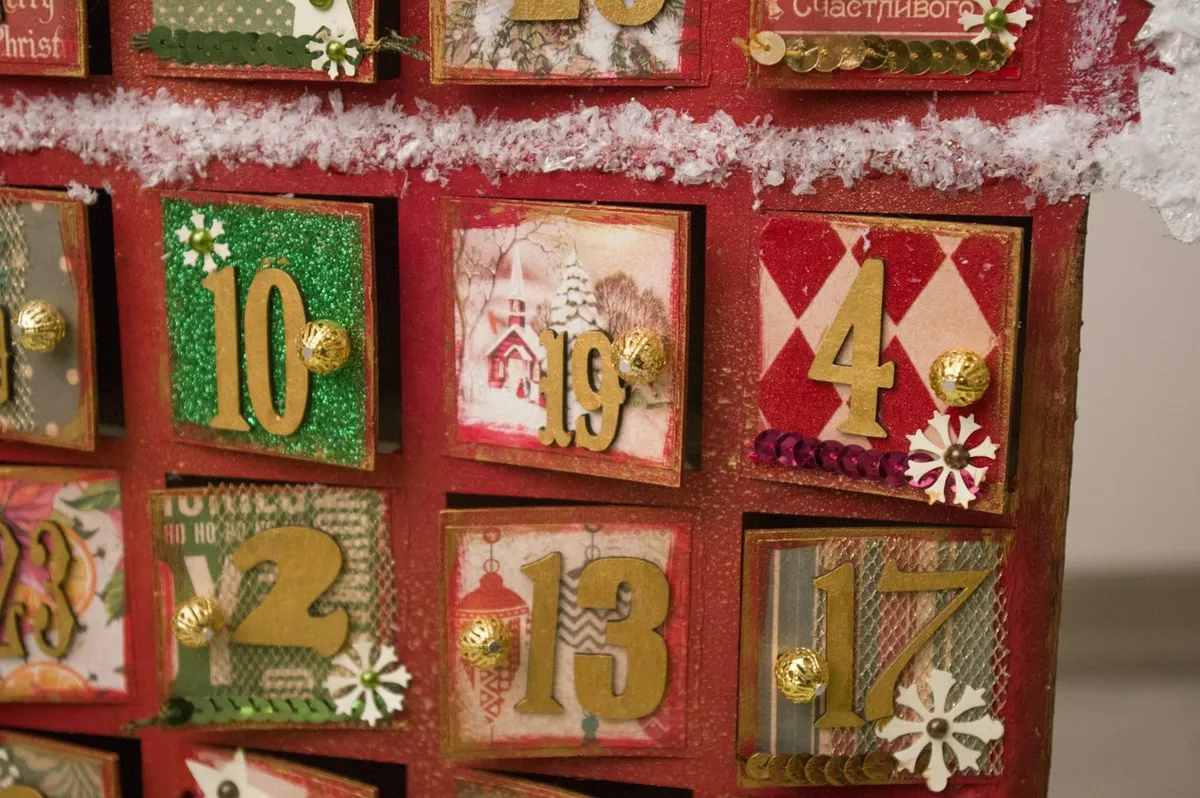
An advent calendar does not have to hide a chocolate behind every door. Many families now prefer a calendar of small activities: a craft on Monday, a kind act on Tuesday, a snowy-day story on Wednesday. The countdown becomes a daily reason to slow down and do something together.
This guide gives you 24 non-candy advent calendar activities for kids, plus simple ways to build the calendar, plan the month and keep it realistic. If you want more ideas for the season, our guide to Christmas activities for kids at home pairs well with it.
How an activity advent calendar works
The idea is simple. You prepare 24 small prompts, one for each day, and your child opens one at a time. Each prompt is an activity, a challenge or a small shared moment. Some people add a tiny object to each pocket, such as a sticker or a pipe cleaner, but the object is optional.
Why families like it:
- It shifts the focus from “what do I get” to “what do we do”.
- It builds a routine. A short daily ritual gives children something steady to look forward to in a busy month.
- It is flexible. You can match the activities to your child’s age, your budget and your free time.
Ways to build the calendar
You can make the structure in an hour or less. Here are some easy options:
- Envelopes on a string. Number 24 envelopes, slip a card inside each and peg them to a string or ribbon.
- Paper bags or small boxes. Decorate and number them, then line them up on a shelf or windowsill.
- Cardboard tubes. Save toilet-roll tubes, fold the ends shut and decorate them.
- A paper chain. Write one activity on each link and tear off one link per day.
- A printed countdown page. Colour in one square a day, and pair it with a jar of activity slips.
Let your child choose the colours and help number the pockets. Decorating together takes the pressure off getting it right.
24 non-candy advent activities
Use these in any order, or swap them for ideas that suit your family. We have grouped them by feel so you can balance busy and calm days.
Crafts and making
- Make paper snowflakes. Fold, cut and hang them on a window.
- Decorate a gift tag. Draw a picture on a tag for a family member’s present.
- Build a pinecone or paper ornament. Add a loop of string and hang it on a branch or tree.
- Make a Christmas card. Choose someone who would enjoy getting a drawing in the mail.
- Create a paper chain garland. Use strips of coloured paper and tape.
Kindness and giving
- Write a kind note. Leave it for a sibling, neighbour or teacher.
- Choose a toy to donate. Talk about why it might make another child happy, and let your child decide.
- Bake something to share. Even a simple batch of biscuits counts. Check allergies before you give food to others.
- Say thank you. Call or draw a picture for someone who helped you this year.
- Do a small household job without being asked. Make it a team effort and celebrate it.
For more ideas in this vein, see our guide to kindness activities for kids at home and our list of gratitude activities for kids.
Games and play
- Play a winter-themed board or card game. Pick one the whole family can join.
- Have a living room treasure hunt. Hide a few paper stars and let your child find them.
- Do a Christmas puzzle or maze. Short puzzle pages are easy to slot into any evening.
- Dance to three songs. Ask your child to pick the music and lead the moves.
- Build a blanket fort. Read a story inside with a torch.
Calm and cosy moments
- Read a winter story aloud. Choose a picture book and take turns turning the pages.
- Have a hot chocolate or warm drink evening. Serve it warm rather than hot, and drink it slowly.
- Draw your favourite thing about the season. Display the picture on the fridge.
- Write a letter to Santa. Our guide to writing a letter to Santa with kids has easy prompts.
- Sit for five quiet minutes. Look out of the window, listen and share what you notice.
Family and outdoors
- Go for a winter walk. Look for lights, bare branches or frosty patterns.
- Have a family movie night. Let your child choose the snacks and the spot on the sofa.
- Call or video chat with a relative. Your child can show a drawing or sing a short song.
- Make a gift for the family. Wrap it with the tags your child decorated on day two.
Planning the month so it stays easy
An advent calendar can become a source of stress if every day demands a big effort. A few planning habits help:
- Look at your calendar first. Mark busy evenings, school events and travel, then put the simplest ideas on those days.
- Alternate the energy. Follow a lively game with a quiet reading day.
- Prepare supplies once. Gather paper, glue, crayons and tape in a single box so you are not hunting for them.
- Write two spare ideas. Keep a couple of low-effort backups, such as “draw together” or “dance to a song”, for unexpected days.
- Keep it optional. If a day does not work, move it to the weekend or skip it.
Adjusting for different ages
- Toddlers (about 2 to 3). Choose sensory and movement ideas: tearing paper, stamping with sponges, dancing and cuddling with a book. Keep pockets big and easy to open, and stay close throughout.
- Preschoolers (about 3 to 5). They enjoy simple crafts, short games and acts of kindness. Pictures on the slips help non-readers know what to expect.
- Early school age (about 6 to 8). Let them write or draw some of the activities themselves, and give them a job such as choosing the song or reading the card aloud.
Using printables with your calendar
If you would rather not prepare everything from scratch, printable pages can fill several days. A countdown page lets your child colour in one square each day, and puzzles, mazes and matching pages can be saved for the calm evenings.
The Christmas Activity & Coloring Book for Kids is a 25-page printable PDF for ages 3 to 8. It includes Christmas countdown pages, coloring pages, Santa’s maze, find-the-differences and connect-the-dots puzzles, counting activities, tracing, gift tags and a Dear Santa letter, and it costs $4.99. That makes it easy to slot a page into a day when you need something quick.
For general screen-free play across the whole month, The Ultimate Kids’ Activity Book is a printable PDF workbook for ages 4 to 8 with puzzles, mazes, matching games, pattern activities and more, and it is a handy source of quiet-time pages.
Troubleshooting
- Your child opens several days at once. Hide the calendar after the daily opening, or keep only the day’s envelope visible.
- Siblings argue about who opens it. Alternate days or let one choose the activity and the other open the pocket.
- You run out of energy. Swap in a spare simple idea and remind yourself that a small moment still counts.
- You miss a day. Move it to the next weekend or fold two easy activities into one evening.
- Your child wants candy. Add a small sweet on one or two special days if your family likes, or let your child choose a treat for a weekend outing.
A gentle reminder
The calendar is meant to bring a little warmth to a busy month. If it feels like a chore, simplify it. Twelve activities done happily are worth more than twenty-four done through gritted teeth, and the memory your child keeps is usually the time together, not the list.