Every December the same thing happens: a rainy afternoon, a restless child, and a drawer full of paper. Christmas crafts are a gentle answer. They keep hands busy, build fine motor skills and leave you with decorations or gifts that have a story attached.
This guide collects easy Christmas crafts for kids that need only everyday supplies, organized by age so the project fits the child. If you enjoy paper projects in general, our broader paper crafts for kids guide has plenty more.
What you need: a simple supply box
Keep a small box ready so you can start a craft in two minutes:
- Plain and colored paper, plus a few sheets of cardstock or cereal-box cardboard
- Washable glue sticks and white school glue
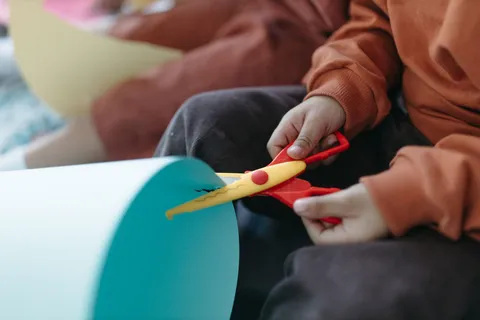
- Kid-safe scissors
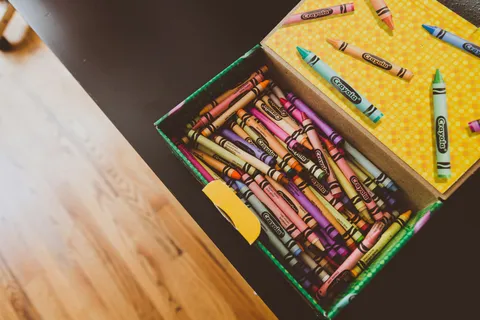
- Crayons, washable markers and colored pencils
- Tape and a hole punch
- String, yarn or twine for hanging
- Stickers, stamps or a few torn pieces of tissue paper
- An old tablecloth or newspaper to cover the table
Skip loose glitter and small beads if you have toddlers. Colored paper scraps and crayon shavings give sparkle without the choking risk.
Toddlers (about 2 to 3): tear, stick and stamp
At this age, the process matters more than the product. Keep each craft short, ten minutes at most.
- Torn-paper tree. Draw a big tree shape on paper. Let your toddler tear green paper into pieces and stick them on with a glue stick.
- Sponge-stamp stars. Cut a kitchen sponge into a star or square shape. Dip it in washable paint and press onto paper to make wrapping paper.
- Sticker snowman. Draw a snowman outline and let your child cover it with white circle stickers.
- Crayon rubbing. Place paper over leaves or textured card and rub with the side of a crayon.
Your role is to set up, supervise and hang the finished piece proudly on the wall.
Preschoolers (about 3 to 5): cut, glue and decorate
Preschoolers can start using safety scissors, which is great fine motor practice. Our guide to fine motor activities for preschoolers explains why these small movements matter.
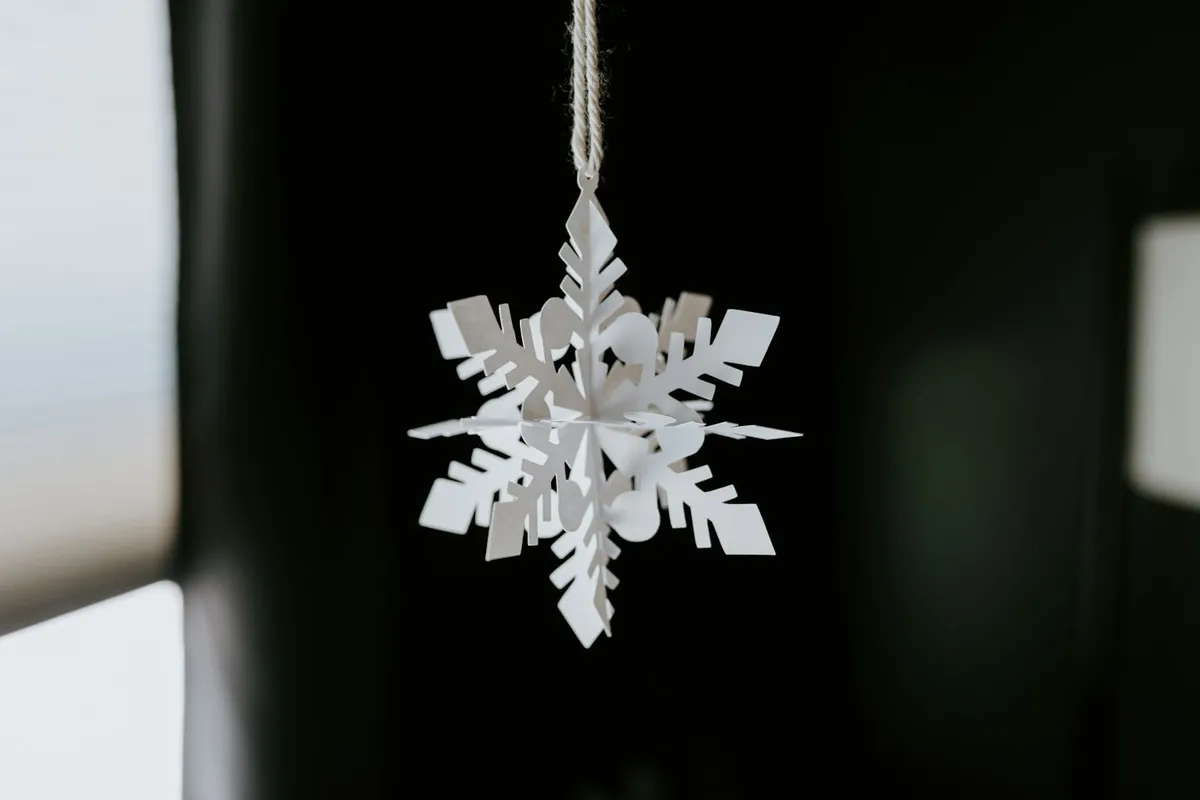
- Paper snowflakes. Fold a square of paper in half and then in half again, and help your child snip small shapes along the edges before unfolding. Every snowflake looks different, and that is the charm. Hang them on a window with tape or on string.
- Paper-chain garland. Cut strips of red and green paper, loop one through the next and glue or tape the ends. Count the links as you go for a built-in math moment.
- Handprint reindeer card. Trace your child’s hand on brown paper, cut it out, glue it to folded card, and add eyes and a red nose.
- Decorated gift tags. Cut small rectangles from cardstock, punch a hole, and let your child decorate with crayons and stickers. Tie on a piece of yarn.
Early school age (about 6 to 8): fold, plan and make
Older kids enjoy projects with several steps and a result that looks “real.”
- 3D paper stars or ornaments. Cut and glue paper strips into stars or woven hearts, following a simple pattern or one you invent together.
- Cardboard ornaments. Trace a cookie cutter on cardboard, cut it out, paint it and add a loop of string.
- Handmade cards. Plan a message, practice the lettering on scrap paper, then write it on the final card.
- Paper-chain advent chain. Make a chain with one link for each day before Christmas and tear one off every morning.
- Pinecone decorations. Collect dry pinecones outdoors, paint the tips white or add small dabs of paint, and hang them with a loop of string.
Handmade gifts kids can make
Children often love giving presents, and a gift they make themselves teaches generosity. A few ideas by effort level:
- A framed drawing. Pick a favorite drawing and put it in a simple frame or on a piece of colored cardstock.
- A bookmark. Cut a strip of cardstock, decorate it and add a ribbon or yarn tassel.
- A card with a message. A few sentences in a child’s own words often become the keepsake.
- A homemade coupon book. “One hug,” “Help with the dishes,” or “Reading a story together.” Keep promises realistic.
- A decorated jar or mug. For mugs, use a paint pen made for ceramics and follow the instructions on the label; an adult should handle any oven-baking step.
Let your child choose the recipient and the design. Resist the urge to “fix” the drawing; imperfect is what makes it personal.
A printable option when you need a break from prep
Some days you want crafts without cutting a hundred shapes. A printable book can handle much of the setup. Christmas Activity & Coloring Book for Kids: Puzzles, Countdown Pages & Gift Tags is a 25-page printable PDF for ages 3 to 8, priced at $4.99. According to the product page, it includes Christmas coloring pages, countdown pages, puzzles and mazes, counting and early math, tracing, a draw-your-gift-tag page, a Dear Santa letter and a make-your-own-ornament activity. It sits well next to the crafts above, for quiet time or while glue dries.
For more coloring ideas with a kitchen and baking flavor, see our kitchen and baking-themed coloring pages for kids.
Safety notes for Christmas crafting
A few extra habits that help:
- Cover the table before you begin and keep wet wipes close.
- Wash hands after gluing and painting.
- Store scissors and craft tools out of reach when you are done.
- If anyone has allergies, check the ingredients in salt dough, flour paste or food coloring before using them.
Making crafting time calm
A craft session goes better when you plan for the child, not the Pinterest picture:
- Pick one project. Offer two choices at most.
- Prepare the pieces. Pre-cut shapes for toddlers, or have all supplies laid out for older kids.
- Set a time limit. Fifteen to twenty minutes is plenty for preschoolers.
- Let the child lead. Offer help when asked and keep your own hands out of their picture.
- Display the work. A string and a few clothespins make an instant gallery.
- Clean up together. Even toddlers can put crayons back in the box.
Start small
You do not need to try every idea. Pick one craft this week, such as the paper snowflakes, and see how your child reacts. If it is a hit, add another next week. By Christmas you will have a house decorated by small hands and a few gifts ready to wrap.