Addition is one of the first big ideas in math, and kindergarteners often find it easier when it feels like play. Instead of starting with a page of sums, it helps to let children join groups of real things, count them, and talk about what they see.
Here are 10 addition games for kindergarten that need little more than dice, counters and a few household objects. They follow a gentle progression from sums to 5 up to 10 and 20, so you can choose games that match where your child is right now. If you want to see what else children typically work on at this age, our guide to kindergarten math and reading worksheets is a good companion.
What kindergarteners need before they start adding
Addition builds on a few earlier skills. It helps if your child can:
- Count objects up to 10 accurately, touching each one once
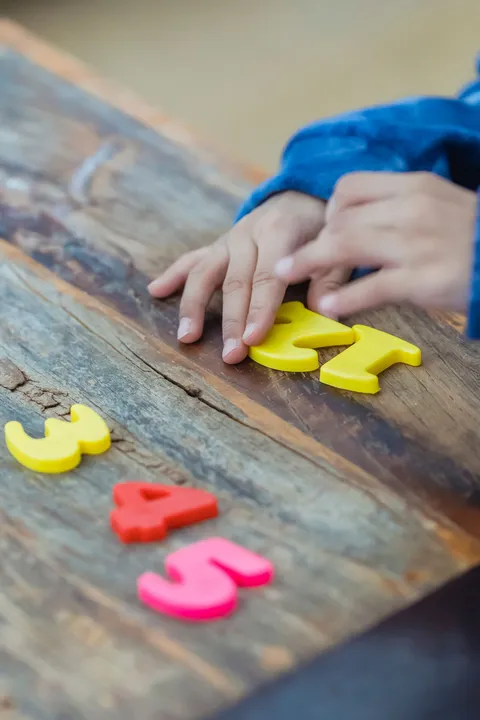
- Recognize the numerals 1 to 10
- Understand that the last number counted tells “how many”
- Compare two groups (“Which has more?”)
If counting is still shaky, spend time there first. Our article on counting activities for kindergarten has ideas to strengthen those foundations.
The three stages of learning addition
Most children move through three stages, and it helps to follow them in order.
- Concrete: Joining real objects such as blocks, buttons or counters
- Pictorial: Drawing dots or circles, or using pictures of objects
- Abstract: Writing and reading number sentences like 3 + 2 = 5
Spend plenty of time at stage 1. Moving to numbers too quickly is a common reason children feel confused.
What you need
- A few dice (standard dice and, if you can, dice with dots only)
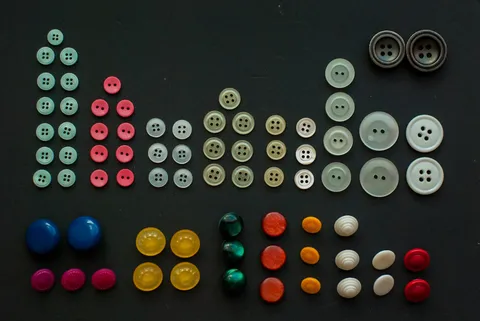
- A bag of counters, such as buttons, pasta shapes or coins from a play set
- Paper and a pencil
- A ten frame (draw a rectangle with two rows of five boxes)
- A deck of playing cards, with face cards removed
Stage 1: Adding to 5 with real objects
Game 1: Two-pile count
Put a few counters in one pile and a few in another. Ask your child to count each pile, then slide them together and count all of them.
- Place 2 counters in one pile and 1 in the other.
- “How many here? How many here? Now how many altogether?”
- Repeat with new numbers, keeping the total to 5 or less.
Say the sum aloud: “Two and one more makes three.” You do not need to write anything yet.
Game 2: Finger flash
Show a number on one hand and another number on the other hand, then count all the fingers.
- You show 2, your child shows 3. “How many altogether?”
- Take turns choosing the numbers
- Add a rule that the total must be 5 or less at first
Fingers are a perfectly good addition tool at this age.
Stage 2: Adding to 10 with games
Game 3: Roll and add with one die
Roll one die and put that many counters on a plate. Roll again and add more counters. Count them all.
- Child rolls twice and counts the total
- Parent and child each roll, then compare who has more
- Write the number sentence after a few rounds: 4 + 3 = 7
Game 4: Ten-frame fill
A ten frame makes it easy to see how close a total is to 10.
- Roll a die and place that many counters in the frame, filling the top row first.
- Roll again and add more counters.
- Count how many boxes are full and how many are empty.
Over time, children begin to see that 6 and 4 make 10 without counting. This “making ten” idea is useful for later addition.
Game 5: Addition war with cards
Use cards from ace (1) to 10 and play in pairs.
- Each player turns over two cards.
- Each adds the two numbers together.
- The player with the larger total wins both pairs.
Let children use counters or fingers to check their answers. This game also builds comparison skills.
Game 6: Hide and find
Hide some counters under a cup.
- Show 5 counters.
- Hide 2 under the cup while your child watches.
- Ask, “How many are hiding?” and let them count what is left to work it out.
This is a gentle introduction to the idea that addition and subtraction are connected.
Stage 3: Moving toward 20
Game 7: Board game adding
Any simple board game with dice works, with one twist: before moving, your child must add the two dice together.
- Roll two dice and say the total before moving
- Move forward by that many squares
- Use counters to check any tricky sums
Start with dice that go up to 6, and add a second die only when one die feels easy.
Game 8: Counting on
Counting on is a strategy where a child starts from the bigger number and counts up.
- Roll two dice, such as 5 and 3.
- Say, “Start at 5 and count on: 6, 7, 8.”
- Check with counters.
Some children discover this by themselves. Let them find it at their own pace, and do not force it if counting from 1 feels more comfortable.
Game 9: Beat the target
Choose a target number, such as 10, and see how close the roll gets.
- Roll two dice and add them
- If the total is 10, the child wins a counter
- Try again with a target of 12, then 15 once they are comfortable
Game 10: Add and color
For a quieter activity, draw two rows of simple shapes on paper (such as circles). Your child colors a few in one color and a few in another and writes the sum below.
- “3 red and 4 blue is 7 altogether.”
- Let your child make the sums for you to solve, which reverses the roles and builds confidence
This bridges the gap between games and written number sentences.
Games or worksheets? Use both
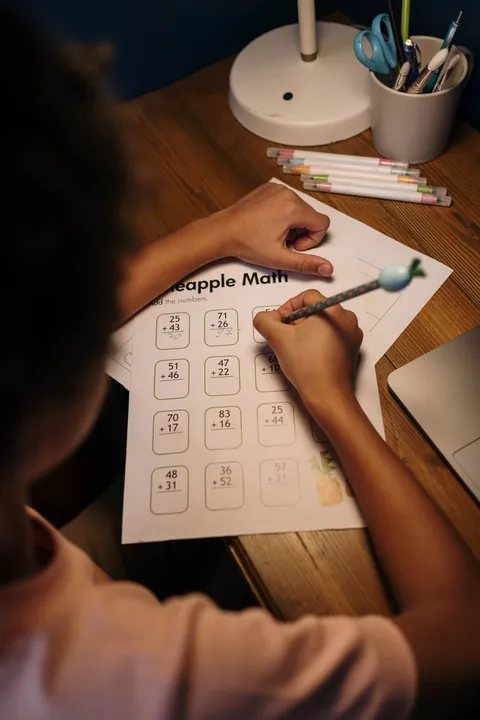
Games are excellent for understanding, while worksheets give children quiet practice and a way to review what they have learned. If you would like ready-made pages to go with the games, Kindergarten Math Workbook: Counting, Numbers, Addition & Subtraction to 10 is a 25-page printable PDF for ages 5 to 6 with counting, number matching, picture-based addition and subtraction within 10, math puzzles and a final math challenge. Preschool Skills Busy Book offers school-readiness activities such as numbers and counting, patterns and matching, which can help younger children build up to addition. For cut-and-glue practice, see our guide to cut-and-paste worksheets for kindergarten.
Tips for successful practice
- Keep it short. Five to ten minutes is enough. Stop while it is still fun.
- Use the words. “Add,” “plus,” “altogether” and “makes” help children link language to math.
- Let mistakes happen. If an answer is wrong, count together with counters instead of just correcting it.
- Celebrate effort. “You counted carefully” matters more than the right answer.
- Return to earlier games. Revisiting an easier game builds confidence.
- Link to real life. “You have two cookies and I give you one more. How many now?” makes math real.
Troubleshooting
- Counts by guessing. Encourage touching each object once and moving counted objects to one side.
- Loses track at higher numbers. Go back to sums within 5, then step up slowly.
- Gets frustrated. Switch to a hands-on game like two-pile count, or take a break.
- Does not want to write. Skip written sums for now. Spoken sums and counters are still real math.
- Always uses fingers. That is fine. Fingers are a useful tool, and children usually need them less over time.
A simple weekly plan
- Monday: Two-pile count (sums to 5)
- Tuesday: Roll and add with one die
- Wednesday: Ten-frame fill
- Thursday: Addition war with cards
- Friday: A board game of your child’s choice, with adding before each move
Short and regular beats long and occasional. If your child is ready for more, you can compare progress with the skills in our kindergarten at-home guide.