Counting looks simple to adults, but for a five-year-old it is a real piece of reasoning. Reciting “one, two, three” is only the beginning; the harder part is understanding that the last number you say tells how many there are, and that you must touch each object exactly once.
The ten counting activities for kindergarten below use things you already own and fit into five or ten minutes. They are ordered roughly from easiest to most challenging, with a gentle path toward adding and subtracting at the end.
Before you start: what good counting looks like
Watch your child count a small pile of objects. Skills that tend to develop in this period include:
- One-to-one matching. One touch, one number word.
- Stable order. Saying the numbers in the right order every time.
- Cardinality. Knowing the last number said is the total.
- Counting on and back. Starting from a number other than one, or counting down.
If some of these wobble, that is normal and worth playing with, not worrying over. For a wider view of what kindergarten math usually covers, see our kindergarten math and reading worksheets guide.
1. Counting walks
Take a walk around the house, yard or block and count what you see: windows, steps, trees, red doors. Ask, “How many do you think there are before we count?” Estimating first makes the real count more exciting.
2. Button or block counting
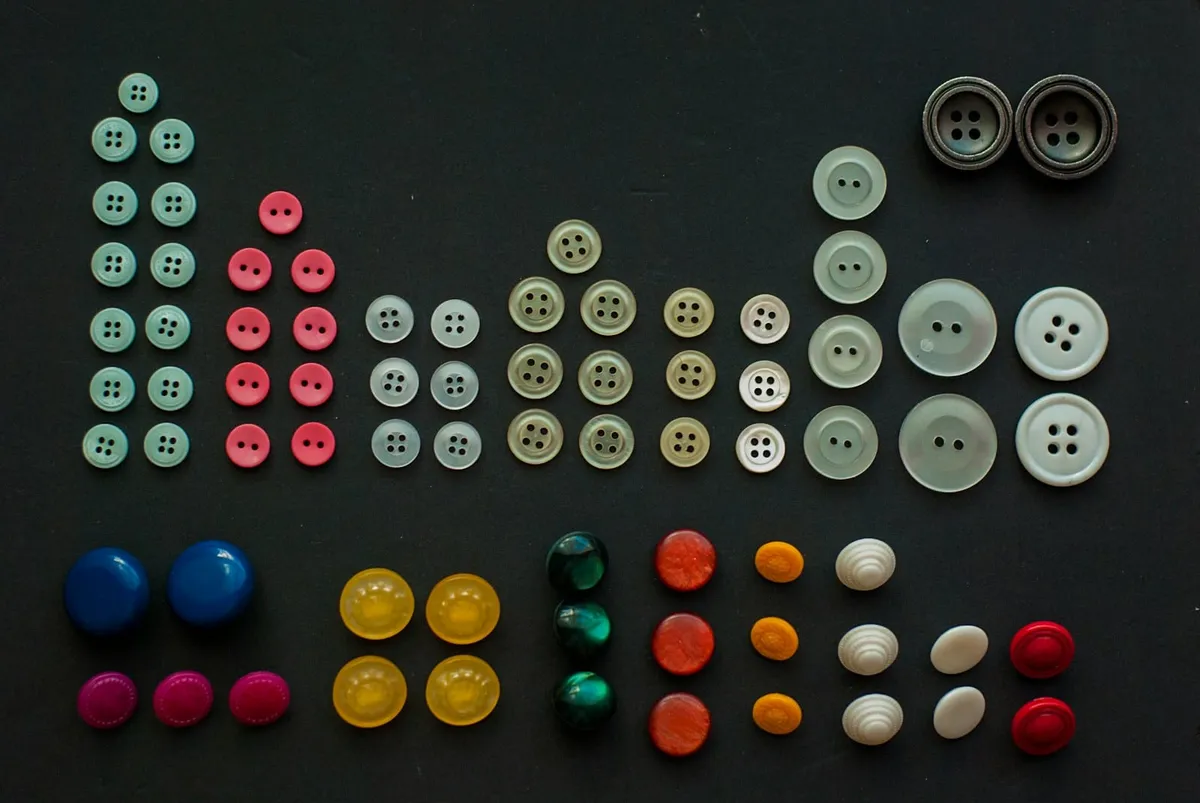
Spill a handful of buttons or blocks on a tray and have your child count them by touching each one. Move counted items to one side so none is missed or counted twice. Start with up to 10 and grow slowly. Keep buttons and other small items away from younger siblings, and supervise closely.
3. Dice games
Roll one die and count the dots. Then try:
- Roll and collect. Roll a die and take that many blocks. First to 20 wins, or just see how many you gather.
- Roll and jump. Roll and jump that many times.
- Roll two dice. Count all the dots together, a first step toward adding.
4. Egg-carton ten frame
A ten frame is a grid of two rows of five, and it helps children see numbers as groups. You can make one from an egg carton by cutting off two of the twelve cups.
- Place counters (beans, buttons or pom-poms) into the cups as you count.
- Ask, “How many are there? How many empty spots?”
- Show 7, then ask how many more to make 10.
Over time children begin to “see” 5 and 3 more as 8 without counting each one.
5. Number hunt
Write numbers 1 to 10 on sticky notes and hide them around a room. Children find a note, say the number and bring back that many items, such as three spoons or five socks.
6. Hopscotch and number paths
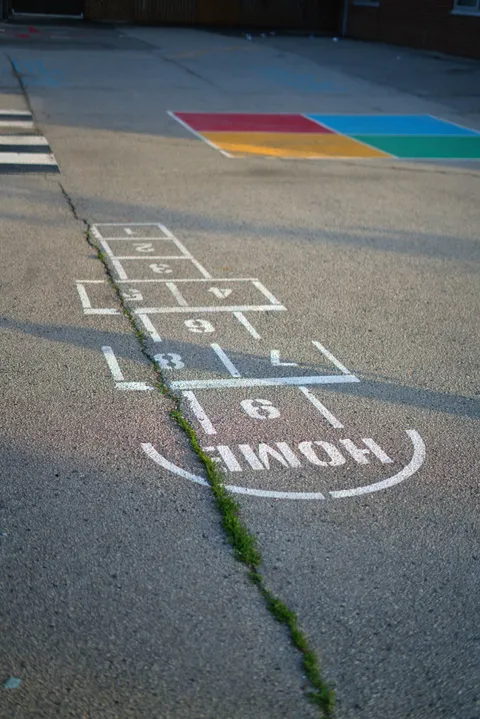
Draw a number path with chalk outside, or with masking tape indoors. Hop from 1 to 10, then backwards. Call out numbers and have your child jump to them. Add skip counting, like 2, 4, 6, later.
7. Counting snacks
Snack time is full of math. Count raisins, crackers or grapes into groups.
- “Can you give me 5 grapes?”
- “Put 3 crackers on each plate.”
- “I have 6 raisins. If you eat 2, how many are left?”
Check for allergies, and keep round foods like whole grapes cut up for younger children to reduce choking risk.
8. Card games
Use a deck with face cards removed (or just cards 1 to 10).
- War. Each player flips a card; the higher number takes both.
- Memory. Match pairs of the same number.
- Go to 10. Lay out cards in order from 1 to 10.
9. Counting books and songs
Songs and rhymes with numbers, such as counting down from ten, make sequences stick. Count objects in picture books together, pointing as you go. For more ideas on learning through play at this age, see our guide to early learning activities for preschoolers, which also suits younger siblings.
10. Number matching with objects
Make cards with numerals 1 to 10 and cards with dots or small pictures. Have your child match the numeral to the right group, or place that many objects on a numeral card. This links the written symbol to the amount.
From counting to adding and subtracting
Once counting to 10 feels easy, children can start combining and separating groups with the same objects:
- Adding. “Here are 3 buttons. I’ll add 2 more. How many now?” Count them all, then try counting on from 3.
- Subtracting. “You have 5 blocks. I take 2 away. How many are left?”
- Make 10. Show 6 counters in a ten frame and ask how many more fill it.
Keep things concrete at first: objects, then pictures, then numbers on paper. A workbook can help with the paper stage. The Kindergarten Math Workbook is a 25-page printable PDF for ages 5 to 6 covering counting to 10, number matching, count-and-write pages, and addition and subtraction within 10, including picture-based problems. It is priced at $3.99.
Younger children or mixed-age families may also like the Preschool Skills Busy Book, which includes numbers and counting among its school-readiness activities.
Making counting a daily habit
A few habits that keep practice light:
- Five minutes a day. One game, no pressure.
- Count in real life. Stairs, plates, toys, cars.
- Let your child lead. Ask what they want to count.
- Celebrate effort. “You touched every button!” is better than “Right!”
- Take breaks. If it feels like a struggle, stop and return another day.
For more no-equipment games to fill odd moments, our list of games to play at home with kids has plenty.
When to ask for help
Children learn at different speeds, and a bit of unevenness is normal. If your child seems very frustrated, avoids number activities or is falling well behind what their teacher expects, it is a good idea to talk with their teacher. They can suggest what to work on next.
A simple plan for this week
Pick three games: a counting walk, an egg-carton ten frame and a dice game. Play one a day for five to ten minutes, and keep the rest of the week free. Watch for your child touching each object once and saying the total, and enjoy the small wins.