Six is an interesting age at home. Many children are starting or settling into school, they can follow multi-step rules, they love to win (and sometimes hate to lose) and they are often full of opinions about what they want to do. That is good news for activity ideas, because a 6-year-old can handle more than a preschooler without needing to be glued to a screen.
This guide sorts ideas by skill area so you can mix them through the week. If your child is a little younger, see our list of activities for 5-year-olds at home, and for the next step up try screen-free activities for 8-year-olds. Treat all ages here as ranges: children develop at different speeds, and these are ideas, not milestones to tick off.
What 6-year-olds tend to enjoy
Every child is different, but many 6-year-olds like:
- Rules and games. They can follow rules and take turns, and they enjoy simple strategy.
- Making things. Building, drawing and crafting projects with a visible result feel satisfying.
- Being the expert. Teaching you a game or explaining a fact gives a boost of confidence.
- Big energy followed by calm. Many need active play to settle into quiet activities.
A useful approach is to plan a small “menu” each day: one active thing, one thinking thing and one creative thing. Your child picks the order.
Movement games that burn energy indoors
Sitting still is hard after a school day or on a rainy weekend. These games need almost no equipment:
- Pillow obstacle course. Lay cushions to step over, a blanket to crawl under and a line of tape to balance along. Time each run, then change the course.
- Freeze dance with a twist. When the music stops, call out a pose such as “tree”, “robot” or “sleeping cat”. Add rounds where the pose must have only one foot on the ground.
- Sock toss. Roll socks into balls and toss them into a laundry basket from different distances. Keep score on paper to add counting.
- Animal walks. Race across the room as a crab, bear or frog. It is silly, active and works in a small space.
- Balloon keep-up. Try to keep a balloon off the floor for as long as possible, then use only elbows or only the left hand.
For more no-prop ideas, our guide to games to play at home with kids with no equipment has a longer list.
Logic and thinking activities
Six-year-olds are ready for puzzles that take a few minutes of real thought:
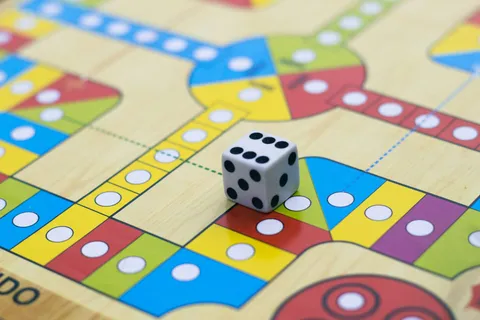
- Simple board and card games. Matching games, memory, “Go Fish” and basic strategy games teach turn-taking, memory and planning.
- Mazes and spot the difference. These are quick to start and give a satisfying finish. You can draw your own maze on a sheet of paper and let your child draw one for you.
- Pattern challenges. Make a row of colored blocks or beads (red, blue, red, blue) and ask your child what comes next, then let them create patterns for you to continue.
- Riddles and “20 questions”. One person thinks of an animal and the other asks yes/no questions. It builds listening and reasoning skills.
- Build to a challenge. Ask your child to build the tallest tower that can hold a small toy, or a bridge between two books that holds a stuffed animal. Let them test and rebuild.
If your child enjoys puzzles, a printable workbook can save you hunting for ideas. Brain Games for Kids: Printable Activity Workbook is a PDF for ages 4 to 10 with puzzles, mazes, matching games, pattern recognition, spot the difference and logic challenges, at $3.99. Print what you need and reuse it for personal or family use.
Creative projects
Creative time works well when there is a loose goal and room for your child’s ideas:
- Draw a map of your home or street. Add a legend with symbols and a compass rose. It practices observing and early map skills.
- Make a comic strip. Fold a sheet into six panels and tell a story with pictures first, words second.
- Build a cardboard city or marble run. Use recycled boxes, tubes and tape. Adult help with cutting is often needed.
- Invent a game. Ask your child to make up a new board game with a hand-drawn board and rules. Play it together and ask for improvements.
- Craft with what you have. Paper chains, collages from old magazines and painted stones are cheap and fun.
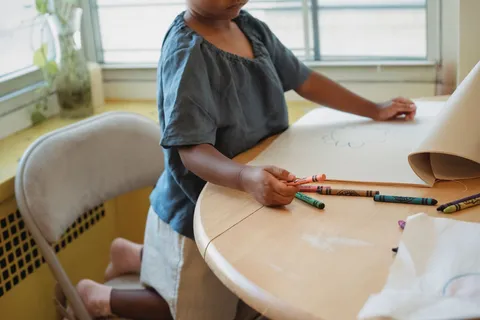
Keep a “creative box” with paper, crayons, tape, child-safe scissors, glue sticks and recycled materials so your child can start without asking you to set it up.
Early reading and writing play
Many 6-year-olds are still building reading confidence, and some are already fluent. Either way, playful practice helps more than drills:
- Read together, taking turns. Your child reads a page, then you read a page. Pick books a little below their independent level for fun, and sometimes a harder one to enjoy together.
- Letter and word hunts. Hunt through a cereal box, a magazine or a street sign for specific letters, then for words they know.
- Write real notes. A shopping list, a birthday card or a note to a grandparent gives writing a purpose, and spelling does not have to be perfect.
- Story dice or story cards. Draw pictures on small cards and ask your child to make up a story using three of them.
If you have worries about your child’s reading, talk to their teacher. We cannot assess individual children, and a teacher can say what is typical for their class and school.
Math play that does not feel like homework
You can sneak numbers into almost anything:
- Cooking and baking. Measuring ingredients, counting spoonfuls and splitting a snack into equal parts all use real math.
- Number scavenger hunt. Ask your child to find something with the number 3, five round things, or a number higher than ten around the house.
- Shop with play money. Set up a pretend store with price tags and let your child be the shopkeeper, adding up totals and making change.
- Dice games. Roll two dice and add them, compare them or race to a target number on a sheet of paper.
- Measure everything. Use a ruler, tape measure or a row of paper clips to measure the length of a toy, a shoe and a table.
Putting a day together
A simple rhythm helps many families. For example:
- Something active first, such as an obstacle course or dance break.
- A quiet challenge, such as a puzzle, a maze or a reading time.
- A creative project while you cook or tidy up nearby.
- A shared game in the evening, such as a card game or a family quiz.
For days when you need a ready-to-go option, an activity book can help. The Ultimate Kids’ Activity Book: Screen-Free Games and Puzzles is a printable PDF for ages 4 to 8 with puzzles, mazes, matching games, word searches, connect-the-dots, counting games and drawing prompts, at $4.99. It works well as a quiet-time or travel option, but nothing in this article requires it.
When your child says “I’m bored”
Boredom is normal, and a little of it is not a problem. Many parents find it helps to:
- Keep a “boredom jar” with ideas written on slips of paper.
- Offer two or three specific choices instead of an open-ended list.
- Join in for the first five minutes, then step back.
- Accept that not every activity will be a hit. If one flops, try another tomorrow.
The goal is not a perfect, enriching day. It is a handful of moments where your child is curious, moving, creating or thinking, and enjoys your company.