A rainy forecast doesn’t have to mean a long, screen-heavy afternoon. This guide is organized by age so you can jump straight to what will actually hold your child’s attention — from a two-minute sensory bin for a toddler to a longer, more independent project for a nine-year-old. Nothing here requires a supply run.
Quick-start: five activities you can set up right now
- Cushion obstacle course. Line up couch cushions and low furniture into a path to climb over and crawl under.
- Paper plate sorting game. Sort buttons, blocks, or pasta onto plates labeled by color or shape.
- Balloon and cup toss. Tape a few cups to the floor and take turns tossing a lightly inflated balloon into each one.
- Sock puppet in two minutes. An old sock, two buttons, and a marker make a puppet ready for its first show.
- Flashlight shadow play. Dim a room and use hands or toys to cast shadows on the wall.
Activities for toddlers (about ages 1–2)
Toddlers do best with activities that involve simple, repeatable motions and close supervision.
Sensory bin with rice or pasta. Fill a shallow bin with dry rice or pasta and hide a few small toys inside. Add a measuring cup and spoon for open-ended scooping and pouring — the pouring itself is usually more engaging than finding the hidden toys.
Painter’s tape roads. Stick a few strips of painter’s tape across the floor to create simple “roads” for toy cars, or a path to walk along heel-to-toe.
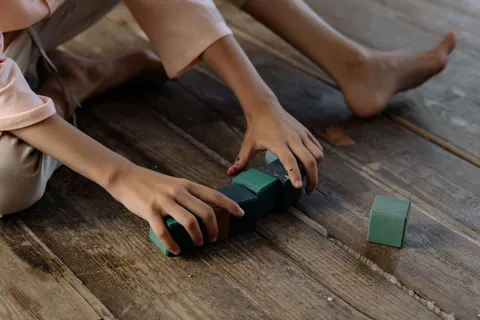
Container stacking and nesting. Nesting cups, empty food containers, or plastic cups of different sizes give toddlers a satisfying stacking-and-knocking-down loop that needs no setup at all.
Activities for preschoolers (about ages 3–5)
Preschoolers can follow a simple multi-step activity and enjoy a bit of pretend-play structure.
Cardboard box imaginative play. An empty box becomes a car, a boat, or a rocket ship. Offer markers and stickers so children can personalize it before the pretend play begins.
Indoor obstacle course. Use couch cushions, painter’s tape, and household furniture to build a path across a hallway or living room. A kitchen timer adds a layer of challenge for children who enjoy racing the clock.
Color and shape hunt. Call out a color or shape and have your child find three matching objects around the room. This works well as a calming activity between more active ones.
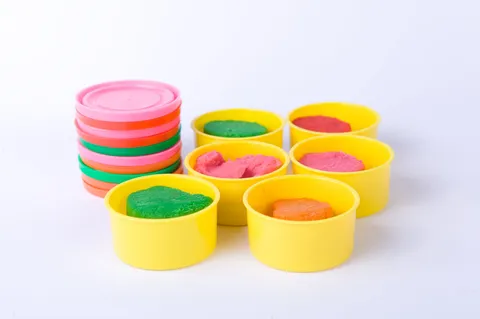
Playdough with kitchen tools. Rolling pins, cookie cutters, and a plastic knife turn a tub of playdough into 20 minutes of independent, hands-busy play.
Activities for early school age (about ages 6–8)
Children in this range can manage longer, more structured activities and enjoy having a clear goal.
Paper airplane distance contest. Fold a few different airplane designs and mark a starting line to see which one flies farthest. This naturally invites a second and third round of adjustments.
Indoor scavenger hunt. Write a short list of items to find around the house (something soft, something that starts with the letter B, something older than you) and set a timer.
Build a marble run. Cardboard tubes, tape, and a few marbles are enough to build a simple run down a wall or staircase railing, with plenty of room for trial and error.
Comic strip creation. A folded sheet of paper divided into four boxes is all it takes to write and draw a short comic strip — a good option for a child who prefers a quieter, solo activity.
Activities for older elementary children (about ages 9–10)
At this age, children can sustain a longer project with less supervision and often prefer activities with a real end product.
Stop-motion animation with a phone camera. Using small toys or clay figures, take a photo, move the figures slightly, and repeat. A basic photo app is enough to flip through the images afterward.
Indoor fort with a working “roof.” Chairs, blankets, and clothespins can hold together a genuinely sturdy fort — a good multi-hour project on its own.
Recipe-following baking project. Choose a simple no-oven recipe (like no-bake energy bites) and let your child follow the steps with minimal help, which builds real independence.
Sibling and multi-age activities
Shared blanket fort with assigned “jobs.” Give each child a role — architect, decorator, snack manager — so different ages can all contribute meaningfully to one project.
Balloon volleyball over a string. Tie a string or ribbon between two chairs and keep a balloon from touching the ground. The slow pace of a balloon keeps this manageable across a wide age range.
Team scavenger hunt. Pair an older and younger child together for a scavenger hunt list, letting the older child read the clues aloud.
Looking for more, organized by category?
Browse the full Kids Activities collection for more screen-free, low-prep ideas.
For a deeper dive into one specific age, see Indoor Activities for 4 Year Olds at Home, and for activities built specifically around avoiding screens, see Screen-Free Boredom Busters for Kids.
Frequently asked questions
What if I only have a few minutes to set something up?
Start with the quick-start ideas at the top of this guide. Each one uses items already in most homes and takes well under five minutes to set up.
Are these activities suitable for more than one child at a time?
Most of them. The sibling and multi-age section groups activities that work well when children of different ages are playing together, and several of the age-specific ideas can be adjusted up or down with light supervision.
Do any of these activities need special equipment?
No. Every activity here uses ordinary household items — paper, containers, cushions, tape, and similar basics most families already have on hand.