When it is cold, wet or simply too late to go out, an indoor scavenger hunt for kids is one of the cheapest and most flexible games you can set up. It uses what you already have, takes a few minutes to prepare and can be adapted for a toddler or an eleven-year-old.
This guide covers the main kinds of hunts, how to match the clues to your child’s age, room-by-room lists to borrow, and the rules that keep the game fun and safe. For more things to do on gray days, see our list of rainy day activities for kids.
Choose a type of hunt
1. Checklist hunt. Give children a list of items to find and tick off. This is the simplest version and ideal for beginners.
2. Picture hunt. For children who cannot read yet, draw or print small pictures of the items (a spoon, a sock, a book) and let them match each one to the real object.
3. Clue trail. Each clue leads to the next hiding place, and the final clue leads to the “treasure”. This takes more preparation but feels like a real adventure.
4. Color or shape hunt. “Find something red, something round, something soft.” A good fit for toddlers and preschoolers.
5. Photo hunt. Children photograph items instead of collecting them. Handy for older kids and for items that cannot be moved.
6. Team challenge. Two teams race to find a list of items, with a rule that everyone must be walking, not running.
Match the clues to the child’s age
Toddlers (about 2 to 3). Keep it to three or four items and use pictures or verbal clues (“Find something soft to hug”). Stay with them and cheer each find.
Preschoolers (about 3 to 5). Use picture clues, color and shape lists, or very simple rhymes (“I have pages and a story; read me, I am not boring”). Add a counting element: “Find three spoons.”
Early primary (about 6 to 8). Short written clues, simple riddles, and a basic “first letter” challenge (“Find something that starts with B”). Clues can lead from one place to another.
Older children (about 9 to 12). Riddles, simple codes (swap each letter for the next in the alphabet), maps of the house and multi-step clues. They can also create a hunt for a younger sibling.
Room-by-room ideas
Choose safe, everyday items, and avoid anything sharp, fragile or hot.
Living room
- Find a cushion with a pattern
- Find something that has a button
- Find a book with a blue cover
- Find three things that are soft
Kitchen (supervise)
- Find something round
- Find a wooden spoon
- Find something that comes in pairs (for example, oven gloves)
- Find a fruit or vegetable that is orange
Bedroom
- Find a stuffed animal with ears
- Find a sock that does not have a partner yet
- Find something that smells fresh (a clean pillowcase)
- Find a picture on the wall
Bathroom (older children, with permission)
- Find a towel that is a different color from the others
- Find something that starts with S
Hall or entryway
- Find a shoe that fits you
- Find a scarf or hat
- Find something that has a zip
You can mix and match these lists and add your own family-specific items.
Sample clue trail (about 10 minutes)
For a simple trail, write each clue on a card and hide it in the place the previous clue names. Adjust to your home.
- Start card (on the fridge): “I keep your food cold, I hum all day. Look where the socks go when they’re away.” → Laundry basket
- Laundry basket: “I’m full of books, but I am not a library. Find me where you sit to read.” → Reading chair
- Reading chair: “I help you see the stars at night, though I am not a window. Look where the pillows live.” → Bed
- Bed: “The treasure is somewhere you eat. Look where plates and spoons meet.” → Kitchen table, with a small prize or snack
Replace the riddles with picture clues for younger children, or longer riddles for older ones.
Set simple rules before you start
A few agreements keep the hunt calm:
- Walk, don’t run. Most indoor accidents happen when children race.
- Hands off breakables. Mark off-limits rooms or shelves.
- Ask before opening drawers, cupboards or the fridge.
- Work as a team if there is more than one child, or take turns reading clues.
- No pushing. If someone gets frustrated, pause and give a hint.
Before the hunt, move anything sharp, medicinal, hot or heavy out of reach. Do not hide clues in places such as stairs or on top of furniture.
Make it feel special with small touches
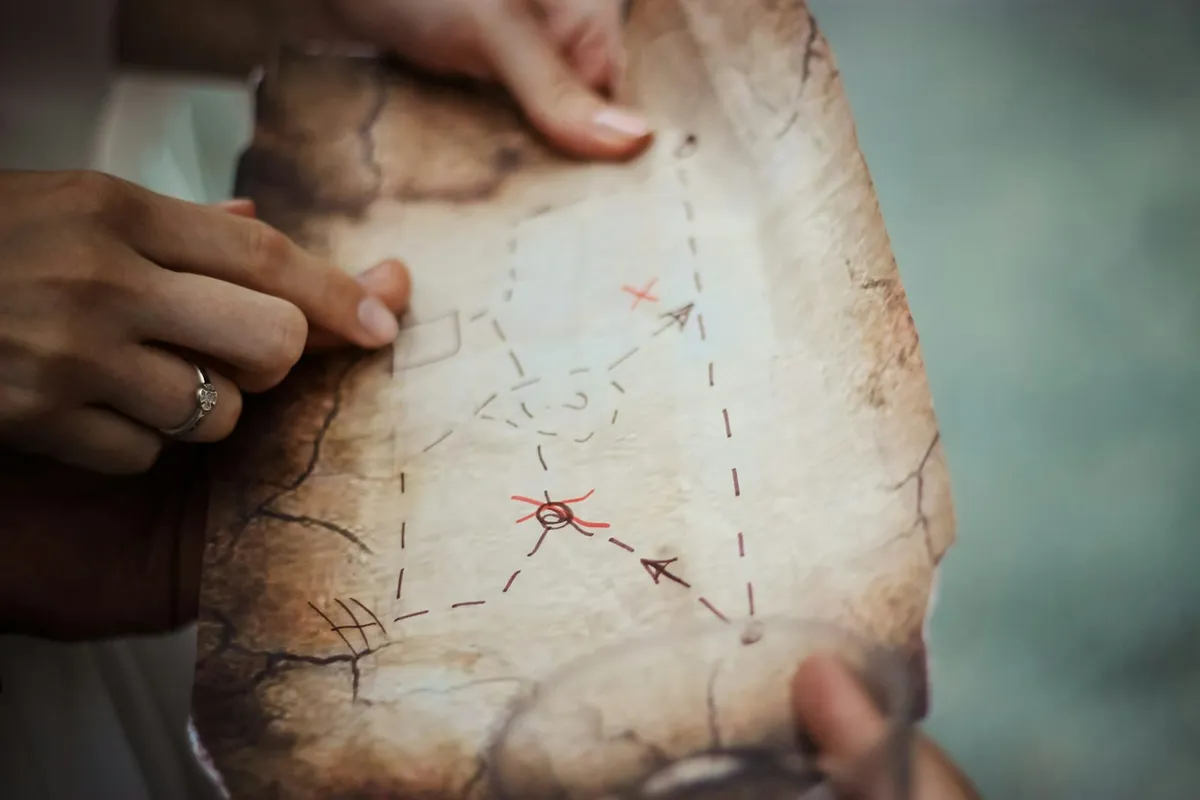
- A map. Draw a simple plan of the house and mark the places where clues are hidden.
- A detective kit. A paper magnifying glass, a clipboard (a piece of cardboard works) and a pencil.
- A theme. Pirates, spies, zoo animals or “the missing teddy”.
- A timer. For competitive children, a friendly “beat your own time” challenge adds excitement. For others, skip it.
- A finishing ritual. A snack, a game of cards or a shared story gives the hunt a warm ending.
Use the hunt as a bridge to quieter activities
After a lively hunt, children often need a calm activity. Have something ready, such as drawing the treasure map, sorting the found items, or settling down with a printable puzzle. The Ultimate Kids’ Activity Book — 25 Screen-Free Games & Puzzles is a printable PDF for ages 4 to 8 with puzzles, mazes, matching games, word searches, connect-the-dots and drawing prompts, so a wet afternoon can include both a hunt and some quiet paper-and-pencil time.
For more ideas for this age group, see our guide to indoor activities for 4 year olds and our list of screen-free boredom busters.
Quick troubleshooting
- A child gets upset when they cannot find an item. Offer a hint (“warmer, colder”) or make it a team effort.
- One child finds everything first. Give each child their own color or list, or set a “one item at a time” rule.
- It ends too quickly. Add a second round: “Now hide five things for me to find.”
- It runs too long. Shorten the list and finish with the final clue.
- Mixed ages. Give younger children picture lists and older ones riddles, with the same final destination.