Telling time on an analog clock looks simple to an adult, but it asks a child to do several things at once: read numbers, understand two hands that mean different things, count by fives and connect all of that to the idea of time passing. No wonder many children need weeks or months to get comfortable.
This guide shows how to teach kids to tell time in a logical order, from the hour to five-minute intervals, with games, everyday routines and a realistic sense of what to expect. If your child is still learning to manage their day, you might also like our article on teaching kids time management.
Before you start: what children should know first
Reading a clock builds on some basic skills. It helps if your child can:
- Recognize and read numbers up to 12 and ideally up to 60
- Count by fives, at least to 30 or so, even if they need help
- Understand words such as before, after, morning, afternoon, and night
- Tell the difference between short and long
If skip-counting is shaky, practice it first. Chanting “5, 10, 15, 20…” while pointing at the clock numbers is one of the most useful warm-ups.
What you need
- A real analog clock, or a toy clock with movable hands (a paper plate and two paper hands with a brad fastener works well)
- A marker, paper and a few counters
- A small timer or a sand timer
- A weekly or daily routine chart (optional)
Step 1: Meet the clock
Start with a clock face and talk about what you see.
- The numbers 1 to 12 go around in order.
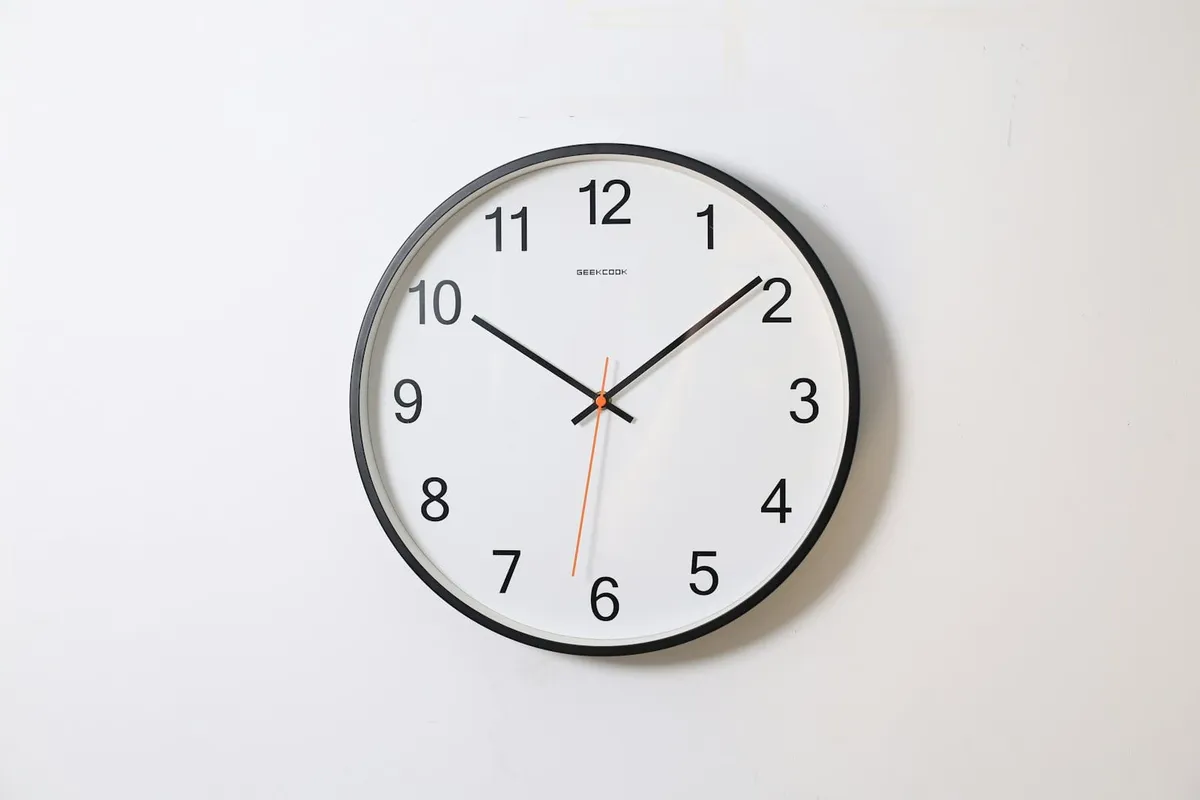
- There are two hands: a short one and a long one.
- The short hand is the hour hand. It tells us the hour.
- The long hand is the minute hand. It tells us how many minutes.
Ask your child to find “the number at the very top” (12) and “the number at the very bottom” (6). A fun description: the hour hand is “short and slow”, the minute hand is “long and fast”.
Step 2: The hour (o’clock)
Begin only with times on the hour. When the minute hand points straight up at the 12, the time is “something o’clock”, and the hour hand tells you which hour.
- Set the clock to 3:00 and say, “The long hand is on 12. The short hand is on 3. It’s 3 o’clock.”
- Ask your child to say it back.
- Give a few times and let your child move the hands to match.
- Link them to your day: “We have lunch at 12 o’clock.” “Bedtime is at 8 o’clock.”
Keep this step going until reading and setting o’clock times is easy and fast.
Step 3: The half hour
Next comes “half past”. When the minute hand points straight down at the 6, the time is half past the hour.
- Explain that the hand has gone halfway round the clock, so it is “half” an hour.
- Show how the hour hand sits roughly between two numbers. At 3:30, the short hand is halfway between 3 and 4. This is tricky for many children, so talk about it explicitly.
- Practice: “It’s half past 7.”
Step 4: Quarter past and quarter to
Now add quarters. Draw or show the clock like a pizza cut into four slices.
- Minute hand on 3 is quarter past (a quarter of the way round).
- Minute hand on 9 is quarter to the next hour (a quarter left to go).
- Compare with halves: two quarters make a half, four quarters make a whole hour.
Using a shaded paper plate clock, let your child see the “slice” covered by the minute hand.
Step 5: Count by fives
This is the step that turns clock reading into a real skill.
- Point to each number on the clock and count: 1 is 5 minutes, 2 is 10 minutes, 3 is 15 minutes, and so on.
- Write the minute numbers (5, 10, 15 … 55) lightly on the outside of the paper clock.
- Practice skip-counting out loud as you move the minute hand around.
- Then read times such as 4:10, 4:25 and 4:40 together.
At first, always have the child read the hour hand first and the minute hand second. Say the hour, then the minutes: “It is 5… twenty.”
Step 6: Put it together with games
Short, playful practice helps more than worksheets alone.
- Clock bingo. Draw times on cards and call them out.
- What time is it, Mr. Wolf? An old favorite for practicing times on the hour and half hour.
- Set my clock. You call a time and your child makes it on the toy clock. Then swap roles and make some deliberate mistakes for your child to catch.
- Daily time check. Ask “what time is it?” at the same moments each day, such as before lunch or dinner.
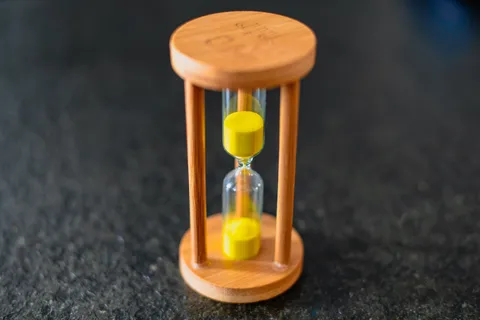
- Beat the timer. Use a visual timer to show how long five minutes feels: tidy up, brush teeth, read a page.
- Match the clocks. Pair analog clock pictures with digital times.
Real-life routines make it stick
Children understand time best when it is connected to their day.
- Draw a simple daily schedule and put clock faces next to key events.
- Let your child be the “time keeper” for leaving the house or starting a bath.
- Use phrases such as “In five minutes, we turn off the TV” and show the clock.
- Talk about how long things take: “Brushing teeth takes about two minutes.”
If your child enjoys planning and sequencing, My Time-Smart Day: A Time Management Workbook is a 15-page printable PDF for ages 6 to 7 with schedule, planning, time-word, routine and sequencing activities. It is a time-management and routines workbook rather than a clock-reading course, but it gives children plenty of practice thinking about their day. You can see how it fits with other skills in our guide to kindergarten skill-building workbooks.
A realistic timeline (every child is different)
Children vary a lot, so use this only as a rough guide.
| Stage | Typical focus |
|---|---|
| Around 3 to 4 | Time words, routines, before and after, timers |
| Around 5 to 6 | Parts of the clock, hour, half hour |
| Around 6 to 7 | Quarter hours and five-minute counting |
| Around 7 and up | Exact minutes, digital and analog together, elapsed time |
Schools follow different curricula, so check what your child’s class is working on. If a step feels too hard, go back one step. That is normal.
Troubleshooting
- Mixing up the hands. Use a colored sticker on the hour hand and a different color on the minute hand. Say “short hand, hour; long hand, minutes” often.
- Counting by fives is slow. Practice skip-counting separately with songs, steps or jumps.
- Confusion about 7:45 versus 8:45. Show how the hour hand is almost at the next number at quarter to.
- Digital clocks only. Many homes mostly have digital clocks. Add an analog clock to a prominent wall for a few weeks.
- Frustration. Stop while it is still fun, and try again the next day with a game.
How much practice is enough?
Five to ten minutes a day usually works better than a long weekly session. Mix hands-on tasks with real-life time checks, and let your child teach you now and then. For a simple way to fit this kind of practice into your week, see our at-home skill practice routine.