A child tumbles off a scooter, and a three-year-old nearby rushes over with a toy to share. Ten minutes later the same child snatches a shovel from the sandbox and walks off, unbothered by the wail behind them. If that sounds familiar, you are watching empathy in the making: real, but still uneven.
This guide to how to teach empathy to preschoolers focuses on small, repeatable habits: naming feelings, using picture books, trying role play and responding calmly when things go wrong. None of it needs special materials, and all of it can fit into the day you already have.
What empathy looks like at ages 3 to 5
Empathy is usually described as two linked skills: noticing what someone else feels, and responding with care. For preschoolers, both are developing. A few things you may see:
- A child pauses at a crying friend, watches, and maybe offers a hug or a toy.
- A child says “Are you sad?” but moves on quickly.
- A child understands that a character in a story is upset but still insists on their own way at the sandbox.
Each of these is normal. Young children are also still learning that other people can want and feel things that differ from their own wishes, which makes empathy a skill that grows over years, not a switch that flips at age four. Treat every small caring moment as something to notice and encourage, not as a test your child passed or failed.
Step 1: Build a feelings vocabulary
It is hard to notice sadness in a friend if you have never had a word for your own. Start with a handful of simple words: happy, sad, mad, scared, excited, tired, frustrated, proud.
- Narrate your child’s feelings. “You look frustrated. The puzzle piece will not fit.” You are not fixing it, just naming it.
- Narrate your own. “I feel a little nervous about the appointment, so I am taking a deep breath.”
- Use faces. Draw five simple faces on paper with your child and match them to words. Ask them to make each face in a mirror.
- Accept all feelings, guide behavior. “You are allowed to feel angry. You are not allowed to hit.” Our guide to helping kids name and handle anger goes deeper on this.
Children who feel understood tend to find it easier to understand others, so this step supports everything that follows.
Step 2: Use picture books as a practice ground
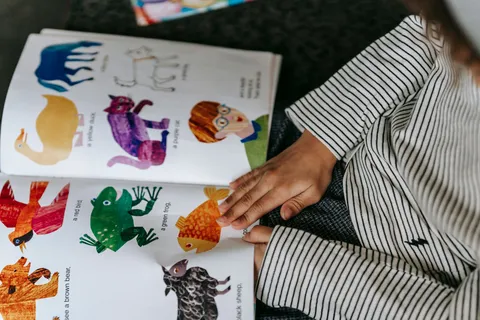
Books are one of the gentlest ways to practice empathy, because the child is watching a character’s feelings from a safe distance. Try this routine on one or two pages per book, not every page:
- Pause on a face. “Look at his eyes. How do you think he feels?”
- Ask why. “What happened just before this page?”
- Connect gently. “Have you ever felt like that?” (Let your child say no or pass.)
- Ask about helping. “What could the other animals do to help?”
Choose stories with clear facial expressions and a simple emotional problem, such as a lost toy, a shy first day or a big frustration. Our article on choosing age-appropriate stories for kids can help you match books to your child, and the tips in the benefits of reading aloud to kids explain why the conversation matters as much as the story.
If you would like a short illustrated story to start with, It’s Okay to Be Shy: A Story About Quiet Confidence is a 10 to 15 page PDF storybook for ages 4 to 8 that includes conversation prompts for parents and teachers. When I Feel Angry: A Story About Big Emotions works in a similar way for frustration and anger. Both are one-time PDF downloads you can print or read on a screen, and each is a conversation starter, not a cure for anything.
Step 3: Try simple role play
Pretend play lets children take another person’s point of view in a low-pressure way.
- Stuffed animal feelings. Have a teddy bear “feel sad” because it lost its blanket. Ask your child, “What could we do to help Teddy?”
- Switch roles. Act out sharing a toy twice: once with your child as the one who wants the toy and once as the one holding it. Ask how each felt.
- Doctor and helper play. Bandages, soothing words and “Are you okay?” are natural empathy rehearsals.
- Puppets for tricky moments. A puppet can say, “I feel left out when you play without me,” which is often easier for a child to hear than the same words from a parent.
Keep sessions to five or ten minutes and follow your child’s lead. If the game turns silly, that is fine; laughing together still builds connection.
Step 4: Respond to real moments with a short script
Real life offers dozens of chances a day. When your child hurts someone, a calm three-part response usually works better than a long lecture:
- Check on the hurt person first. This shows your child what caring looks like.
- Name what happened. “Sam is crying. When you pushed, his arm hurt.”
- Offer a repair. “What could we do to help? A hug, a drawing, some water?”
Notice that the response does not demand an instant apology. Forced “sorrys” can feel empty to a three-year-old. Offering a choice of repair actions keeps the focus on the other child’s feelings.
Step 5: Model empathy yourself
Preschoolers watch adults closely. The way you respond to a cashier, a grandparent or a child crying in the supermarket becomes a lesson.
- Say out loud what you notice: “That baby looks tired. Maybe he wants his mom.”
- Respond warmly when your child is upset, even if the reason seems small. Being taken seriously teaches children that feelings matter.
- Apologize when you lose your patience: “I raised my voice and I am sorry. I was feeling stressed, but you did not deserve that.”
This does not mean being perfectly calm all the time. Repairing after a hard moment is itself a powerful lesson.
A weekly rhythm you can try
You do not need a program. Here is a light plan to adapt:
- Daily: name one feeling at breakfast or bedtime (“What was your happiest moment today?”).
- Three times a week: read a picture book and pause on one face.
- Once a week: a five-minute role play with a stuffed animal or puppet.
- Whenever it comes up: the three-part response after a conflict.
Short and steady beats long and rare. Even two or three of these habits will give your child regular practice.
Safety and wellbeing notes
Empathy activities are low risk, but a few points are worth keeping in mind:
- Do not force a child to share a feeling. Some children need time or prefer to answer through drawing.
- Avoid shaming. Phrases like “How would you like it if someone did that to you?” can make a young child feel attacked. Try “Look, he is sad. What could help?”
- Watch for overload. Very sad stories can upset sensitive children. Pick gentler books and stop if your child seems distressed.
- Get support if you are worried. If your child seems extremely withdrawn, very aggressive or uninterested in other people over a long period, a conversation with your pediatrician or teacher is a sensible step.
What to expect
Progress is rarely a straight line. Your child may show wonderful kindness on Monday and a shove on Tuesday. Over weeks and months, the caring moments tend to become more frequent when the adults around a child keep naming feelings, reading together and responding with calm. Treat each small act, such as a pat on the back or a “Are you okay?”, as a seed, and keep watering it gently.