Geography can feel like a long list of names to memorize, but for young children it is really about curiosity: Where does that animal live? How far away is grandma? What is on the other side of the ocean? Games turn those questions into something they can touch, move around and repeat.
Below are ten geography games for kids that need little more than a map or globe and a few household items. They are grouped by age so you can choose what fits, and they are meant to be played in short sessions. If you would like a wider overview of ways to explore the world at home, start with our guide to fun ways to teach kids about the world.
What you need
You do not need much:
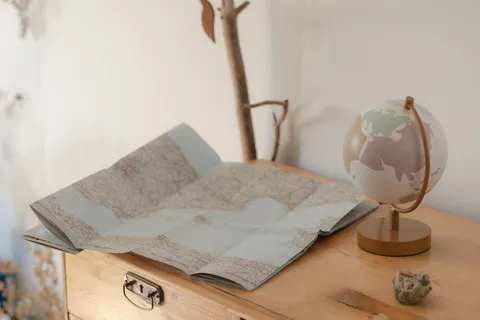
- A world map (a wall map, a printed map or a placemat map) or a desk globe
- Sticky notes or small stickers
- A few small toys, such as plastic animals
- Paper, crayons and scissors
- A bowl or box for drawing cards
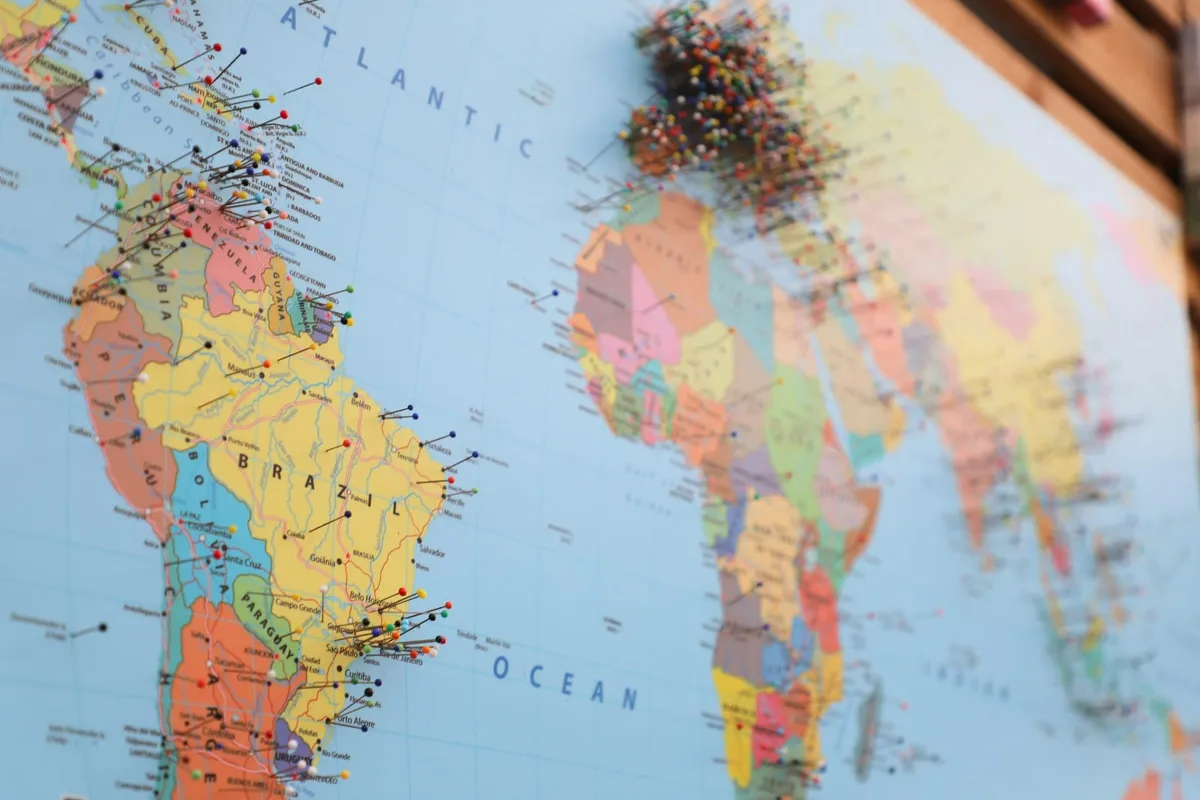
A map your child can touch and mark up is more useful than a perfect one tucked away on a shelf. Try hanging it at a child’s eye level.
Games for ages 3–5: big-picture ideas
At this age, the goal is simple ideas rather than names: land and water, near and far, home and away.
1. Land or water?
Point to a spot on the globe and ask, “Land or water?” Children usually notice quickly that most of the globe’s surface is blue. Let them take a turn asking you. Spin the globe gently with a finger and stop it to pick a spot.
2. Where do the animals live?
Give your child a few plastic animals and place them on the map where they live: a polar bear near the top of the map, a kangaroo near Australia, an elephant in Africa or Asia. Check an animal book together if you are unsure. This works because children already love animals.
3. Find home
Put a sticker on your own town or country, then ask, “Where is our home?” and “Where is somewhere far from here?” Add a second sticker for a place a friend or relative lives. Counting the distance between stickers with a finger “walk” is a nice way to introduce the idea of far and near.
Games for ages 5–7: continents, oceans and flags
Once children can follow a short instruction on their own, names begin to stick if they are tied to a game.
4. Continent sort
Write the names of the seven continents on sticky notes and place them on the map together. Then sort toy animals or picture cards onto the right continent. Start with just two or three continents and add more over several days.
5. Map scavenger hunt
Call out a clue, such as “Find the biggest ocean on the map” or “Find a continent that starts with A.” Let your child race a parent or sibling to point to it. Keep clues easy at first and use a separate round for harder ones.
6. Flag match
Print or draw a small set of flags and the country names on separate cards, then lay them face-down for a memory-match game. Use four to six pairs to start. Flags are visual and distinctive, so they make good anchors for names.
Games for ages 7–10: directions, scale and research
Older children can begin to use maps as tools.
7. Compass treasure hunt
Draw a simple map of a room or garden with a compass rose, hide a small treat and give directions such as “walk three steps north, then two steps east.” Swap roles so your child writes the directions. Make sure the route is safe, with no stairs or obstacles.
8. Where is it from?
Pick an everyday object, such as a banana, a cereal box or a shirt label, and find the place named on the packaging. Locate it on the map together and talk about how far it traveled. Take care to say only what you can see on the label rather than guessing about how it was made.
9. Country detective
Choose a country and give your child three clues to look up in a book or a child-friendly website: one landmark, one animal and one food. Let them present their findings in a minute or two. Adults should supervise any online searching.
10. Draw-it-from-memory map
After spending a few days with a map, give your child a blank sheet and ask them to sketch the continents from memory, then compare. Treat mistakes as interesting rather than wrong. It is fine if the shapes are rough.
Making geography stick
A few habits help all of these games work better:
- Revisit often, add slowly. A familiar game with one new piece is easier than a brand-new game every time.
- Connect to stories. When a book or movie is set somewhere, take a moment to find the place.
- Keep the map visible. A map on a wall gets used in passing; a map in a drawer does not.
- Be accurate and specific. If you do not know an answer, look it up together instead of guessing.
Adding printable practice
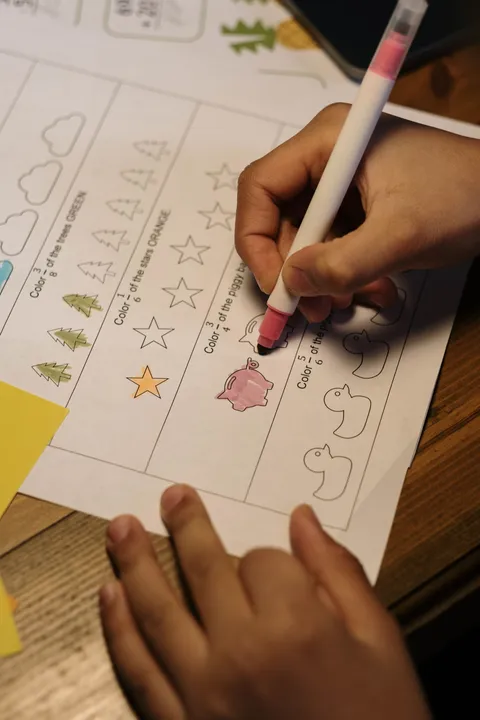
Games are great for movement and talking, and printable pages give children a quiet way to practice on their own. World Explorers: Countries and Cultures Activity Workbook is a 15-page printable workbook for ages 6–7 that includes countries and cultures, landmark and geography activities, memory and observation challenges, and logic and pattern puzzles. It can sit alongside the games above for a mix of active and quiet learning.
If you are weighing different options, our roundup of skill-practice printable workbooks for kids compares what is available by age and skill, and this guide to kindergarten skill-building workbooks covers how world-themed pages fit with logic and time-telling practice.
Safety and practical notes
- Supervise any use of scissors and small items such as pins. Use sticky notes or stickers rather than push pins with younger children, and keep small toys away from children under three.
- If you search online together, stay with your child and use a child-friendly search setting.
- Keep an eye on frustration. If a game gets stressful, switch to a simpler one.
Frequently asked questions
What are some easy geography games for kids?
Map scavenger hunts, ‘Where in the world is it from?’ guessing games, continent sorting with toy animals, flag matching and a simple pin-the-place game all need very little preparation. Pick one that suits your child’s age and keep sessions to ten minutes or so.
What age can kids start playing geography games?
Preschoolers can enjoy simple games about land, water and where animals live. Names of continents and countries usually become easier from around age five or six, and map skills such as directions and a simple key tend to suit children from about seven or eight. Every child is different, so follow their interest.
Are there free printable geography games?
Many free printable blank maps and flag sheets are available online, and you can also draw a simple map yourself. If you would like a ready-made printable set, a workbook such as World Explorers can add structured practice, but you do not need one to get started.
How do I make geography less boring for kids?
Link places to things children enjoy: where pandas live, where a favorite snack comes from, where a relative or pen pal lives. Games, movement and short bursts of practice keep it light.