Thanksgiving dinner is a long event for a small child. There is the cooking, the arrival of guests, the waiting for everyone to sit and the moment when adult conversation takes over. A kids’ table can make it a happy part of the day, but only if there is something for hands and minds to do.
This guide gives you low-mess ideas you can prepare in advance, a simple way to pace them and a short safety checklist. If you are also planning games for the rest of the day, see our lists of Thanksgiving games for kids and family and Thanksgiving activities for kids at home.
Think in three phases
Children rarely stay engaged for the whole meal, so it helps to plan in three short phases:
- Arrival and waiting. Children are excited and a little restless. They need something to do straight away.
- At the table, before and during the meal. Quiet activities that do not distract from eating.
- After eating. Children finish quickly and want to leave the table. A fresh activity gives adults a few more minutes to finish.
Prepare one idea for each phase, plus a spare in case something falls flat.
Set up the table so it is the activity
The easiest way to avoid clutter is to make the table itself the canvas.
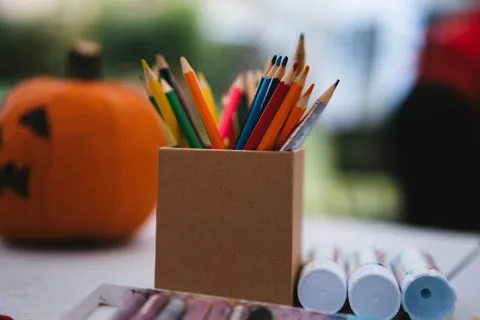
- Paper tablecloth. Tape a roll of plain brown or white paper over the table. Put a cup of crayons in the middle and write a few prompts on the paper: “Draw what you are thankful for,” “Draw the funniest turkey,” “Connect the dots to make a leaf.”
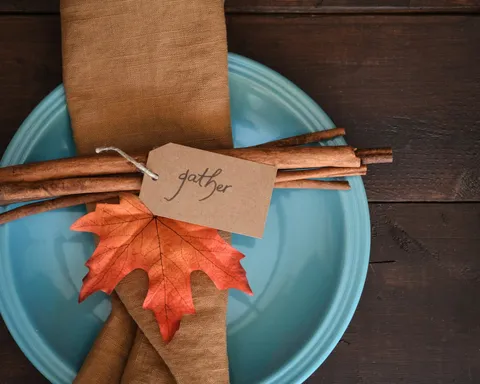
- Place cards. Give each child a folded card to decorate with their own name and a drawing. This doubles as a seating plan and a small craft.
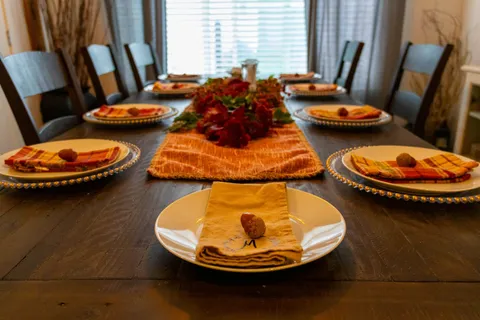
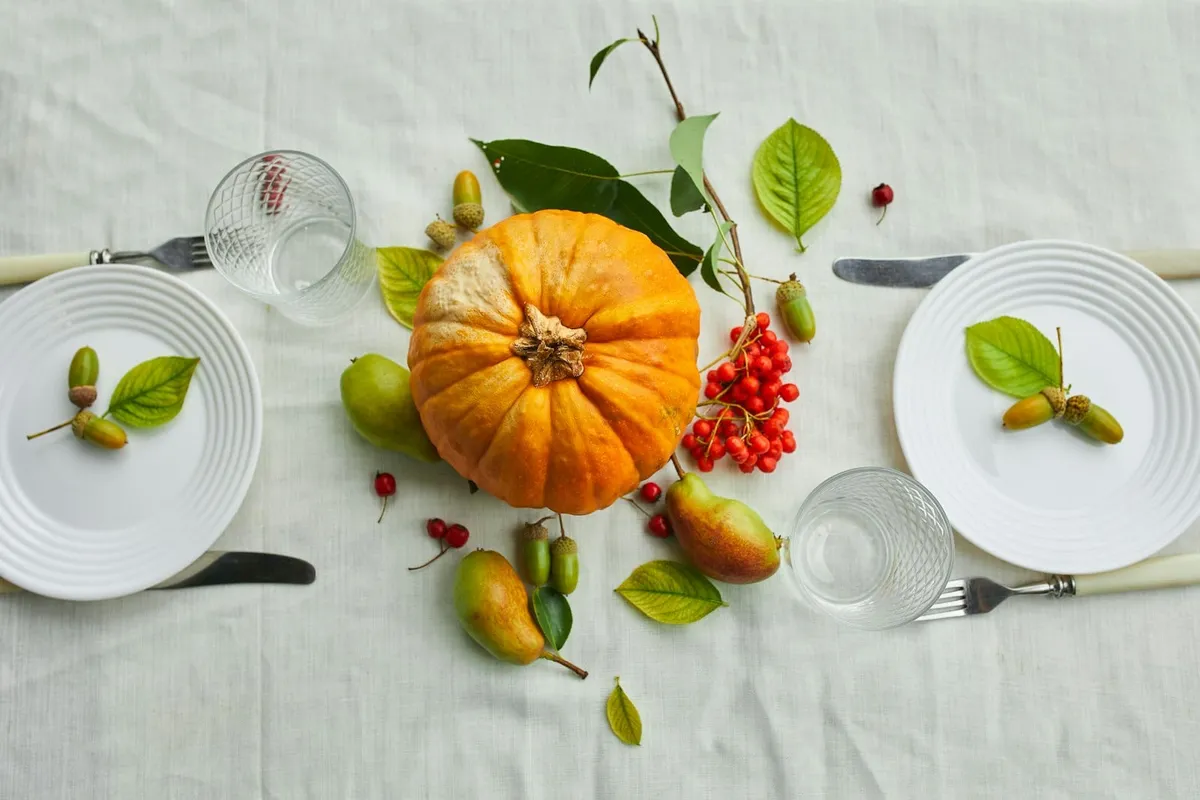
- Centerpiece job. Let the children arrange leaves, acorns or paper pumpkins in the middle of the table. Real nuts and berries can be a choking or allergy hazard for young children, so paper or felt items are a safer choice.
Phase 1: Quick activities for arrival
These need no table and take a few minutes.
- Gratitude jar. Give each child a slip of paper to write or draw one thing they are thankful for, then drop it in a jar to read aloud at dinner. Our article on gratitude activities for kids has more ideas along these lines.
- Leaf hunt. If the weather allows, send children outside with a bag to find three leaves of different colors. Leaves can be pressed or used on the place cards.
- Helper jobs. Children often enjoy a small real job, such as folding napkins or putting a place card at each seat. A task with a purpose keeps them busy and proud.
Phase 2: Quiet activities at the table
Choose games that can be played with a pencil and a piece of paper, so they can stop and start as plates arrive.
- Tic-tac-toe and dots and boxes. Everyone knows them, and they need no setup.
- Thankful alphabet. Go around the table naming something you are thankful for that starts with each letter, helping younger children with a hint.
- Draw the story. One child draws a line or a shape, the next adds to it, and so on, until a picture appears.
- Table bingo. Make cards with simple pictures such as a pumpkin, a fork, a candle or a leaf, and let children mark them when they spot them on the table.
- Conversation cards. Write one question per card: “What is your favorite food on the table?” or “Who would you like to say thank you to?” Take turns drawing a card.
For children who like worksheets, a few printed pages go a long way. The Thanksgiving & Fall Activity Book for Kids is a 25-page printable PDF for ages 4 to 8 with gratitude pages, coloring, mazes, counting, tracing and a Thanksgiving crossword. It costs $4.99, and you can print a handful of pages and tuck them into a basket. If you would like a wider mix of puzzles and mazes, The Ultimate Kids’ Activity Book is another printable option for ages 4 to 8.
Phase 3: After the meal
Children usually finish well before adults. Have a fresh activity ready so they can stay near the table without getting bored.
- Thankful tree. Draw a bare tree on paper and let each child add leaf-shaped notes with things they are thankful for.
- Card for the host. Make a thank-you card signed by every child.
- Quiet challenge. Try a team game, such as seeing how many words can be made from the word “Thanksgiving,” working together.
- Story or movie break. If you do want a calm-down time, a short picture book read aloud on the sofa can bring the energy down for the rest of the evening.
Ideas by age
- Toddlers (about 2 to 3). Large crayons, a few stickers and a soft toy. Expect them to want to be near an adult, and keep a spare activity to hand.
- Preschoolers (about 3 to 5). Coloring, simple matching and a small job such as handing out place cards.
- School-age children (about 6 and up). Word games, dot games, riddles and being in charge of organizing the younger children’s activity.
Mixed ages are common at holiday tables. Pairing an older child with a younger one for a drawing game gives both something to do.
Make a basket per child
A small basket or tray at each seat keeps things tidy and avoids arguments. A simple set might hold:
- Three or four crayons or pencils
- A few activity pages on a clipboard or piece of cardboard
- A sticker sheet or a small notebook
- One surprise item, such as a new crayon or a paper fortune-teller you folded
Hand out the baskets when children sit down and collect them again when plates arrive, so food and crayons do not share the table.
Troubleshooting
- Children lose interest in minutes. Keep several short activities rather than one long one, and swap them in when the energy drops.
- Arguments over the crayons. Give each child their own small set.
- A child will not stay seated. Allow short breaks. A quick walk to fetch a napkin or a leaf can reset the mood.
- The table is crowded. Use a tray or clipboard on laps for drawing, and keep only plates and cups on the table itself.
A last thought
The point of the kids’ table is not to keep children silent. It is to give them a place where they feel included and have enough to do that the long afternoon feels fun. A few paper activities, a snack within reach and a grown-up nearby are usually enough. This article offers general ideas only, so adapt them to your family, your guests and any dietary or safety needs.