A child grabs a toy from a friend, the friend cries, and every adult in the room looks at you. It is one of the most common moments in early childhood, and it is easy to feel that it means something is wrong. Usually it does not. Learning how to teach a child to share is a slow process, and what looks like selfishness is often a child who has not yet worked out what sharing is, how long a turn lasts or what to do while waiting.
This guide explains what sharing actually asks of a child, what is realistic at each age from toddler to about eight, what to say in the moment, how to practice when everyone is calm and when it is fine not to share. Everything here is general parenting guidance rather than medical or psychological advice, and every child develops at their own pace.
What sharing really asks of a child
“Share” sounds like one skill, but it is at least three:
- Turn-taking: using something for a while and then handing it over, knowing it will come back.
- Playing together: using the same toys at the same time, such as building one tower or using one set of blocks.
- Giving: offering something to another person, sometimes without getting anything back.
Each of these needs self-control, patience and an understanding of another person’s feelings, and each develops at a different pace. Turn-taking is generally the easiest place to begin because the child still keeps the toy in the long run. Giving without a return is the hardest and usually comes last.
Realistic expectations by age
The ages below are rough guides. If your child is ahead or behind them, that is usually within the normal range.
| Age (roughly) | What is common | What helps |
|---|---|---|
| 1 to 2 | Grabbing, “mine”, playing near other children rather than with them | Duplicate toys, short supervised time together, calm words for what happened |
| 2 to 3 | Strong feelings about ownership, big reactions when a toy is taken | Simple turn-taking with a timer, a “special toys” box, lots of repetition |
| 3 to 5 | Taking turns with adult help, beginning to negotiate, still many disagreements | Scripts, pretend play, games that need two players |
| 6 to 8 | More able to share, wait and compromise, but still argue about fairness | Problem-solving together, family rules, letting children suggest solutions |
At any age, sharing goes better when a child is rested, fed and not overexcited. A hungry, tired child who has not slept well is unlikely to share, even if they can do it on a good day.
What to say in the moment
When a toy is grabbed, a short, calm script works better than a lecture. A pattern many families find useful is name the feeling, state the rule, offer a next step.
- Name the feeling. “You really wanted the red truck.”
- State the rule simply. “Grabbing hurts. We ask first.”
- Offer a next step. “You can ask ‘Can I have a turn?’ or play with the blue truck until it is free.”
- Support the other child. “Sam is upset because the truck was taken. Let’s see if he wants it back.”
If a child refuses to give a toy back, avoid pulling it away with a struggle. Try a timer or a first-then order instead: “Sam has it for two minutes, then it is your turn. While you wait, let’s build a ramp.”
Practice turn-taking when nobody is upset
Real conflicts are a poor time to learn a new skill. Practice with games that make sharing fun:
- Pass the ball. Sit on the floor and roll a ball back and forth. Say “your turn, my turn” each time.
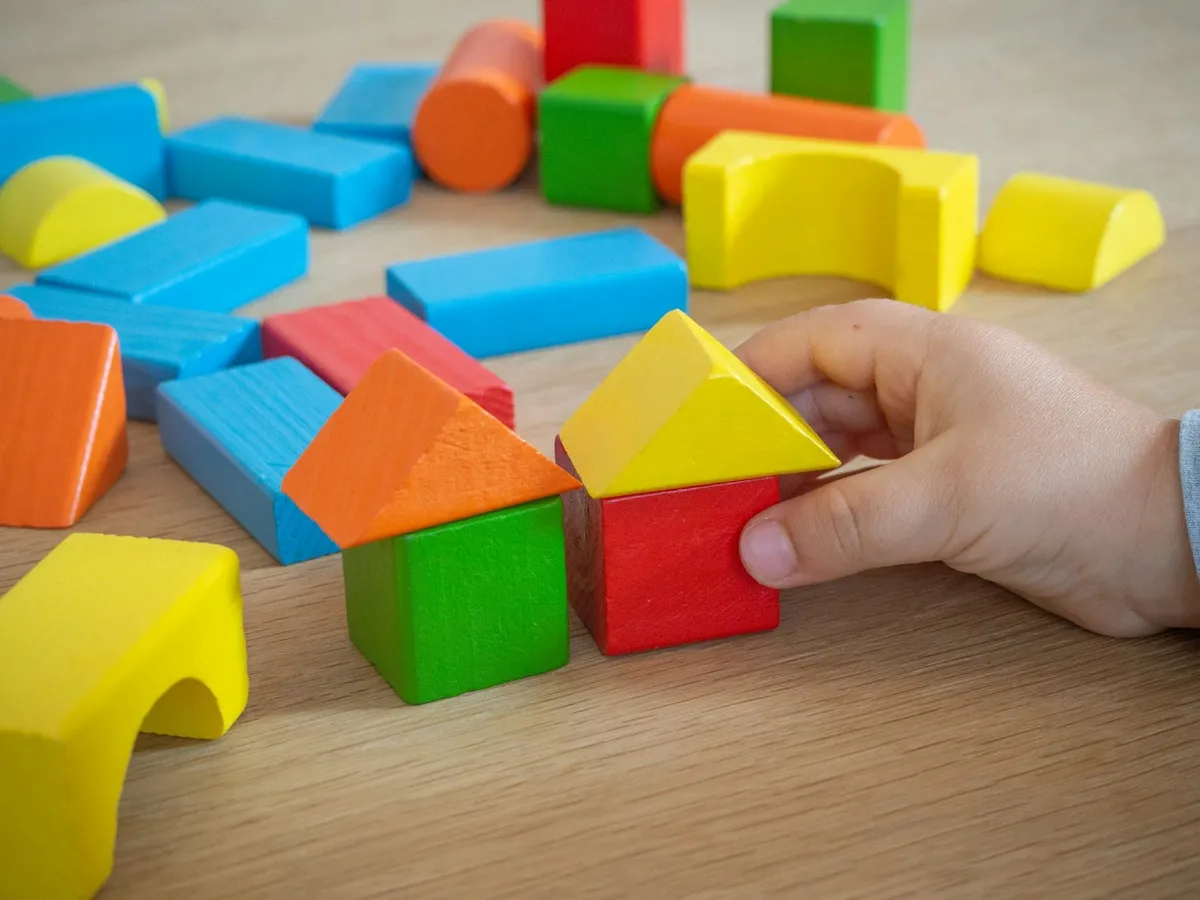
- Build one tower together. Take turns adding blocks. Talk about whose turn it is and what happens if the tower falls.
- The sand-timer turn. Use a sand timer or a kitchen timer so that turns are fair and visible. Children usually accept “the timer says” more easily than “because I said so”.
- Snack sharing. Let your child divide a plate of grapes or crackers into equal piles for everyone. Supervise closely and cut grapes lengthwise for younger children.
- Two crayons, one page. Give two children a single big piece of paper and one crayon each, then let them draw a picture together.
- Pretend play. Act out a toy shop, restaurant or doctor’s office where children take turns being the customer and the shopkeeper.
For more everyday games that build waiting and turn-taking, see the ideas in our calm-down activities guide, which also help when a disagreement gets loud.
Protect a few special things
Not everything has to be shared. It helps to divide toys into two groups:
- Shared toys, which anyone can use with turn-taking rules.
- Special toys, such as a favorite stuffed animal, that belong to one child and can be put away before a playdate.
Before friends or cousins arrive, let your child choose what goes in a “special” box or on a high shelf. Explain that everything else is for playing together. Children are often more willing to share the rest when they know their favorite item is safe. This is not spoiling; it teaches that sharing is a choice within fair rules, not a demand to give up everything.
Be the example
Children watch how adults share far more than they listen to what adults say. Look for everyday chances to show it and describe it out loud:
- “I’ll pass you the salt, and then can I have it back, please?”
- “I have two oranges, so I’ll give one to Grandpa.”
- “It is my turn on the computer now, and then it is yours.”
When you hear your child share or wait, notice it specifically: “You waited for Leo to finish. That was hard, and you did it.” Specific praise about behavior tends to work better than “good sharing!” and does not turn every offer into a performance.
Big feelings behind a grab
A grab is often a feeling before it is a decision. A child may be frustrated, excited, jealous or worried that a toy will not come back. If the reaction is loud or physical, help your child calm down first, then talk. Our guide to helping kids name and handle anger explains how naming feelings makes them easier to manage.
Stories can also help, because a child can watch a character wait or feel upset without being in the middle of it. The Patience Garden: A Story About Waiting is a 12-page illustrated PDF story about Milly, a young gardener who learns that good things take time, which can open a conversation about waiting for a turn. When I Feel Angry: A Story About Big Emotions is a storybook for ages 4 to 8 that includes conversation starters for parents and teachers and shows coping strategies such as deep breathing and using words instead of actions. For more ideas on choosing and using this kind of story, see teaching kids patience through stories.
Preparing for playdates
A little planning prevents many meltdowns:
- Talk beforehand. “Mia is coming. She will play with the blocks and the trains. Your special toys will be in the box.”
- Keep it short. An hour or so is often plenty for young children, and it is fine to end while things are still going well.
- Have duplicates or similar toys where possible, especially for children under three.
- Plan a shared activity such as playdough, painting or a water tray that does not depend on one favorite toy.
- Step in early. Calmly join the play before frustration peaks, rather than waiting for tears.
When to be patient, and when to look further
Grabbing, tantrums about toys and rigid ideas about “mine” are common and usually fade with practice. Consider talking with your child’s pediatrician or teacher if your child is much older than their peers and still has frequent, intense conflicts, seems unable to calm down after them, or if you are worried about how they get along with other children in general. A professional can look at the full picture, and asking is a normal, sensible step rather than a sign of failure.
Bringing it together
Teaching a child to share is a long game. Begin with turn-taking, keep your expectations realistic for your child’s age, use short scripts, practice with games when nobody is upset and protect a few special toys. Model sharing yourself, notice when your child waits or offers, and be patient with the setbacks. Over months, you will probably see fewer grabs, more “can I have a turn?” and a child who is starting to think about what the other person feels, which is the real heart of sharing.