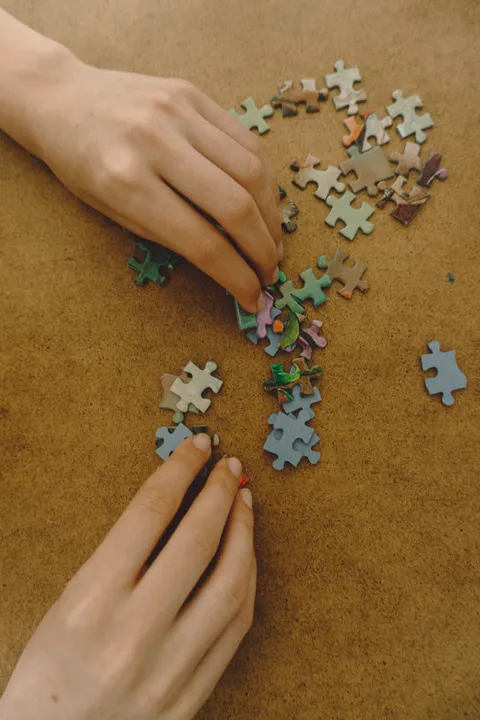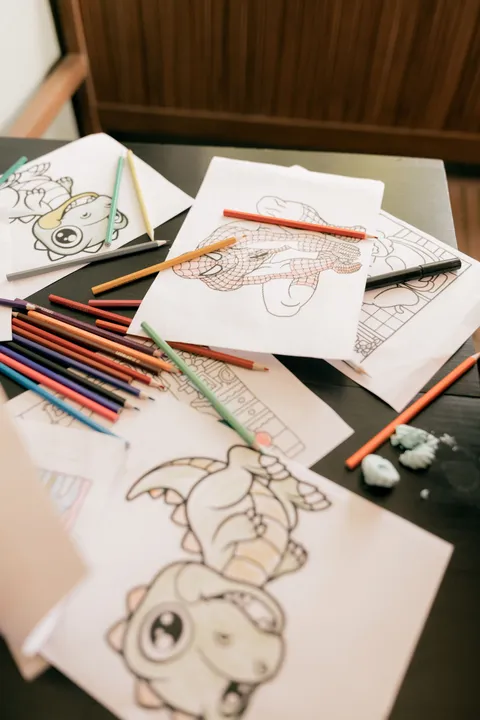
A good brain game feels like play, but it quietly trains thinking: remembering, noticing, planning and working things out. The best brain games for kids to play at home need nothing more than paper, pencils and a bit of imagination, and they work for a single child on a quiet afternoon or a whole family at the table.
Here are twenty, grouped by the skill they build.
Memory games
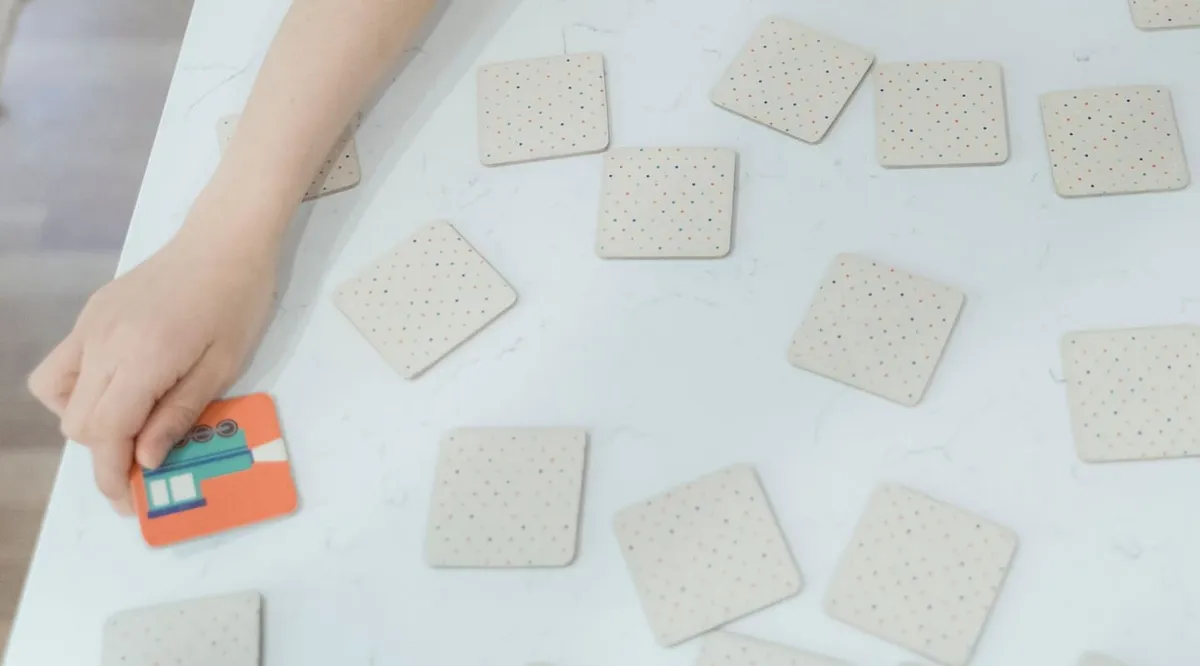
1. Classic matching pairs. Make cards by drawing simple pictures twice on index cards. Turn them face-down and take turns finding pairs. Start with six pairs and add more as skills grow.
2. What’s missing? Place five to eight small items on a tray, let your child study them for 20 seconds, then cover the tray and remove one item. Ask which one is gone.
3. Kim’s game (variation). Lay out ten household objects, cover them with a cloth, and have your child list as many as they can remember.
4. Story chain. Each player repeats the story so far and adds a new detail: “I went to the market and bought an apple…” Then “an apple and a banana…” The list grows.
Observation games
5. Spot the difference. Draw two nearly identical pictures with five changes, or use printed pages. Ask your child to circle every difference.
6. Hidden pictures. Look for hidden objects inside a scene. This trains focused visual scanning.
7. I spy with clues. Give harder clues (“I spy something round that’s in the kitchen and is often cold”).
8. Room change. One player leaves the room while another changes three things; the first tries to spot them.
Logic and pattern games
9. Pattern continuation. Draw a pattern such as circle, square, circle, square and ask what comes next. Increase difficulty with three-step or growing patterns.
10. Odd one out. Show four items where three share a property and one doesn’t (three fruits and a shoe). Ask which one doesn’t belong and why.
11. Sorting challenges. Sort a pile of mixed objects in several ways: by color, then by size, then by use.
12. Simple 4x4 puzzles. A small logic grid with four symbols where each appears once in each row and column introduces deduction.
13. Tangram shapes. Cut a square into seven basic shapes and make animals or figures from them.
Mazes and problem solving
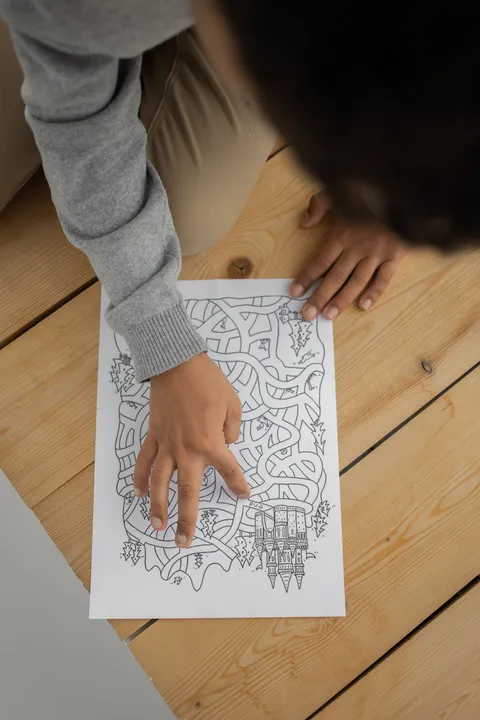
14. Maze solving. Mazes practice planning ahead and persistence. See our guide to maze activities for kids for how to use them well.
15. Escape-room at home. Hide a few simple clues around a room that lead to a “treasure,” using easy riddles or pictures for younger children.
16. Build it challenge. Give a target (“build a tower at least as tall as your arm using only blocks and paper”) and let children experiment.
Word and number games
17. Riddles. Age-appropriate riddles build language and reasoning. Let children make up their own, too.
18. Rhyme chains. One player says a word and the next says a rhyme until someone gets stuck.
19. Number detective. “I’m thinking of a number between 1 and 20. It is more than 10 and less than 15. It’s even.” Let children guess.
20. Mystery word. Draw blanks for the letters of a word and have your child guess letters, like a simple hangman without the drawing.
Choosing the right level
A brain game works when it sits just above what a child can do easily. If they breeze through it, add a step. If they get frustrated, simplify and try again. Watching for “productive struggle” (a little effort, then success) is a useful guide.
Ages 3–4: simple matching, sorting and “what’s missing” with three to five items. Ages 5–6: memory pairs, spot the difference, easy mazes and basic patterns. Ages 7–10: riddles, logic grids, tangrams and multi-step puzzles.
Turn it into a habit
Make a brain-game basket. Keep a box with cards, a stack of printed puzzles, a timer and a pencil case. Rotate the contents weekly.
Play together. Adults playing alongside children model persistence and show that mistakes are part of solving.
Ask “How did you know?” Explaining their thinking helps children notice their own strategies.
Celebrate effort. “You tried three different ways” builds a growth mindset.
Ready-made brain-game pages
When you want a stack of puzzles without designing them yourself, a printable workbook is convenient. The Brain Games for Kids — Printable Activity Workbook includes puzzles, mazes, matching games, pattern recognition, spot-the-difference and logic challenges for ages 4 to 10, in standard letter size, and you can print it repeatedly for personal use.
For broader thinking activities, our guide to logic and problem-solving activities for kids covers more ways to build reasoning skills.